


















By Ekeoma Ogwo and Augusta Uchediunor.
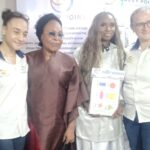
The National Director, Sickle Cell Foundation Nigeria (SCFN), Dr Annette Akinsete, has urged persons with Sickle Cell Disorder (SCD) to live meaningful lives because it is not “a death sentence”.
She spoke during a sensitisation and awareness campaign organised by the Coalition of Sickle Cell NGOs under “The Red Umbrella Walk for Sickle Cell Disorder’’ campaign.
The News Agency of Nigeria (NAN) reports that the awareness campaign has as its theme: “The Power of Hope: Step Up for Sickle Cell’’.
She said: “Here, we have not just Sickle Cell Foundation of Nigeria, we have other NGOs, and what we have done is bring them all under one umbrella to have what we call ‘The Coalition of Sickle Cell NGOs.
“ Some member NGOs of the coalition included Crimson Bow Sickle Cell Initiative, SAMI Sickle Cell Management Initiative, Sickle Cell Foundation Nigeria, others.
“We want to speak with one voice to carry the information to the people that Sickle Cell is not a death sentence.
“It always used to be thought of as an incurable disease, but nowadays, we know that persons with SCD are living longer for decades. We had a female carrier who died at the age of 94.
“As long as Sickle Cell carriers are properly treated and properly managed, they can live long productive lives.
“ The walk on Saturday was a precursor to ‘World Sickle Cell Day’ , marked annually on June 19 and it held simultaneously in Lagos, Warri, Benin, Ilorin and other states in Nigeria.’’
According to the Vanderbilt University Medical Centre, Sickle Cell disease (SCD) is an inherited blood disorder. That means it is passed down from a parent’s genes. It causes the body to make abnormal haemoglobin.
“Haemoglobin is the protein in red blood cells that carries oxygen to all parts of your body. When you have SCD, your body’s tissues and organs don’t get enough oxygen.
“Healthy red blood cells are round and move easily all over the body. With SCD, the red blood cells are hard and sticky. They are shaped like the letter C (and like a farm tool called a sickle).
“These damaged red blood cells (sickle cells) clump together. They can’t move easily through the blood vessels. They get stuck in small blood vessels and block blood flow.
“This blockage stops the movement of healthy oxygen-rich blood. This blockage can cause pain. It can also damage major organs,” the News Agency of Nigeria reports.
To avoid bearing children with sickle cell disorder, Akinsete encouraged people to go for genetic counselling and testing in order to know their genotype; whether they are AA, AS or SS.
“We counsel young people to know their genotype early enough before they begin to date or plan for marriage or begin to have a family of their own.
“Sickle Cell is a genetic disorder, so couples need to know how it’s inherited and how to avoid it,” she said.
On the treatment and management, Akinsete said the treatment and management were quite expensive as carriers had to be on medications every day of their lives.
“Sickle Cell carriers need basic medications like Folic Acid, Hydroxyurea and malaria prevention medications daily. These medications help to prevent crises in patients.
“However, there are now experimental medications such as Arbutamine, which, in the past, patients couldn’t access, but are now accessible through clinical trials,” Akinsete said
She advised patients to eat a balanced diet, drink plenty of water, avoid excessive exercise as well as avoid excessive cold and heat in order to avoid the crisis.
Also, Mrs Toyin Adesola, Executive Director of Sickle Cell Advocacy And Management Initiative and Chairperson of Coalition of Sickle Cell NGOs, said that sickle cell disease was a major public health concern in Nigeria.
She said Nigeria had one of the highest burdens of sickle cell disease in the world, with a significant portion of the population carrying the sickle cell trait.
“It is estimated that over 150,000 children are born with sickle cell disease in Nigeria each year, making it the highest number of newborns affected by the condition in any country.
“This event holds immense significance as we come together to raise awareness about sickle cell disease and advocate for better healthcare and support for individuals living with this condition.
“It is a testament to our commitment to making a difference in the lives of those affected by sickle cell disorder.
“Today, we stand here with our red umbrellas held high, symbolising unity and protection for those who face the daily challenges of sickle cell disease.
“Each step we take represents a step towards progress, hope, and empowerment.
“Our united presence sends a powerful message to the world—that we are here, visible, and demand change’’
“Through this Red Umbrella Walk, the 7th edition, we strive to educate the public about the realities individuals faced with sickle cell disease.
“We aim to break the stigma surrounding this condition and foster community among patients, their families, and the wider society.
“We will shatter misconceptions and build a more inclusive and supportive environment,’’ she said. (NAN)(www.nannews.ng)
Edited by Dianabasi Effiong/Vivian Ihechu