



















By Lydia Ngwakwe
The Federal Government says it plans to raise the percentage of skilled workers in Nigeria’s youth population from 15 per cent to 50 per cent.
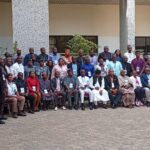
Mrs Abiola Arogundade, Senior Special Assistant to President on Technical, Vocational and Entrepreneurship Education (SSATVEE), said at the opening ceremony of free leather works training on Tuesday in Lagos.
The News Agency of Nigeria(NAN) reports that the training was organised by SSATVEE in collaboration with Yikodeen Factory.
She said that the initiative aims to address the pressing need to equip more individuals with marketable skills, thereby reducing unemployment and poverty in the country.
To achieve this goal, Arogundade said that her office had commenced a training programme in the 36 states of the federation, including the Federal Capital Territory, using a label audit.
“One of my mandates is to increase the number of skilled workers, especially among the youth in Nigeria. Currently it’s at 15 per cent; we want to move that up to 50 per cent.
“From the low-skilled and the semi-skilled, we’re trying to push it up to create more economic activity in the country and increase this highly skilled to 50 per cent.
“So, that’s one of the reasons why we put this programme together.
“This programme is about bringing people in the local community, and even in Lagos at large, to come and learn a skill, which is the leather works and how to make shoes, to learn a skill, to use that skill to unlock the door for prosperity for them,’’ she said.
She said that the programme, which would run for one month, would train 100 people in relevant skills to work in the factory.
She said, “After the training out of the 100 people, we’ll be employing 50 people directly to work in this factory. After that, the rest of the 50 people will have access to non-collateral loans through one of our interventions that the government has put together through the Senior Special Assistant to the President on job creation.
“Also, we have our national chairman here, he has a directory of all leather shoe-making companies in Nigeria. He will also be matching training to jobs.’’
She noted that the training, which would last for one month, would enhance their skills and empower them to be able to make a living for themselves and their family.
The Managing Director, Yikodeen Footwear Ltd., Mr Atunde Olayinka, said that the training would empower and equip participants with the necessary skills and knowledge.
Olayinka said that the training, which would be comprehensive, would help participants to become successful in the footwear industry or beyond, as entrepreneurs or skilled workers.
Olayinka said, “The three weeks to a month training is for them to understand the basics of footwear making, both the industrial side; how to use machineries and how to also produce shoes for themselves, like slippers and basic shoes.
“ So, after that, we’re also taking them on finance courses to understand as an entrepreneur, you need to understand numbers, basically.
“So, it’s a mix of different things, not just footwear making. It’s also a mix of the entrepreneurial skills, where they learn finance, sales and marketing, basically put together.’’
Mr Ayodele Olasukanmi, National Chairman, Cobblers, Leather, Artisans Association of Nigeria, emphasised the varied benefits of footwear training in the country.
He cited the acquisition of valuable skills, enhancement of career prospects, and contribution to the nation’s economic development.
“A skilled workforce in the footwear industry contributes to the overall economic growth of Nigeria, by creating jobs, generating revenue, and attracting foreign investment.
“So, it is a very big market; the leather industry contributes enormously to the GDP of Nigeria.
“Also, there lies enormous gain for the participants if they take advantage of the skills provided to them today,’’ he said.
One of the beneficiaries, Mr Ndifreke Nathan, a Gospel Music Minister, expressed the hope that after the training, beneficiaries would get the necessary materials and facilities to put those skills into practice.
“This skill is needed at this time but it will not be fair at the end of the training, successfully trained participants will not have access to materials and facilities to start something.
“Often times people feel frustrated with government promises of support after training. These promises remain unfulfilled, leaving participants disappointed and unable to utilise their acquired skills,’’ Nathan said.
Edited by Olawunmi Ashafa