













By Folasade Akpan
The Minister of Humanitarian Affairs and Poverty Reduction, Prof. Nentawe Yilwatda, has called for a transition from short-term relief efforts to long-term, sustainable strategies in addressing humanitarian needs across Nigeria.
Yilwatda made the call while delivering a keynote address at the Nigeria INGO Forum (NIF) Dialogue Series on Thursday in Abuja.
The address was delivered on his behalf by Mrs Ene Odusuyi, Technical Adviser on Policy Review and Intergovernance Relations.
The event was themed “Accountability in Action: Advancing Durable Solutions for Crisis-Affected Populations Amid Dwindling Aid.”
He stressed that the growing scale of humanitarian needs continued to outpace the resources available, both globally and nationally.
“In spite of increasing humanitarian needs, global donor aid is shrinking.
“This reality is actively felt in Nigeria, as the country has been listed as an ‘accelerated transition country’ by the United Nations.
“This means the traditional international humanitarian architecture will soon be dismantled.”
He highlighted the protracted conflict in the NorthEast, which had displaced 2.3 million people, and growing crises in the NorthWest and North Central regions, driven by criminal banditry and widespread violence.
“The 2025 Humanitarian Response Plan projects that 910 billion dollar is needed to support 3.6 million people in Borno, Yobe, and other affected states.
“Behind these statistics are real people, families displaced, communities striving to rebuild amid great loss,” he said.
Yilwatda reassured stakeholders of the government’s commitment to working with partners to ensure that no one was left behind.
Speaking at the event, Mr Trond Jensen, Head of Office, UN Office for the Coordination of Humanitarian Affairs (OCHA) in Nigeria, underscored the need for inclusivity and empowerment in humanitarian response.
“When it comes to accountability, inclusivity is key.
“We must prioritise the most vulnerable, often women and girls, and ensure they are given power and choices.
“They need what they actually want, not what we assume they need,” Jensen said.
He emphasised the importance of collaboration between humanitarian and development actors to reduce long-term dependence on foreign assistance.
“As humanitarians, our role is to complement government efforts and work with local partners and civil society.
“We must build trust and enable communities to eventually take over operations,” he said.
Mrs Chimda Musa, Executive Director of the Rural Agricultural Transformation and Empowerment Initiative (RATEI), emphasised a practical model that integrated displaced women into agriculture, particularly rice farming.
“These women are not only learning to cultivate rice but also engaging in rice processing and organic fertiliser production.
“This social enterprise creates sustainability and can be replicated in other regions,” she explained.
Also speaking, Hauwa Nuhu, Managing Editor of Human Angle Magazine, emphasised the critical role of the media in exposing humanitarian issues and tracking accountability gaps.
“Accountability is essential to identify gaps and drive real, sustainable solutions for affected regions,” she said.
Director of the NIF, Ms. Camilla Higgins, pointed out that accountability extended beyond financial management.
“We can’t talk about accountability without mentioning the devastating funding cuts this year.
“The loss of U.S. funding has been particularly severe, but we’re seeing donors across the board shift priorities.
“In Nigeria alone, more than 2.3 million people are internally displaced in the NorthEast, and 4.6 million face food insecurity nationwide.
“Our response must be smarter, more accountable, and more sustainable,” she said.
Higgins stressed the need to amplify community voices and keep affected people at the centre of humanitarian responses.
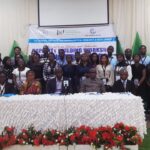
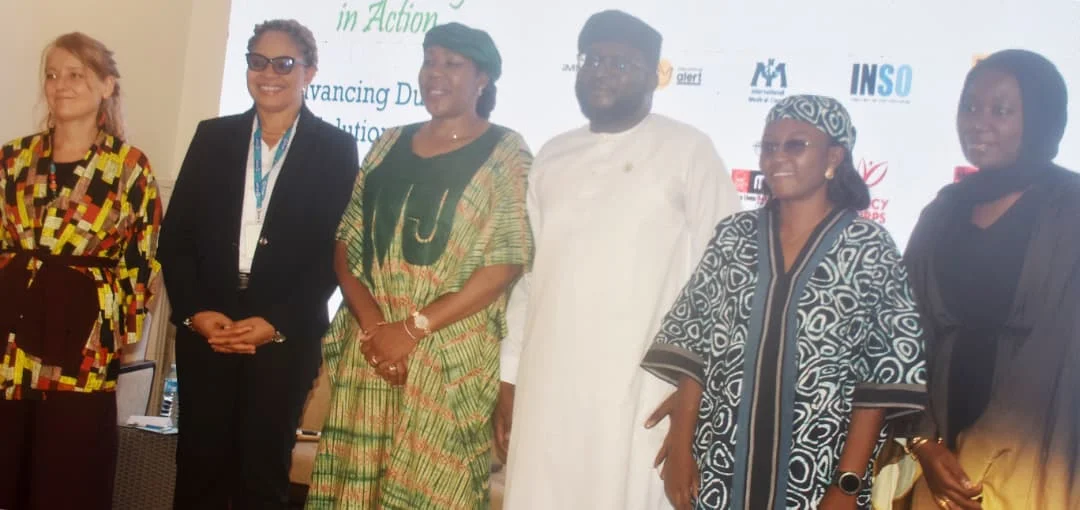
The forum convened a diverse group of stakeholders from government, international and national NGOs, UN agencies, civil society, and the media to explore durable solutions and improve accountability in Nigeria’s humanitarian efforts. (NAN)(www.nannews.ng)
Edited by Abiemwense Moru