









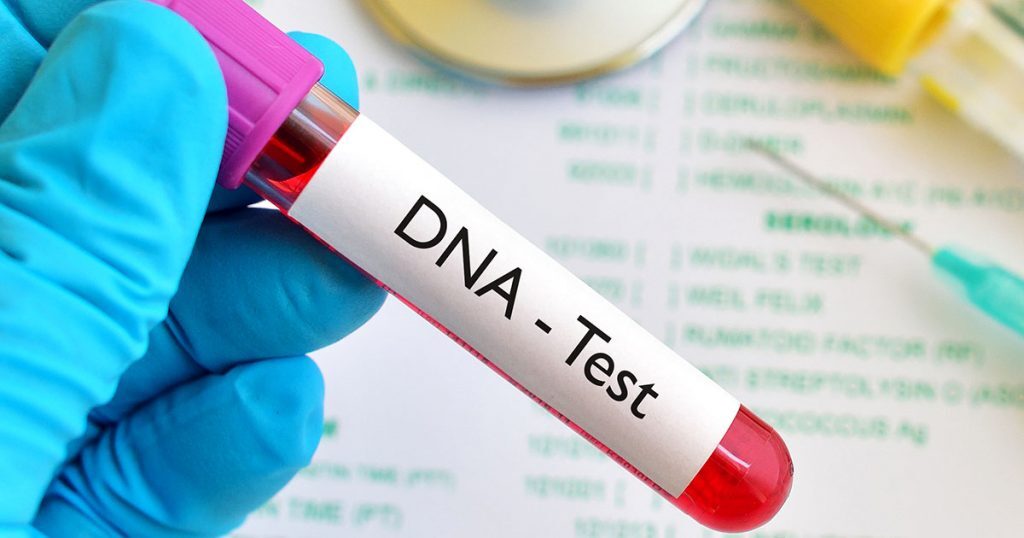










DNA
By Lilian U. Okoro
The country’s leading DNA testing centre, Smart DNA Nigeria, on Sunday released its 2025 Annual DNA Testing Report, revealing that deoxyribonucleic acid (DNA) testing surged to 13.1 per cent in 2025.
The News Agency of Nigeria(NAN) reports that DNA is the genetic information inside the body’s cells that helps make people who they are.
A DNA paternity test determines the biological father of a child using genetic materials.
The study, analysing data from July 2024 to June 2025, also revealed startling insights into Nigeria’s family dynamics, including persistent paternity uncertainty and the profound impact of emigration on DNA testing demand.
It also revealed that paternity exclusion rate remains at 25 per cent as immigration testing surged
“One in four tests still negative.
“The 2025 data shows 25 per cent of paternity tests returned negative results, a slight decrease from 27 per cent in 2024 but maintaining the worrying trend where 1 in 4 presumed fathers are not the biological parent,” the Centre said.
According to the report, firstborn children are significantly more likely to have negative paternity test results compared to non-firstborn children.
It said that while firstborn sons showed the highest discrepancy (64 per cent), firstborn daughters were also more likely to be biologically unrelated to their presumed fathers compared to later-born children.
“Immigration testing explodes amid “Japa” Wave Immigration-related DNA testing surged to 13.1 per cent of all tests, reflecting Nigeria’s unprecedented emigration trend.
“The increase indicates growing numbers of dual-citizenship families processing documentation for children’s relocation abroad, with many parents securing foreign documentation as “second passport” insurance.
“This consistent pattern raises serious questions about family structures, trust, and social arrangements in urban Nigeria,” the Centre said.
The report exposes a dramatic gender imbalance, with men initiating nearly nine out of 10 paternity tests while women account for just 11.8 per cent
This disparity underscores deep-seated gender roles where men predominantly seek paternity confirmation, often after years of accumulated doubts.
According to expert analysis, these findings are not just about science; they tell us something profound about trust, relationships, and the legal and economic realities of Nigerian families today.
The Operations Manager at Smart DNA, Elizabeth Digia, said thee report calls for urgent action on multiple fronts such as Legal Reform, Healthcare Integration and Educational Outreach.
“Nigeria lacks specific paternity fraud laws, unlike South Africa, leaving men with little legal recourse when discovering non-paternity after years of financial responsibility.
“Public health campaigns should normalise paternity discussions and integrate DNA testing into pre-marital and family health programs.
“Misconceptions persist, including beliefs that DNA testing is only for wealthy families or that physical resemblance guarantees paternity.
“Our role is to provide certainty through accurate testing while encouraging sensitive handling of the life-changing information our clients receive,” Digia said.(NAN)(www.nannews.ng)
Edited by Vivian Ihechu