


















By Simon Akoje
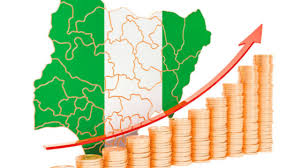
Some financial experts say Nigeria’s $43.4 billion external reserves, the highest in five years, signals investor confidence, Naira stability, and stronger support for policies that improve citizens’ welfare.
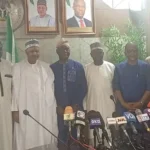
They made this known in interviews with the News Agency of Nigeria (NAN) on Sunday in Lagos, while commending the Federal Government and the Central Bank of Nigeria (CBN) for the steady improvement in external reserves.
The experts noted that the achievement reflects growing fiscal discipline and the positive impact of ongoing reforms.
They also stressed the need for the government to channel the gains toward boosting production, creating jobs, and easing the cost of living.
The Chief Executive Officer, Centre for the Promotion of Private Enterprise (CPPE), Dr Muda Yusuf, said the development proved an increasing confidence in Nigeria’s economy from both local and foreign investors.
Yusuf said that the increase also showed evidence of fiscal discipline and effective policy implementation.
NAN reports that the external reserves dropped to $33.28 billion as of September 2023, from $37.1 billion recorded in December 2022,
He noted that a significant portion of the inflows came from autonomous sources such as foreign portfolio investment (FPI), foreign direct investment (FDI), and diaspora remittances.
“This is an indication that investors and citizens’ confidence is improving, which is good for the general economy,” Yusuf said.
He advised that while macroeconomic fundamentals are improving, government attention should now shift toward policies that directly impact the welfare of Nigerians.
“The government should focus on addressing the cost-of-living challenge so that the increase in external reserves can translate into tangible benefits for households and businesses,” he said.
Yusuf also called for improved fiscal discipline and efficient public spending to prevent leakages and ensure better management of public debt.
Former President of the Chartered Institute of Taxation of Nigeria (CITN), Mr McAntony Dike, also commended the government for raising the nation’s reserves, describing it as a step toward long-term economic stability.
Dike said Nigeria must now focus on improving the business environment to attract more domestic and foreign investments.
“When investors see consistency and a supportive business climate, they are encouraged to inject capital, which in turn drives growth and development,” he said.
He added that enhanced security and investment in digital monitoring platforms were vital to ensuring a safe environment for businesses to thrive.
Similarly, the founder of the Independent Shareholders Association of Nigeria (ISAN), Mr Sunny Nwosu, said the increase in foreign reserves was a positive signal for the economy.
He, however, urged the government to use the opportunity to invest in key infrastructure that could boost local production, create jobs, and enhance economic resilience.
Nwosu stressed that investing in agriculture, power, and manufacturing would help ensure that the benefits of a stronger reserve position reflect in the everyday lives of Nigerians.
NAN recalls that the Central Bank of Nigeria (CBN) recently announced that the country’s foreign exchange reserves surged to a five-year high of $43.4 billion, in spite of efforts to clear FX backlogs and stabilise the Naira.
The disclosure was made by the CBN Deputy Governor for Economic Policy, Mr Mohammed Abdullahi, during the Nigeria Investors Forum held on the sidelines of the IMF–World Bank Annual Meetings in Washington, D.C.
Abdullahi said the reserves as of Oct. 10 were enough to cover 11 months of imports.
He added that the Naira had remained stable, with the gap between the official and parallel market rates narrowing to less than three per cent, compared to over 50 per cent in 2022.
He also noted that inflation had declined to 18.02 per cent, the lowest in three years, while capital inflows and remittances continued to strengthen Nigeria’s balance of payments. (NAN)(www.nannews.ng)
Edited by Olawunmi Ashafa





Can you be more specific about the content of your article? After reading it, I still have some doubts. Hope you can help me.