














By Angela Atabo
Stakeholders in the peace and security sector have called for stronger collaboration among peacebuilders, policymakers, and development actors to address the escalating threats undermining peace, stability, and development across West Africa.
The call was made at the 2025 West Africa Peace and Security Dialogue (WaPSeD), organised by the Building Blocks for Peace Foundation (BBFORPEACE) in partnership with the Institute for Peace and Conflict Resolution (IPCR).
The dialogue, themed “Reimagining Peace and Security in West Africa: Local Solutions, Regional Solidarity and Global Partnerships,” was supported by the Embassy of the Netherlands and other partners in Abuja.
Delivering a keynote address titled “Reimagining Peace and Security in West Africa,” Prof. Isaac Albert of the Institute of Peace and Strategic Studies, University of Ibadan, warned that the region was approaching a dangerous tipping point.
Albert, represented by Prof. Benjamin Aluko of the University of Ibadan, attributed the worsening insecurity to persistent violent conflicts, military coups, and community-level instability spreading across the sub-region.
He said that while governments continued to prioritise military deployment, fragile governance systems, weak intelligence networks, and deep social inequalities had allowed extremist recruiters to exploit local grievances.
According to him, armed groups such as ISIS-West Africa (formerly Boko Haram), Jama’at Nusrat al-Islam wal Muslimeen (JNIM), and Islamic State Sahel Province (ISSP) were operating extensively across the region.
He warned that without credible accountability mechanisms and holistic civilian-protection strategies, the security situation risked further escalation and regional spillover, deepening instability and humanitarian crises.
Albert noted that the rise of non-state armed actors reflected eroding state legitimacy in many communities where citizens felt neglected by political leadership.
He added that when people were deprived of basic services, livelihood support, justice, and fair representation, they became vulnerable to recruitment by extremist groups.
He cautioned that unless urgent steps were taken to strengthen local governance, rebuild public trust, and foster regional solidarity, the region risked deeper instability and humanitarian collapse.
Albert emphasised that sustainable peace must begin with restoring trust between the state and its people, supported by comprehensive strategies integrating national, local, and regional actors.
He also underscored the importance of political will, inclusive governance, effective service delivery, and capacity-building at all levels.
Also speaking, Executive Director of the Building Blocks for Peace Foundation, Rafiu Lawal, said the dialogue provided a timely platform for practitioners, policymakers, and stakeholders to assess and respond to evolving security challenges in the region.
“In Nigeria, persistent herder-farmer clashes, banditry, and violent extremism, especially the enduring Boko Haram insurgency, had destabilised the North-Central, North-West, and North-East regions,” Lawal said.
He noted that the crises had triggered ripple effects nationwide, including food insecurity and inflation, as farmers were unable to access their lands, while public resources meant for development were diverted to address conflicts.
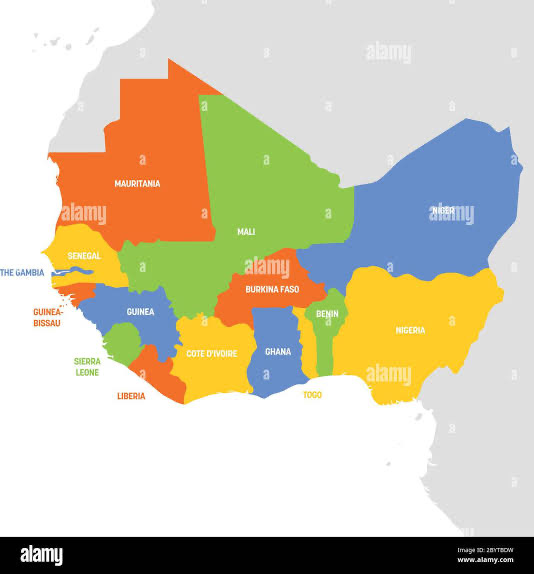
Lawal added that beyond Nigeria, countries such as Mali, Burkina Faso, and Togo were grappling with internal conflicts, cross-border crimes, and violent extremism.
He described the recent wave of unconstitutional government takeovers in Niger, Mali, Burkina Faso, and Guinea as a worrying democratic backslide that had deepened public disillusionment with governance.
He also cited election-related tensions in Côte d’Ivoire and widespread protests over economic hardship as further signs of regional instability, leading to loss of lives, displacement, and slowed development.
“These issues are rooted in poverty, underdevelopment, ethno-religious divisions, and climate-induced crises, all of which continue to amplify instability,” he said.
Lawal stressed that the dialogue’s theme reflected a shared commitment to locally driven, bottom-up strategies that centred real actors and lived experiences in peacebuilding efforts.
In his remarks, Dr Joseph Ochogwu, Director-General of the Institute for Peace and Conflict Resolution (IPCR), said overcoming the region’s challenges required championing local solutions, strengthening regional solidarity, and recalibrating global partnerships.
Ochogwu, represented by Dr Olalekan Babatunde, Head of Directorate at IPCR, said instability in one nation often became a contagion that weakened others.
“Our strength lies in unity. The legacy of ECOWAS, founded on the dreams of visionaries, reminds us that our destinies are intertwined.
“We must breathe new life into the principle of collective security, our most vital strategic imperative. The world is interconnected, and our collective stability is a global public good.” (NAN)
Edited by Abiemwense Moru