



















By Rukayat Moisemhe
Experts have stressed the need for significant investment in human capacity across the tax ecosystem to enable the new tax laws to deliver its meaningful impact in the coming year.
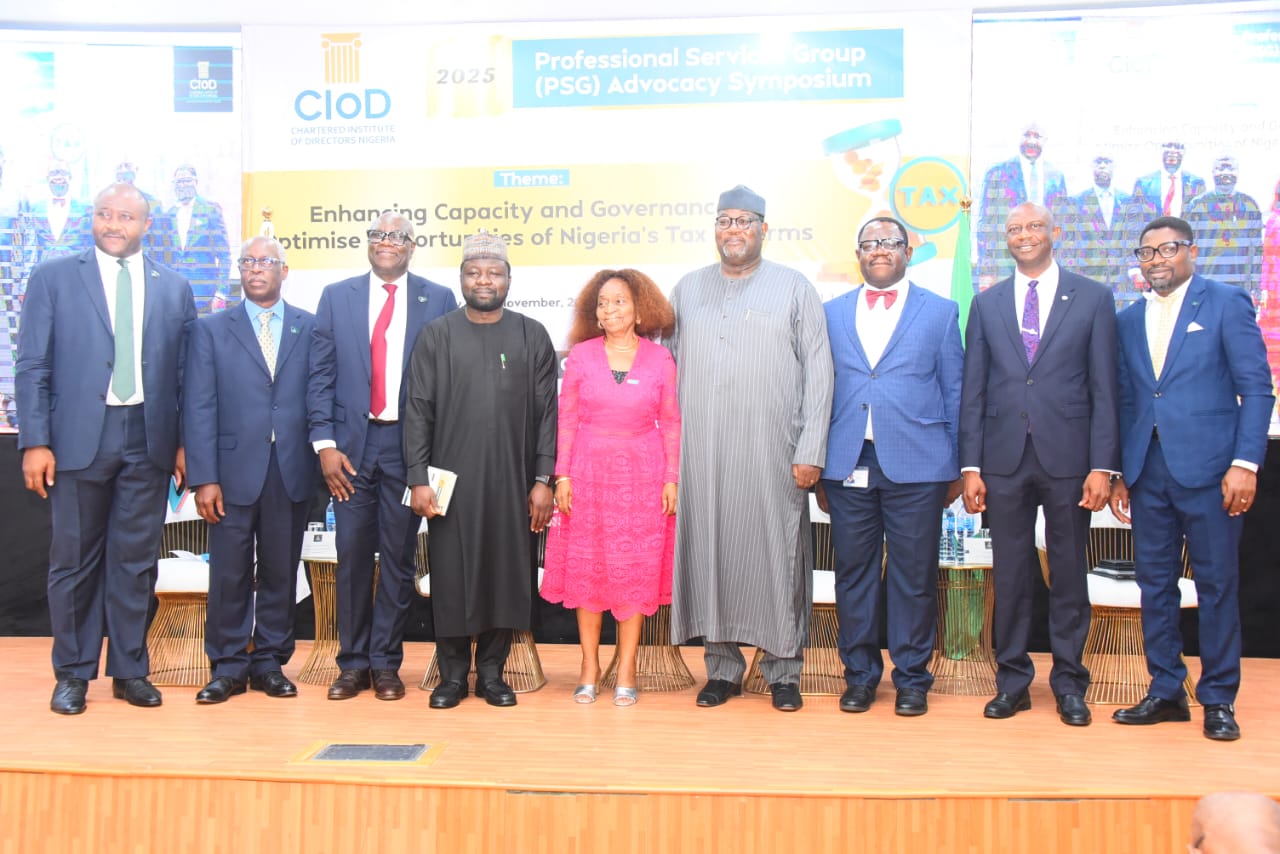
They gave the advice at the Chartered Institute of Directors (CIoD) Professional Services Group Advocacy Tax Symposium on Wednesday in Lagos.
The theme of the event is : “Enhancing Capacity and Governance to Optimise Opportunities of Nigeria’s Tax Reforms”.
According to these speakers, boosting human capacity and strengthening governance are essential for effective implementation of the new tax reforms next year.
Prof. Olateju Somorin, Dean, College of Arts, Social and Management Sciences, Caleb University, said many provisions of the new tax reforms were built on cumulative effort over many years.
Somorin stated that several recommendations from the previous reform cycle remained outstanding.
She, however, noted that the current reform cycle stood out because it combined both tax and fiscal policy measures, correcting years in which Nigeria focused on spending without securing adequate revenue sources.
She said the reforms promised multiple benefits, including harmonisation of taxes, higher tax-to-GDP ratio, increased investment, stronger economic growth and better protection for vulnerable households.
The don stressed, however, that the scale of changes required significant learning across the system.
According to her, nearly 200 new definitions/terms had been introduced, making it essential for taxpayers and professionals to stay informed about deductions, exemptions and reliefs such as rent relief and withholding tax exemptions.
“People must read these laws. If you are entitled to a deduction, you need to know about it so staying informed is no longer optional,” she said.
Somorin added that compliance was crucial to building a functional tax system capable of funding infrastructure and public services.
She noted that penalties for non-compliance have been increased, with sanctions extending to entities that award contracts to individuals or companies lacking proper tax documentation.
Tax authorities, she said, also have compliance responsibilities to uphold.
She described governance and capacity building as interdependent pillars of reform, noting that one cannot function effectively without the other.
Somorin urged Nigerians to see the coming 2026 tax transition as an opportunity for national renewal.
“From Jan. 1, 2026, these reforms offer us a chance to create an intelligent, transparent and inclusive tax system that reflects our collective aspirations,” she said.
She called on policymakers, administrators, private-sector actors, directors, professionals and students to join the drive to build a tax system that can endure for generations.
Mrs Ifueko Okauru, the Managing Partner, Compliance Professionals Plc, said the four newly gazetted tax laws required close study, noting it is important for taxpayers and practitioners to read them personally.
Okauru, also former Executive Chair, Federal Inland Revenue Service, commended the tax community for consistently seeking improvements and urged other sectors to emulate the culture of continual review.
She noted that while the new laws aimed to address multiple taxation, state governments must play their part by domesticating relevant provisions to support the reforms.
She recommended the return of annual finance acts to help correct omissions and address issues discovered during implementation.
Okauru said large-scale capacity building for revenue staff was underway, noting that two of the laws were already in force.
“From a legal standpoint, I advise you to read those two laws carefully. If you are currently breaching any provision, please be aware that it is now legally enforceable,” she said.
Otunba Adetunji Oyebanji, President, CIoD, said everyone’s collective commitment must be to ensure that the ongoing tax reforms move beyond legislative intent and achieve verifiable implementation and positive economic impact.
He noted that the need for a simplified and effective tax system had become increasingly urgent amid concerns about low revenue, a cumbersome tax structure and economic bottlenecks.
Oyetunji said the country’s tax system had been characterised by complexity, leakage, and an over-reliance on a narrow base for a long time.
He, however, stressed that to achieve that goals of the new tax reforms, issues of capacity bordering along technology infrastructure and data utilisation must be addressed.
“Tax is fundamentally a social contract and citizens and businesses must be confident that the taxes they pay to the government are managed transparently, applied judiciously, and translate directly into visible public goods—better infrastructure, healthcare, and education.
“On the pillar of governance, the promise of reform must be met with an ironclad commitment to transparency and accountability as taxpayer morale is directly proportional to public trust in the utilisation of their contributions,” he said.(NAN)(www.nannews.ng)
Edited by Chinyere Joel-Nwokeoma