















By Justina Auta, News Agency of Nigeria (NAN)
“I have been living with HIV for over 15 years and consistently taking my antiretroviral drugs, which has prevented my young children from contracting the virus.
“I wonder what my fate will be with the pause in foreign assistance. Will I be able to access free drugs continuously?” asks Mrs Hannatu Samuel, a widow and mother of three in Nyanya Community, FCT.
Her concerns reflect the fears of thousands of Nigerians who rely on donor-funded treatment.
This anxiety intensified after the United States Government paused foreign aid funds in January, an action that immediately affected the delivery of life-saving HIV medicines and prevention services in several countries.
Although the administration later issued a waiver allowing the continuation of essential medicines and medical services, the temporary halt still heightened uncertainty among people living with HIV and those supporting the national response.
Nigeria, like many developing nations, depends heavily on international funding for HIV testing, treatment and prevention.
This reliance is critical because, according to the Joint United Nations Programme on HIV/AIDS (UNAIDS), the country has the second-largest HIV epidemic globally, with about 1.9 to 2 million people currently living with the virus.
Consequently, any disruption in global financing poses serious risks to the stability of existing treatment programmes.
For years, Nigeria’s HIV interventions have been sustained largely through support from the United States President’s Emergency Plan for AIDS Relief (PEPFAR), the Global Fund to Fight AIDS, Tuberculosis and Malaria, and other development partners.
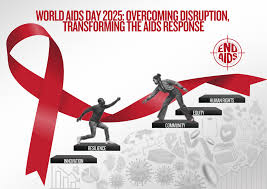
In addition to these concerns, the recent recommendation within the UN80 Initiative to “sunset” UNAIDS by 2026 as part of a broader restructuring of the United Nations system has further heightened apprehension.
Reacting to this, a coalition of civil society organisations issued a warning.
The group includes the Network of People Living with HIV and AIDS in Nigeria (NEPWHAN), the Nigeria Key Population Health and Rights Network (NKPHRN), the Civil Society Network for HIV and AIDS in Nigeria (CiSHAN) and others.
They said that dismantling UNAIDS could reverse hard-won gains.
According to them, AIDS is far from over, progress remains uneven in many countries, and any disruption now could jeopardise global efforts to end the epidemic by 2030.
As these concerns grow, many stakeholders are calling for stronger local ownership and sustainable domestic financing of Nigeria’s HIV response.
Mr Gabriel Undelikwo, Community Support Adviser for the Joint United Nations Programme on HIV/AIDS (UNAIDS) in Nigeria, emphasised the need for deeper integration, sustained treatment services, and greater community empowerment.
He noted that while donor support has been invaluable, Nigeria must begin to mobilise its own resources to ensure long-term resilience and continuity.
This position is shared by other experts in the field.
Dr Jay Osi-Samuels, Deputy Chief Executive Officer (CEO), Programmes at AIDS Prevention Initiative in Nigeria (APIN), stated during the 2025 World AIDS Day media briefing that the country must prepare for a future where global funding is uncertain.
Similarly, Dr Echey Ijezie, Nigeria Country Programme Director, AIDS Healthcare Foundation (AHF), pointed out that the global fight against HIV is far from won.
He noted that 1.3 million new infections are recorded globally every year, underscoring the scale of the challenge.
These realities have strengthened calls for Nigeria to take greater responsibility for its HIV response.
The President of NEPWHAN, Mr Abdulkadiri Ibrahim, noted that the temporary freeze in United States funding; even though later waived for HIV treatment exposed the vulnerability of programmes that rely heavily on foreign assistance.
“This is the time now to take ownership and ensure that our health system leaves no one behind, including people living with HIV.
“Even if funding assistance from these foreign donors declines, by the year 2030, we are not saying HIV is over, but the discussion around HIV may not be as huge as it used to be.
“For how long would we continue to be associated or dependent on a programme that is being dictated?”
He stressed that the country must now focus on sustaining all the gains recorded over the years and ensuring that no one is left behind.
Albeit the challenges, Nigeria has continued to demonstrate resilience.
According to Dr Temitope Ilori, Director-General, National Agency for the Control of AIDS (NACA), the country has made huge progress in spite of fluctuating donor support, economic pressures and the aftermath of the global pandemic.
She said the Federal Government allocated 200 million dollars in the 2025 Budget to sustain uninterrupted HIV prevention, testing and treatment services across the country.
“Domestic resource mobilisation efforts are deepening, with several states increasing budget allocations and strengthening HIV Trust Funds to enhance sustainability and national ownership.
“When global funding uncertainties threatened essential services, the Federal Government stepped in decisively, injecting $200million to ensure uninterrupted HIV prevention, testing and treatment services, as well as allied infections”.
Several states, she added, have also increased their budgetary allocations and strengthened HIV Trust Funds to ensure continuity.
Ilori explained that Nigeria is progressing steadily toward the global 95–95–95 targets for 2030.
She said the country’s current performance stands at 87–98–95, meaning 87 per cent of people living with HIV know their status; 98 per cent of those diagnosed are on treatment; and 95 per cent of those on treatment have achieved viral suppression.
She added that the country has recorded a 46 per cent decline in new infections over the past decade and enrolled more than 204,000 individuals from key populations on antiretroviral therapy in 2024 alone, with strong viral suppression rates.
Even so, she noted that challenges persist, including stigma, discrimination, continued dependence on external funding and limited access to services in remote communities.
She said the government will, therefore, intensify collaboration with states, the private sector and philanthropic organisations to operationalise HIV Trust Funds and strengthen political commitment.
According to her, Nigeria will accelerate the implementation of the Prevention of Mother-to-Child Transmission (PMTCT) Acceleration Plan to ensure that every pregnant woman is tested and linked to treatment.
The country will also advance local production of antiretrovirals to promote national self-reliance.
Overall, Nigeria’s response to the global funding disruption has highlighted both the vulnerabilities and opportunities within the system.
While the pause in foreign aid exposed the risks of overdependence on donors, it has also renewed focus on the need for homegrown solutions, stronger domestic investments and a resilient national health system.
The increasing momentum toward self-reliance suggests that Nigeria can transform this period of uncertainty into a foundation for long-term sustainability.
Stakeholders say that with continued commitment from the government, communities, and development partners, Nigeria can strengthen its HIV response.
They believe the country stands a strong chance of achieving the 2030 goal of ending AIDS as a public health threat. (NANFeatures)
****If used, please credit the writer and the News Agency of Nigeria.