
















By Abiodun Abegunde
A Civil Society Organisation (CSO), Civil Society Legislative Advocacy Centre (CISLAC), has called for a competitive green economy that creates jobs, unlocks innovation and strengthens energy security for Nigerians.
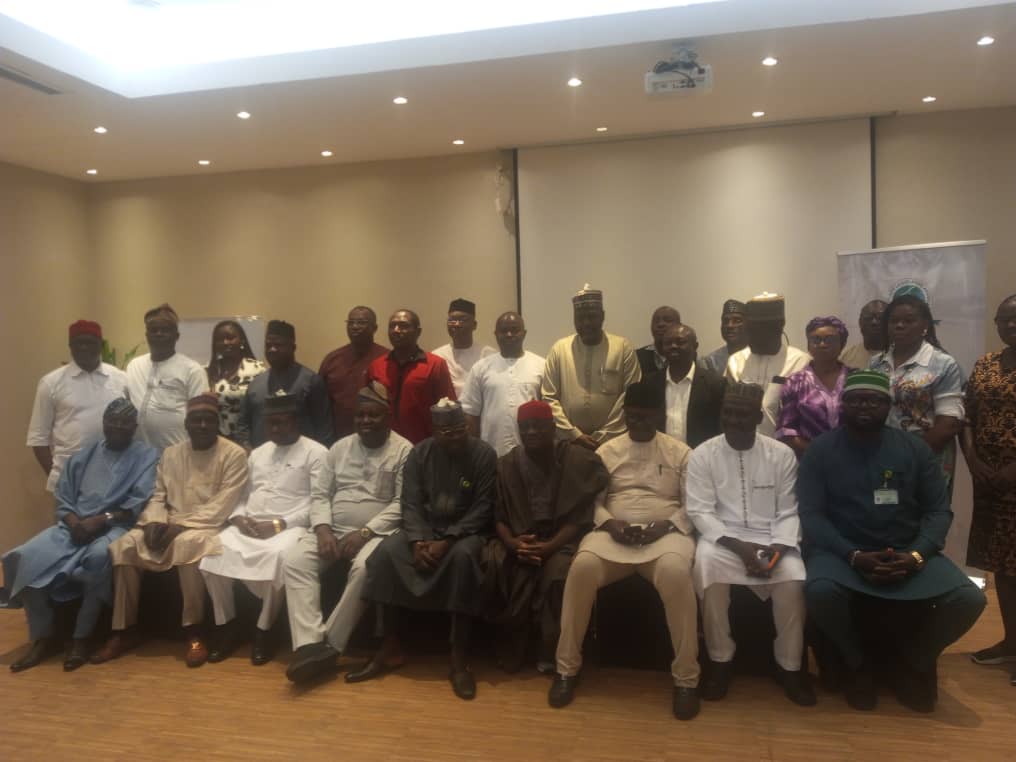
Executive Director of CISLAC, Auwal Rafsanjani, made the call during its Policy Dialogue with Legislators on Tax for Fossil Fuel Phase-Out in Lagos on Monday.
The News Agency of Nigeria (NAN) reports that the dialogue was aimed at convening the leadership of African Parliamentary Network on Illicit Financial Flows and Tax (APNIFFT).
Rafsanjani expressed CISLAC’s deep commitment to supporting the process.
He expressed the belief that the legislature must have the evidence, technical capacity and the institutional tools required to scrutinise existing fiscal incentives, evaluate their environmental and economic impact and introduce reforms, where necessary.
He said that the dialogue aimed to effectively situate Nigeria in the global drive towards transitioning to greener and sustainable energy sources.
“It is no longer news that Nigeria operates an oil and gas-dependent economy. Hence, Nigeria relies heavily on oil revenue to finance annual budgetary implementation and thereby financing its development.
“While we recognise the critical need to diversify and break the dependence on oil revenue, the challenges of global warming and climate change and the accompanied global efforts to combat the menace have made the need to break away from fossil fuel a major necessity.
“This is why today’s conversation could not be more timely, as Nigeria stands at a crossroads.
“On one side is our long-standing dependence on fossil fuels and on the other is the imperative to pursue a cleaner, more resilient and economically-inclusive energy future,” he said.
According to him, the Nigeria Energy Transition Plan (ETP) provides a national compass toward net-zero emissions by 2060.
He, however, said that its success would depend heavily on the country’s capacity to enact and enforce strategic fiscal reforms and targetted tax incentives that redirect investments towards transition fuels and green energy.
“Even as the largest economy in Sub-Saharan Africa, Nigeria continues to face significant energy challenges, including a growing demand for energy, heavy reliance on fossil fuels and limited penetration of renewable energy sources.
“With the share of renewable energy in Nigeria’s energy mix remaining critically low and accounting for less than 10 per cent of total energy consumption, Nigeria continues to be vulnerable to energy insecurity and environmental degradation,” he said.
Rafsanjani noted that the country had demonstrated a good understanding of the problems and had rolled out significant attempts to transition from fossil fuel to renewable energy sources.
This, he said, was part of Nigeria’s contributions to combatting climate change and tackling energy poverty in the country.
The executive director acknowledged the fact that the legislature had contributed its own quota by passing into law these critical frameworks and establishing key government agencies in implementing climate actions.
He, however, stated that effective implementation of key provisions of the frameworks remained a challenge and barriers to building the needed climate resilient infrastructure and low carbon development.
Rafsanjani expressed the belief that the legislature had bigger roles beyond the establishment of frameworks to over-sighting implementations, entrenching transparency and accountability as well as mobilising for efficient climate financing in the country.
“We know that fiscal policy—especially tax incentives—is one of the most powerful levers governments can use to shape economic behaviour.
“Around the world, countries have deployed incentives to accelerate renewable energy, stimulate green industries and encourage divestment from fossil fuels. Nigeria must not be left behind” he said.
Rafsanjani recalled that CISLAC had also conducted a study on assessing tax practices, such as incentives and holidays for fossil fuel industries in the country.
He said, however, that incentives could only be effective if they were well-designed, transparently administered and closely overseen.
This, he said, was where the National Assembly had a pivotal role to play through lawmaking, budget appropriation and oversight.
Rafsanjani said that the national assembly could ensure incentives support strategic divestments from high-emission assets, expand access to transition fuels like natural gas for households and industries, and encourage investments in solar, wind, hydrogen and other renewable technologies.
Also speaking, Speaker of House of Representatives, Rep. Abbas Tajudeen, commended CISLAC and African Parliamentary network on Illicit Financial Flows and Taxation (APNIFFT) for convening the dialogue at an important moment in the country’s national life.
Tajudeen, represented by the House Committee Chairman on Media and Public Affairs, Akin Rotimi, expressed the parliament’s commitment to collaborating to strengthen the energy transition’s fiscal foundations, deepening environmental accountability and safeguarding Nigeria’s long-term prosperity.
“To underscore the seriousness with which the House approaches this subject, we have ensured strong institutional representation at today’s dialogue.
“Committees responsible for fiscal policy, the environment, economic planning and national development are also represented.
“Our presence reflects a united, whole-of-parliament commitment to a just, inclusive and future-focused transition,” he said.
In his own contribution, House Committee Chairman on Foreign Affairs,Oluwole Oke, said that the world had witnessed lots of progress on the issue of climate change in the last two decades.
“In Nigeria, we see increased mining of coal in places like Okaba in Ankpa Local Government of Kogi State, which has come with significant environmental and infrastructural breakdown.
“Generally, there seems to be a resurgence in the world’s recourse to fossil fuel. We, therefore, must deliberate on these issues and come up with a strategy on where we want to stand as a country, as a people and as a parliament.
“We must not lose sight of the fact that we need to preserve the planet because it is the only habitation we have and the only place for generations unborn to live and thrive,” he said.
The lawmaker said that the event was coming at a very crucial time when everyone needed to be asking key questions and seeking how the planet could jointly be protected. (NAN)(www.nannews.ng)
Edited by ‘Wale Sadeeq