










By Mark Longyen
West African women have urged West African leaders to dismantle the structural barriers that inhibit their political leadership across the sub-region, calling for increased women participation in governance.
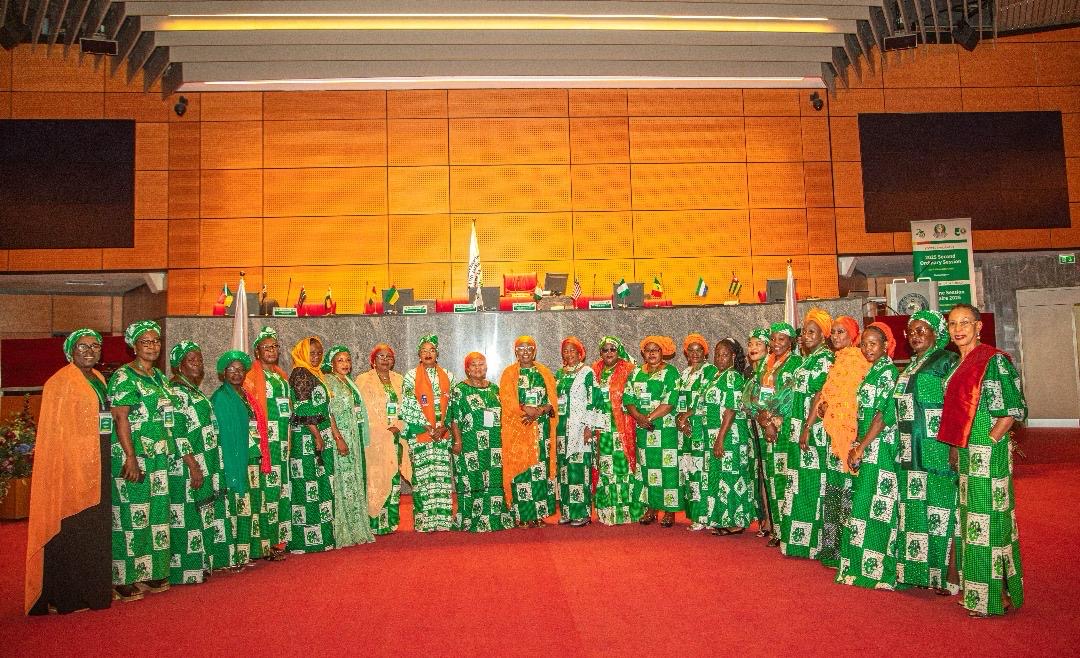
The women made the appeal at the ECOWAS Female Parliamentarians Association (ECOFEPA) Forum of the ongoing 2025 Extraordinary Session of the ECOWAS Parliament and the parliament’s 25th anniversary in Abuja.
The News Agency of Nigeria (NAN) reports that the women, who came from various groups across West Africa, brainstormed on the sub-theme: “Advancing Women’s Proportional Representation in Governance.”
According to them, women remain unfairly underrepresented in political participation in ECOWAS member states, in spite of their constituting more than half of the sub-region’s population.
ECOFEPA President, Veronica Sesay, in an address of welcome, described the forum as an important platform for championing and strengthening the advocacy for proportional political representation across West Africa.
She said that ECOFEPA currently recognised all female parliamentarians at state and national levels as the body’s full members, who are enhancing collaboration across member states.
Sesay noted that there were existing stark gender gaps across the sub-region, adding that most ECOWAS member countries had fallen below the 35 per cent benchmark for women’s political representation.
She disclosed that Senegal was leading the push for gender political mainstreaming with 42 per cent female lawmakers owing to its strong quota laws, while Nigeria currently stood at just 6 per cent.
Sesay, therefore, urged member states to reverse the trend by adopting a law mandating exclusive proportional political representation and reserved seats in parliament and other political positions.
Sen. Oluremi Tinubu, Nigeria’s First Lady, represented by Hajiya Laila Barau, wife of the Deputy Senate President, said that women were unfairly disproportionately represented in politics, although they constitute more than half of West Africa’s population.
She explained that the current administration in Nigeria had deliberately increased the appointment of women into strategic leadership positions to compensate for the decline in elected female representatives.
Tinubu lauded Nigeria’s National Assembly for its ongoing legislative efforts to introduce gender quotas, stressing that “the time for action is now, if the region must build an equitable society.”
Nigeria’s Minister of Women Affairs, Hajiya Imaan Sulaiman-Ibrahim, lauded ECOFEPA for its sustained advocacy for gender mainstreaming in politics across the ECOWAS sub-region.
She reaffirmed the ministry’s commitment to supporting programmes that would enhance women’s political participation, economic empowerment and leadership across the ECOWAS bloc.
Ekiti State House of Assembly Deputy Speaker and Chairperson, Conference of Nigerian Female Parliamentarians (CONFEPA), Bolaji Olagbaju, described gender balance as a “fundamental democratic right”, and not a favour.
The lawmaker lauded the ECOWAS leadership for its sustained conversations on inclusive governance across the member states of the sub-regional bloc.
There was also a Panel Session, which comprised prominent female parliamentarians like former Liberian First Lady Jewel Taylor, and Nigeria’s Sen. Biodun Olujinmi, among others.
The session, which examined: “Strengthening Governance Towards the Realisation of ECOWAS Vision 2050 and the Impact of Gender Parity Laws and Allocation of Reserved Seats, was concluded by an interactive discussion.
The female parliamentarians, during their various contributions, reaffirmed their resolute commitment not to rest on their oars, but to keep on pushing for stronger political inclusion for women across the sub-region.
NAN reports that the two-week Extraordinary Session, which started on Monday, coinciding with the Parliament’s 25th Anniversary, dwells on myriad issues, including the 2026 Community Budget, legislative reforms.
Others issues include the military coup in Guinea-Bissau, various country reports, strategic engagements of ECOWAS member states with international partners, gender parity and women mainstreaming in politics. (NAN)
Edited by Abiemwense Moru