









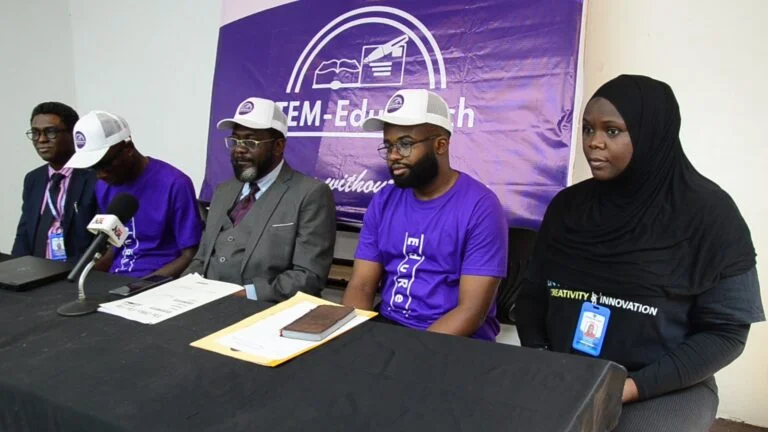










Its Chief Executive Officer, Alhaji Mamu, at a news briefing and the unveiling of the app said that the initiative aimed to ensure every child, regardless of circumstances, had access to quality education.
He added that the programme also sought to provide every child with the opportunity to thrive and reach their full potential.
According to him, the EduReach online app is designed to bridge the education gap among pupils and ensure they are at par with students at similar levels globally.
Mamu explained that the app delivered both Nigerian and Cambridge curricula for primary and secondary students, covering STEM subjects, including robotics, coding, and AI.
He added that the pre-recorded lessons were taught by experienced educators and complemented by lesson notes, quizzes, assignments, live discussion forums, and personalised learning paths to support individual students.
“We have written to the respective state governments to formally extend this offer as part of our contribution to the students’ recovery and reintegration into learning.
“We urge all stakeholders to join hands in confronting the challenges that have long plagued our education sector.
“No child should be denied the right to safe, equitable, and quality education,” he emphasised.
He noted that insecurity, harmful cultural practices such as early marriage and teenage pregnancy, combined with structural challenges like poverty, continued to affect the nation’s educational system.
He cited that about 350,000 teachers served 46 million students at the basic and senior secondary levels, resulting in an alarming student-teacher ratio of roughly 130:1, far above the global benchmark of 20:1.
“These tragedies further complicate an already fragile education system plagued by outdated curricula, inadequate teacher supply, poor infrastructure, and insufficient instructional materials,” he added.
Mr Fidelis Agoundjekpo, an IT expert and Chief Software Engineer of the organisation, highlighted that students could access classes and videos, and engage with educators, even with limited data.
“The students can participate in quizzes, submit assignments, and interact just as they would in a traditional classroom, now in an online format,” he said.
He added, “For instance, with about 200MB, a student can watch the Year One video lessons, costing around N100 or slightly more, while upper-class courses require a maximum of one gigabyte, costing around N500 or more to view an entire course.
“That is how small our bandwidth requirement is, which makes our software very unique.”
He, therefore, urged parents, educators, the government, and other stakeholders to ensure that students had access to the online app, enabling them to improve their education, particularly in STEM-related subjects. (NAN)(www.nannews.ng)