


















By Angela Atabo
Amb. Amarachukwu Orakwe, Executive Director/CEO of the African Academic Achievers Awards (A4), has called for the integration of African-orientated education into national education policy frameworks in Africa.
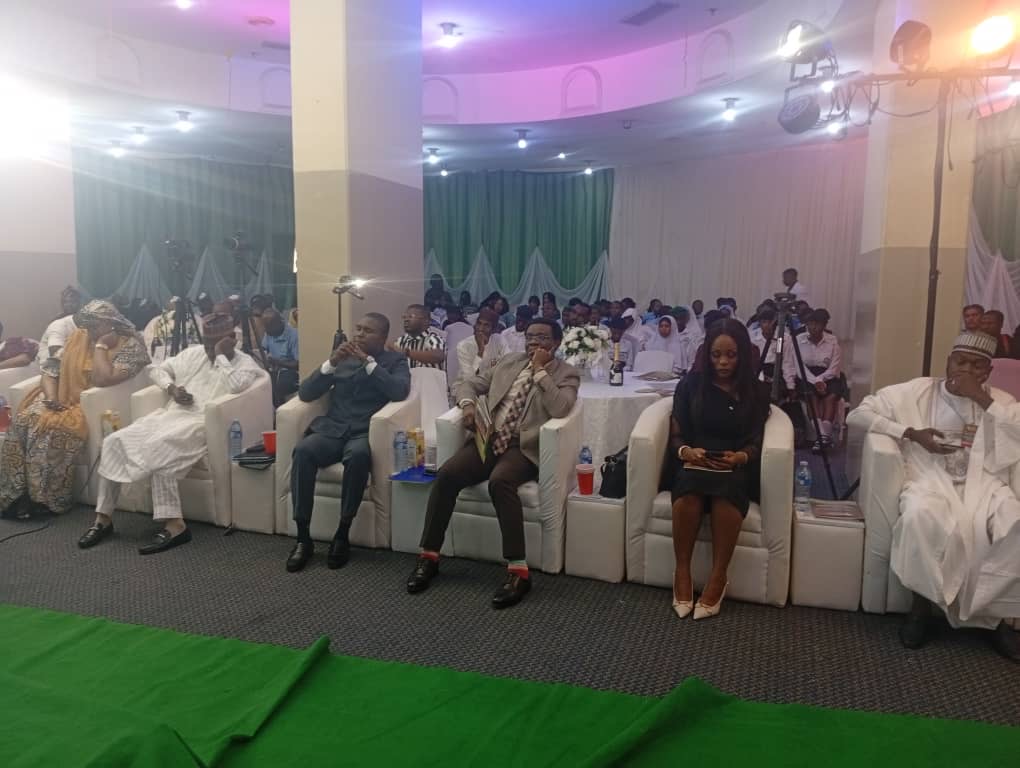
Orakwe made the call in Abuja on Tuesday at the African Academic Conference and second edition, African Academic Achievers Awards (A4) 2025.
The theme of the conference was “Imperativeness of Quality, Inclusive and African-orientated education in a Modern African Society”
The A4 executive director said the theme is not just a topic for discussion, it is an urgent call for reawakening.
According to her, across Africa, over 98 million children and young people remain out of school even in the 21st century.
“If you travel into the rural corners of our nations, from West Africa to East Africa, from the Sahel to Southern Africa, you will still find entire communities still very much uneducated where education is a distant dream.
“Millions of African children still wake up with no school to attend. Millions still learn in languages they do not speak in their hearts and millions still grow without the confidence of who they truly are.
“How can a child excel in physics when the very language of instruction feels foreign to the language of their origin? Yes, the language is placed as more superior and mandatory against their native tongue.
“Imagine the transformation and the speedy learning of a child if he experienced learning in his mother tongue. When an Hausa child learns science in Hausa, when an Igbo child learns chemistry in Igbo, when a Yoruba child embraces mathematics in Yoruba, same applies to other African nations.
According to her, culture is not an obstacle, culture is a bridge, culture is a tool for identity, retention, innovation, and transformation.
“This is why A4 exists, not merely to recognise achievers, but to ignite a movement, a movement that insists on African-led development and an education system that reflects the African mind, African identity, and African possibility.
“This is because if we do not educate our generation now, we will risk losing Africa forever. And losing Africa is not a mere loss of land, it is a loss of identity, a loss of memory, and a loss of heritage, and loss of confidence.
“If our elders leave this world today without passing down our philosophies, our languages, our histories, and our values, the next generation will inherit an empty shell, an Africa without Africans.
“We must activate an African-led education system. This is why policies of intervention is crucial.
“We need government, ministries of education, the African Union, UNESCO, regional bodies, and development institutions to rise to this responsibility.
“We must begin to integrate African-orientated education into national policy frameworks so that our curriculum reflects not just global knowledge, but African reality and African heritage.”
Also speaking, Amb. Tunji Asaolu, Professor of Politics and International Studies, said African governments must embrace an inclusive, quality, and Africa-orientated educational model that honours their rich cultural heritage, nurtures critical thinking, and inspires innovation.
Asaolu is also the Chairman, Board of Directors, African Academic Achievers Award, and Secretary General, United World Congress of Diplomats.
According to him, it is the time to dismantle the inferiority mindset that has held us back for too long and to revive the cultural confidence that sparks to hearts of who we are as Africans.
“Only then can we equip our children to think boldly, lead with integrity, and contribute meaningfully to our society.
“Let all be clear, our work today transcends awards and accolades. It is about englanding a continental awakening, a movement seeking to redefine our narrative and reclaim our place on the world stage.
“If we delay this further endeavour, we risk losing the essence and soul of Africa.
“However, if we act now with determination and vision, we will create a legacy for future generations to uphold.
“As Africans stand on this brink of a transformation era, we must confront the historical legacy that has shaped our educational landscape,” the don said.
According to him, the continental education strategy for Africa serves as our guiding framework for creating new African citizens who would champion sustainable development as part of African Unions Agenda 2063. It also aligns with the strategic objective.
“We have tasks with revitalising the system, professionals enhancing infrastructure, utilising technology to improve access, and promoting peace education across all levels.
“Collaboration with governments, a stable society, and the private sector is very essential to establish credible partnerships for implementing this strategy effectively.
“As we embark on this noble journey towards educational reform and excellence, let us also remain committed to nurturing a generation equipped to think critically, innovate boldly, and lead with integrity.
In his remarks, Dr Henry Emejuo, who was the Chairman of the Occasion, while declaring the conference open, described education as a bedrock of any development.
Emejuo, who is also the Director General, Pan-African Alliance of Small and Medium Industries, said education remains one of the most powerful levers that will unlock human potentials, reduce inequality, and build societies that are innovative, peaceful, prosperous.
“When education is inclusive, every child, regardless of gender, background, ability, circumstances, has a fair chance to learn, to dream, and to contribute to the Africa we want.” (NAN)
Edited by Deji Abdulwahab