















By Talatu Maiwada
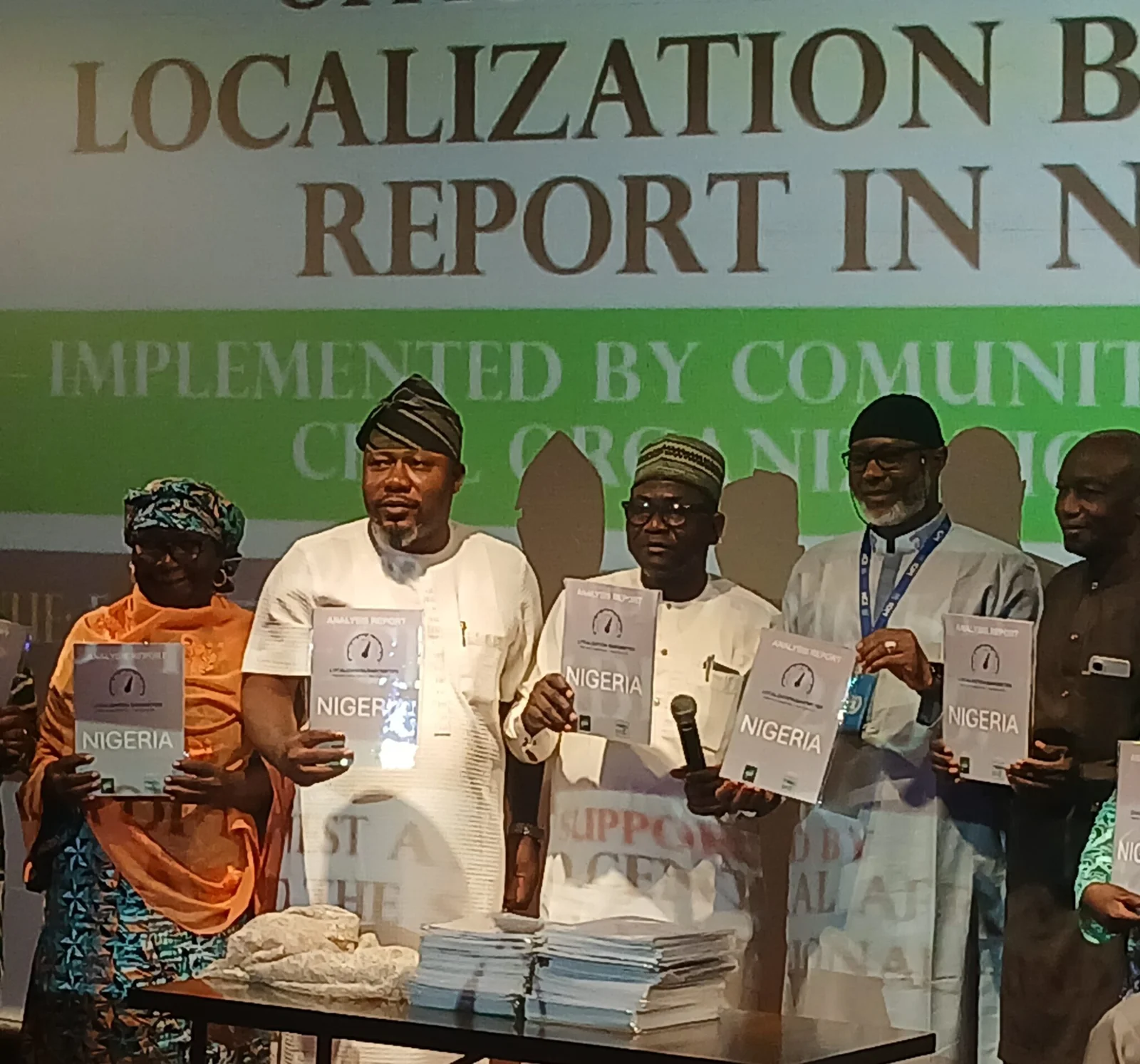
Civil Society Organisations (CSOs) and stakeholders in Nigeria’s humanitarian and development sector have unveiled a localised barometer aimed at strengthening community-led interventions in Nigeria.
The report, unveiled in Yola, is also aimed at assessing progress and gaps in locally-led humanitarian action.
It is implemented by the Community of Adamawa Civil Organisations (CACO).
Chairman of the Network of Adamawa Non-Governmental Organisations (NANGO), Mr Peter Egwudah, described the report as a major milestone in advancing humanitarian effectiveness in Nigeria.
“The initiative aligns with commitments under the Grand Bargain to ensure national and local actors play leading roles in humanitarian response,” he said.
He noted that limited understanding of localisation efforts in Nigeria had persisted, adding that the barometer provided insight into implementation levels, challenges and opportunities.
According to him, the report dispels perceptions that local organisations lack capacity, expertise and visibility.
The chairman stressed that local CSOs could deliver effectively, when given adequate support.
“Gone are the days when people say, local NGOs do not have capacity, expertise, a voice or visibility.
“Today, we have proven that we can deliver on our mandates when given the right opportunities,” Egwudah said.
He, however, identified funding as a critical issue, saying, many local actors lacked direct access to funds, resulting in reduced resources due to multiple intermediaries.
“I recall that the Grand Bargain target of allocating 25 per cent of humanitarian funding directly to national actors had yet to be achieved.
“Access to direct funding is one of the gaps that we are trying to fill with this document,” he said.
The NANGO chairman also highlighted the need for equitable partnerships that promoted skills and transfered knowledge between local and international organisations.
He stressed that effective coordination was essential to avoid duplication and wastage, adding that government leadership was key to ensuring ownership.
He reaffirmed that localisation went beyond policy commitments, rather it remained central to building a more accountable and sustainable humanitarian system in Nigeria.
Also speaking, Managing Director, Nuru Nigeria, Mrs Amy Gaman, said that the barometer would help local actors assess capacity, reflect on impact and ensure sustainability of interventions.
Gaman noted that the 25 per cent funding commitment to local actors remained unmet.
“Increased direct funding will enable local organisations to scale up community-driven solutions, particularly in areas affected by conflict,” she said.
In his remarks, Commissioner for Rehabilitation, Reconstruction, Reintegration and Humanitarian Services, Mr Bello Diram, commended the initiative as a significant achievement.
Represented by the Permanent Secretary, Mr Amos Paribu, Diram said the Adamawa government was committed to supporting national NGOs to maximise their potential.
“The ministry will continue to collaborate with CSOs on coordination, monitoring, reporting, resource mobilisation and capacity development to ensure efficient service delivery.
“I am confident that sustained collaboration would foster a Nigerian-led humanitarian system responsive to community needs,” he added. (NAN)(www.nannews.ng)
Edited by Esenvosa Izah/Ekemini Ladejobi