
















By Sarafina Christopher, News Agency of Nigeria (NAN)
Nigeria’s diplomatic engagement with the Association of Southeast Asian Nations (ASEAN) reached new heights in 2025, marking a shift from conventional political exchanges to a more expansive and coordinated partnership.
This evolving collaboration now spans trade, education, culture, development cooperation, and tourism diplomacy.
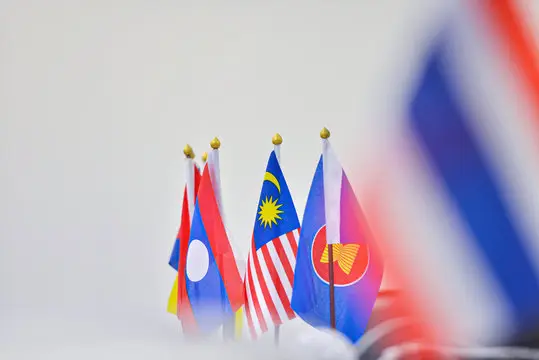
Throughout the year, engagements were predominantly driven by the six ASEAN countries with diplomatic missions in Abuja and Lagos – Malaysia, Indonesia, the Philippines, Thailand, Singapore, and Vietnam.
These nations operated within a collective framework, echoing ASEAN’s regional integration model, to foster deeper ties with Nigeria, Africa’s largest economy.
ASEAN – comprising 10 Southeast Asian countries and a combined population of over 600 million – has long been regarded as one of the world’s most dynamic regions in terms of both economic growth and tourism. Nigeria, in turn, remains a key strategic partner for ASEAN, especially in West Africa.
Cultural diplomacy became a cornerstone of Nigeria’s ASEAN engagement in 2025, notably through the “Essence of ASEAN” festival held in Abuja.
Organised by the High Commission of Malaysia in collaboration with the Embassies of the Philippines, Indonesia, Thailand, and Vietnam, the event showcased ASEAN’s rich cultural diversity through music, dance, fashion, and cuisine.
It also served as a platform for diplomatic dialogue and public engagement.
Mr Aiyub Omar, Malaysia’s High Commissioner to Nigeria, and chair of the ASEAN Committee in Abuja, remarked that the festival aimed to strengthen mutual understanding and collaboration.
He highlighted that 2025 marked 60 years of diplomatic relations between Malaysia and Nigeria, underscoring the long-standing ties between the two nations.
People-to-people exchanges remained strong in 2025, with over 300 Nigerians applying for travel to Malaysia each month.
Additionally, Malaysia hosted more than 3,000 Nigerian students in its public and private universities.
Trade relations between Nigeria and ASEAN countries flourished in 2025.
According to Mr Bui Quoc Hung, Vietnam’s Ambassador to Nigeria, bilateral trade between Nigeria and Vietnam surged to around one billion dollars in 2024, a substantial increase from previous years when the trade value ranged between 500 million dollars and 600 million dollars.
This surge was driven by Vietnamese exports of electronics, garments, and textiles, alongside Nigeria’s supply of agricultural raw materials such as cashew nuts.
Malaysia’s trade with Nigeria also remained robust. Palm oil, which accounts for around 50 per cent of Malaysia’s exports to Nigeria, was valued at approximately 600 million dollars in 2024, according to Malaysian officials.
These growing trade figures highlight the strengthening economic interdependence between Nigeria and ASEAN.
Development cooperation was a key area of engagement in 2025, particularly with Thailand.
Ms Sasirit Tangulrat, Director-General of Thailand’s Department of South Asian, Middle East, and African Affairs, led a high-level delegation to Nigeria that included officials from the Thailand International Cooperation Agency (TICA), the Ministry of Defence, and representatives from the Thai private sector.
Accompanied by Thailand’s Ambassador to Nigeria, Mr Thirapath Mongkolnavin, the delegation held talks with Nigeria’s Ministry of Foreign Affairs, the Nigerian Technical Aid Corps, and the Economic Community of West African States (ECOWAS).
The discussions focused on expanding cooperation in agriculture, public health, trade, investment, and cultural exchange, with both sides agreeing to convene the first Thailand-Nigeria Political Consultations in 2026.
Additionally, engagements with ECOWAS explored areas like development cooperation, food security, and agricultural technology, as well as proposals for a Memorandum of Understanding and ECOWAS participation in the Second Thailand-Africa Development Forum scheduled for September 2025.
Tourism emerged as a growing pillar of Nigeria’s engagement with ASEAN in 2025, in line with the country’s broader efforts to diversify its economy and strengthen global connectivity.
The Federation of Tourism Associations of Nigeria (FTAN) initiated discussions with ASEAN diplomatic missions in Nigeria to explore formal tourism partnerships, beginning with a courtesy visit to the Philippines Ambassador to Nigeria, Mr Mersole Mellejor, who also chaired the ASEAN Group of Missions in Abuja.
ASEAN is renowned for its strong tourism sector, having attracted over 130 million international visitors annually before the COVID-19 pandemic, with Thailand alone receiving close to 40 million tourists in peak years.
Malaysia, Indonesia, and Vietnam have also been top tourism destinations globally.
In contrast, Nigeria’s international tourist arrivals remain modest despite its rich cultural diversity and ecological assets.
However, collaboration with ASEAN could provide Nigeria with opportunities in destination marketing, skills development, hospitality investment, and job creation.
Education and people-to-people exchanges continued to underpin Nigeria’s engagement with ASEAN in 2025, with thousands of Nigerians studying and working across the region.
ASEAN member states have long offered scholarship programmes and academic exchanges that help maintain strong long-term ties beyond official diplomacy.
Singapore also emerged as a critical player in Nigeria’s economic engagement with ASEAN in 2025.
A landmark development was the entry into force of the Investment Promotion and Protection Agreement (IPPA), also known as a Bilateral Investment Treaty (BIT), between Nigeria and Singapore on 22 August 2025.
The agreement provides a legal framework to encourage and protect investments between the two countries, helping to attract foreign direct investment (FDI) to Nigeria and offer protections for Singaporean investors.
The BIT is expected to catalyse economic cooperation, boosting investor confidence and expanding opportunities in sectors such as infrastructure, technology, and sustainable development.
This aligns with Nigeria’s broader foreign policy strategy, under President Bola Ahmed Tinubu, to attract FDI and strengthen global economic partnerships.
Looking forward, Malaysia is expected to deepen its partnership with Nigeria through enhanced educational collaborations, a growing halal industry, and expanded trade in agro-based commodities.
Indonesia, meanwhile, is focused on strengthening cultural diplomacy, education, and private-sector collaborations, with a growing emphasis on renewable energy, agribusiness, and healthcare.
The Philippines aims to further expand cooperation in tourism diplomacy, education, and creative industries, while Thailand plans to deepen institutional ties, particularly in agriculture, public health, and regional cooperation through ECOWAS.
Vietnam’s focus will remain on maintaining high trade volumes and exploring value-addition opportunities in agriculture, aligning with Nigeria’s food security and export diversification goals.
As both Nigeria and ASEAN continue to explore their complementary roles in regional integration and national development, analysts believe that the relationship holds strong potential to evolve into a more structured, outcome-driven partnership in the years ahead. (NANFeatures)(www.nannews.ng)=====If used please credit the writer and the News Agency of Nigeria (NAN)=======