













By Victor Okoye, News Agency of Nigeria (NAN)
The 2025 Africa Cup of Nations (AFCON), hosted by Morocco, combined high-scoring football, strong organisation and intense controversy, as the continent’s flagship tournament unfolded across four weeks.
The competition, which opened on Dec. 21 in Rabat, featured modern infrastructure, large crowds and strong fan engagement, reinforcing Morocco’s credentials as a major football host.
The opening ceremony in Rabat set the tone. Against the backdrop of Morocco’s historic architecture, performers blended tradition with modernity, celebrating Africa’s diversity while underscoring the host nation’s growing stature in world football.
Matches were played across nine venues in six cities of Rabat, Casablanca, Marrakech and Tangier, Agadir and Fès with the tournament producing a mix of shocks, standout performances and recurring debates over officiating.
Due to FIFA expanding its Club World Cup competition to 32 teams and having it scheduled for June and July 2025, this edition of the tournament was played between Dec. 21 2025 and Jan. 18 2026.
It was the first time that the tournament was played over the Christmas and New Year period. The situation was further complicated by the addition of two extra match days scheduled for the last two weeks of January in the expanded 2025/2026 UEFA Champions League season.
This edition of the tournament was scheduled to be the second after 2019 to take place during the northern hemisphere’s summer (June–July), in order to reduce scheduling conflicts with European club teams and competitions; the previous 2023 edition was moved to January and February 2024 owing to the adverse summer weather conditions in Ivory Coast.
Guinea was originally set as hosts for this edition of the tournament, but had its hosting rights stripped after affirming its inadequacy of hosting preparations. After a second bidding process, Morocco was named as the new hosts on Sept. 27, 2023.
A total of 122 goals were scored during the competition, surpassing the 119 recorded at the 2023 edition in Côte d’Ivoire and setting a new AFCON record.
The group stage produced several upsets, with traditional heavyweights facing stiff resistance from emerging teams.
Mozambique, Benin and Sudan attracted attention with disciplined displays, while DR Congo impressed with tactical organisation and composure in key matches.
Nigeria emerged as the tournament’s most prolific attacking side, scoring 14 goals, the highest by any team.
The Super Eagles’ attacking strength was driven by Victor Osimhen and Ademola Lookman, as the team combined pace, width and pressing to unsettle opponents.
However, Nigeria’s campaign was briefly overshadowed by off-field issues, including protests over unpaid allowances and internal tensions within the squad.
The situation was resolved following the intervention of the Federal Government, allowing the team to refocus on the tournament.
Nigeria’s title hopes ended in the semi-finals after a penalty shoot-out loss to hosts Morocco, a match that later drew criticism over officiating decisions.
In spite of the setback, the Super Eagles secured the bronze medal after a 0–0 draw with Egypt in the third-place play-off in Casablanca, winning 4–2 on penalties.
The victory extended Nigeria’s perfect record in AFCON third-place matches to eight wins from eight, a feat unmatched in the tournament’s history, and lifted their overall bronze-medal tally to nine.
Goalkeeper Stanley Nwabali played a key role in the shoot-out victory, which extended Nigeria’s record in AFCON third-place matches to eight wins from eight and increased their overall bronze tally to nine.
Egypt also reached the semi-finals, eliminating defending champions Côte d’Ivoire in the quarter-finals before losing 1–0 to eventual champions Senegal.
The Pharaohs, led by Mohamed Salah, again demonstrated resilience and experience, although they missed out on silverware after losing the third-place match to Nigeria.
Host nation Morocco progressed steadily through the knockout stages, buoyed by home support and improved defensive solidity.
Brahim Díaz finished as the tournament’s top scorer with five goals to claim the Golden Boot, while goalkeeper Yassine Bounou conceded just two goals en route to the final and won the Golden Glove.
However, as Morocco advanced, criticism of refereeing standards intensified.
Players, officials and fans raised concerns over inconsistent decisions and alleged bias towards the host nation, with several matches drawing scrutiny.
Nigeria’s semi-final loss to Morocco prompted complaints from Nigerian supporters over the performance of Ghanaian referee Daniel Laryea.
Earlier, Algeria protested decisions following their group-stage loss to Nigeria, while Cameroon also criticised officiating after their Round of 16 exit in the hands of Morocco.
Many observers contrasted the officiating with the 2023 edition in Côte d’Ivoire, arguing that standards had declined.
CAF President Patrice Motsepe acknowledged the concerns, saying the observations of fans and stakeholders would be reviewed to improve consistency, accountability and integrity in officiating.
He said CAF had instructed referees and VAR officials ahead of the tournament to officiate with independence and impartiality.
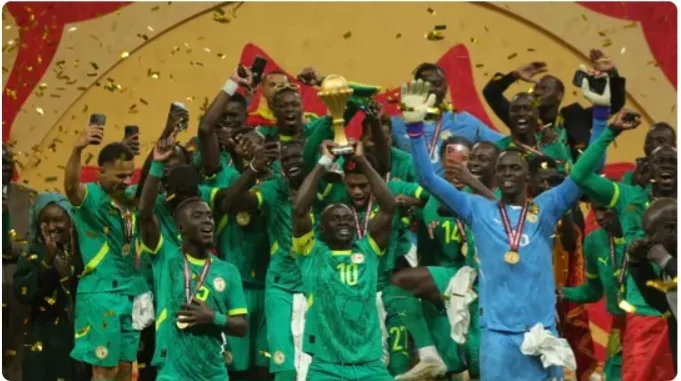
The final, played on Jan. 18 in Rabat between Morocco and Senegal, was marked by controversy.
Referee Jean Jacques Ndala awarded Morocco a penalty in the 98th minute following a VAR review, shortly after Senegal had a goal disallowed.
Senegal’s players briefly walked off the pitch in protest, delaying the match, before play resumed.
The penalty was saved by goalkeeper Edouard Mendy, and Senegal went on to score in extra time through Pape Gueye to secure a 1–0 victory and a second AFCON title in five years.
Following the match, Morocco coach Walid Regragui criticised Senegal’s protest, while FIFA President Gianni Infantino condemned the scenes and called for disciplinary review.
AFCON 2025 will be remembered for its attacking football, competitive balance and strong hosting, alongside persistent concerns over officiating.
Senegal emerged champions through resilience, as Morocco confirmed their growing influence in African football, while Nigeria reinforced their attacking pedigree, and Egypt underlined their enduring relevance.
However, questions surrounding refereeing standards remain a key issue for CAF as the tournament’s legacy continues to be assessed. (NANFeatures)
***If used, please credit the writer and the News Agency of Nigeria (NAN)