

















By Stellamaris Ashinze
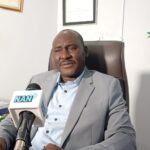
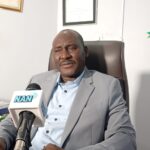
The National Centre for Technology Management (NACETEM) emphasised the need for systems thinking and citizen participation to enhance effective policymaking and implementation in Nigeria.
The NACETEM Director-General, Dr Olushola Odusanya, made this assertion at an Executive Training in Systems Thinking and Systems Dynamics for Decision makers and Policymakers held in Lagos on Monday.
The training was organised by NACETEM in partnership with the House of Representatives lawmakers from Kosofe Constituency.
It had the theme: “Systems Thinking for Transformational Legislative Leadership.”
The News Agency of Nigeria (NAN) reports that Systems Thinking is a holistic approach to analysis that focuses on the way different parts of a system interact and how they influence one another within a whole.
The World Economic Forum says this way of thinking can spur innovation, especially during times of uncertainty.
Odusanya said that systems thinking enabled leaders to understand how issues such as education, healthcare, waste management and security are interconnected for societal development.
He said that, unlike linear thinking, systems thinking encouraged decision makers to analyse cause and effect relationships, feedback loops and dynamic interactions within governance structures.
He said that systems thinking was an approach that would help leaders make informed decisions that positively influenced public perception and development outcomes.
According to him, this approach is already being implemented at the grassroots through legislators in Kosofe Local Government Area of Lagos State, and the aim is to serve as a model for broader national development.
“Bringing together lawmakers, community members, academics, civil servants and private sector players will generate solutions superior to the thinking that created existing problems.
“The programme is a foundation for nation building, expressing optimism that its outcomes can be scaled across Lagos State and eventually serve as a benchmark for West Africa,’’ the NACETEM boss said.
According to him, continuous dialogue and inclusive participation are essential to sustain the gains of the systems thinking initiative.
A Guest Speaker from the University of Florence, Italy, Prof. Stefano Armenia, said policies that failed to reflect societal realities often suffer rejection, regardless of enforcement mechanisms.
Armenia said that wrong or poorly designed policies tended to be resisted by citizens once their inefficiencies become evident, stressing that governments must understand the real-life impact of policy decisions.
He emphasised that collaboration with citizens was critical, as policymakers at the top often lacked insight into grassroots realities without deliberate engagement.
Armenia stressed that involving citizens in policy formulation would help identify potential gaps early and guide governments toward more workable solutions.
He expressed hope that the programme would stimulate greater interest in systems thinking and its adoption in governance.
Also, in his presentation, the President, Systems Dynamics Nigeria, Dr Victor Sobanke, said that systems thinking had been identified as a vital approach for public and civil servants in addressing complex governance challenges that span multiple sectors and institutions.
Sobanke noted that many challenges bedeviling the government are difficult to define, involve competing interests and require collective action across agencies.
He noted further that no single department could effectively resolve such issues in isolation.
His presentation highlighted Causal Loop Diagrams (CLDs) as a key tool for analysing complex systems and understanding feedback relationships that drive policy outcomes.
According to him, CLDs are described as useful for capturing underlying forces, clarifying mental models and communicating how actions in one area can affect others over time.
NAN reports that the highlight of the one-day training was the presentation of appreciation awards to a lawmaker, Kafilat Ogbara, representing Kosofe Constituency at the Federal House of Representatives.
An award was also presented to the Permanent Secretary, Lagos State Ministry of Innovation, Science and Technology.
Edited by Christiana Fadare