



















By Mercy Omoike
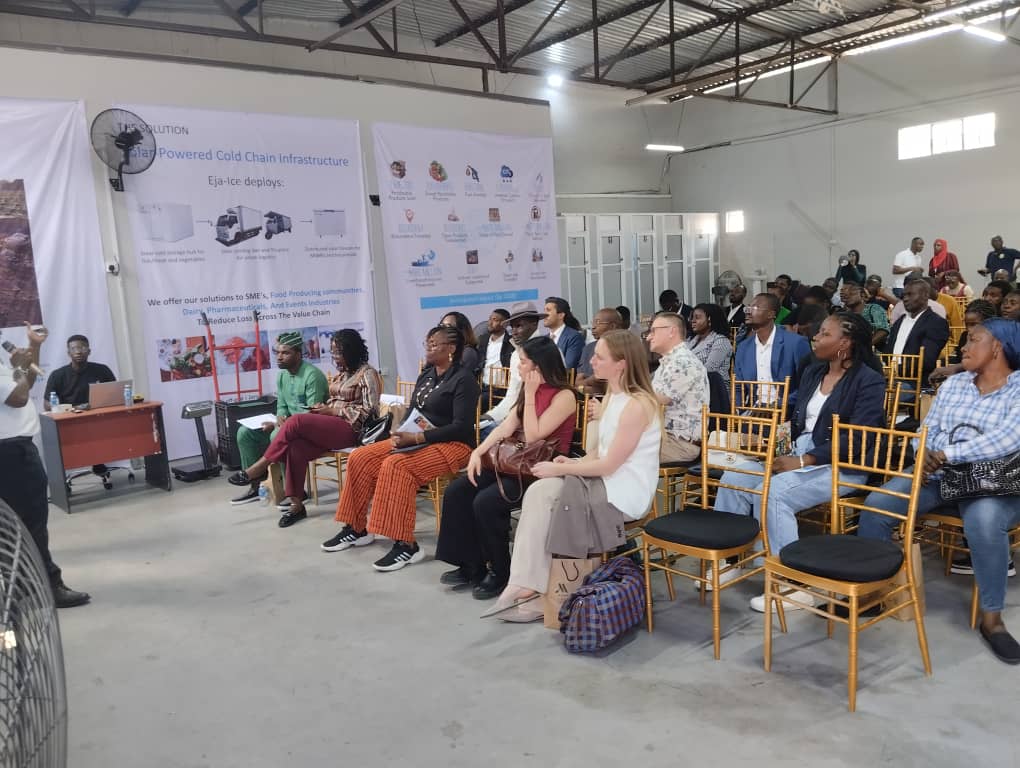
The World Bank Group, together with the United Kingdom and other Cool Coalition stakeholders, has organised Nigeria Cooling Day to highlight challenges and solutions in the country’s cold chain sector.
The News Agency of Nigeria (NAN) reports that the conference held at Marriott Hotel Ikeja on Monday.
NAN reports that the demand is rising as the climate becomes hotter, but affordability and power supply issues limit access to air-conditioning and other cooling solutions.
Nigeria is a signatory to the Global Cooling Pledge, joining over 70 countries and 200 organisations that have pledged, among others, to reduce cooling-related GHG emissions by 68 per cent from 2022 to 2050, increase AC efficiency by 50 per cent. and bring cooling to underserved populations.
The International Finance Corporation, IFC,(a member of the World Bank Group), in the interactive workshop, highlighted how stakeholders can access resources by IFC and our partners.
At the sector-specific breakout sessions, participants were enlightened about some of the innovative solutions for cooling piloted around the world.
In her opening address, Ms Dahlia Khalifa, IFC Director West and Central Africa, reiterated the need to address cooling challenges and solutions in Nigeria.
She noted that cooling was indeed fundamental to climate adaptation, economic productivity, public health and overall economic development.
“With Nigeria’s current cooling challenge, more than 100 million Nigerians lack adequate access to cooling.
“This isn’t just about comfort of enjoying well air conditioned rooms but it is also about making sure that we are able to preserve food, have fresh food and vaccines that actually are potent.
“Two thirds of cooling related emissions already come from what we call emerging developing economies, without deliberate action, that share could exceed 80 per cent by the middle of the century.
“This means that places like Nigeria are at the centre of both the problem, but also the solution.
“We must rise to meet the cooling demand, and that will determine our economic resilience, our environmental future and our quality of life for decades to come.
According to her, the cooling market in developing economies is projected to grow from 300 million, where it is today, to double to 600 million by 2050.
“Adopting sustainable food pathways can unlock over $8 trillion in avoided costs by 2050.
“That is a massive way of saying that we save ourselves $8 trillion by implementing these technologies today, we save that money over the next 24 years.
“This is why we, at IFC, want to be part of that solution. We see this not just as a climate imperative, but we see it as an economic necessity.
“So, I would like to thank the UK Government, who is providing technical assistance and grant funding to pilot innovative technologies, where early stage risks still deter investment,” she said.
On her part, Ms Chau Tonnu, Senior Programme Manager and Policy Advisor UK Department for Energy Security and Net zero, reiterated the UK government support for advancing the cold chain sector in the country.
“Nigeria is setting the pace with strong economic momentum, rising demand for cooling, growing innovation and technology systems, and a strong commitment to climate action.
“With the National Cooling Action Plan and leadership across governments, states and businesses, Nigeria has shown us that cooling is not just an input from the nation, but an innovation and development opportunity.
“And it is because of this leadership that UK Government is so proud to welcome you. Against this backdrop, I want to highlight what UK Government is doing.
“Firstly, UK Government is committed to sharing leadership in sustainable development.
“Alongside Nigeria, UK was one of the first countries to deliver a cooling package and we continue to tackle the dual average of reducing cooling plate conditions whilst expanding access to the global cooling sector,” Tonnu said.
She noted that, “We are also investing in a programme like Cooling Exponential Climate Action, or COETECA, a venture-owned programme to support African-led tech implementation.
“These programmes matter, and Nigeria is at the forefront of the cooling challenge and that’s what this programme is about. We are pleased to say that this year’s programme is a whole and inventive build.
“When governments deliver climate innovation, they are not just profit-driven, they are for the whole of Africa and the world,” she said.
Operations Officer at IFC Country Advisory and Economic Unit, Mr Assadullah Nissar, also emphasised the need to address the cold chain gap in Nigeria.
“Heat directly affects all value chains of all sectors across the economy. When cooling fails, health system fails.
“When cooling is missing, food security is challenged. There is the weight of waste, spoilage, and lives when cooling missing.
“In the context of Nigeria, it is not just high temperatures that is a problem. It is also humidity. So we must address its cooling challenges,” Nissar said. (NAN)(www.nannews.ng)
Edited by Kevin Okunzuwa