










By Usman Aliyu
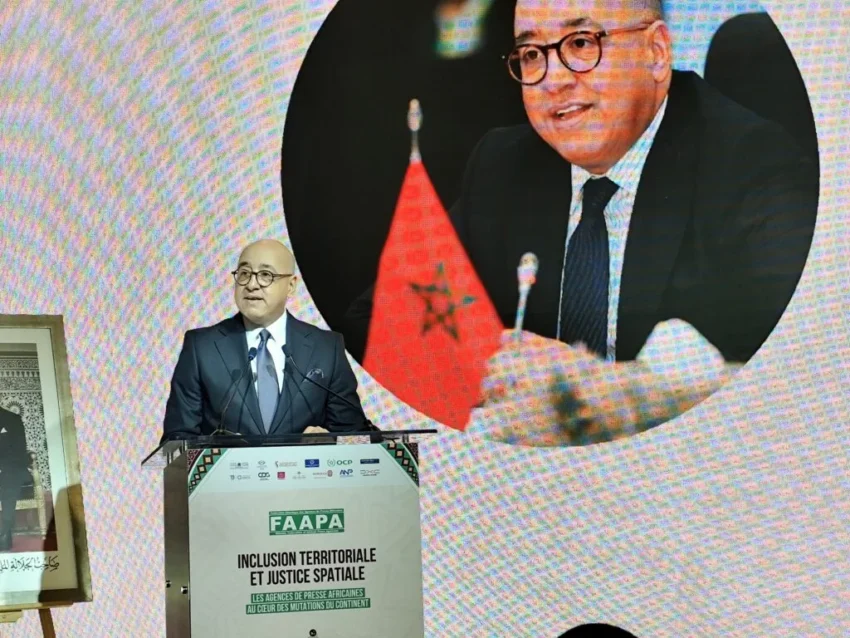
The 9th General Assembly of the Atlantic Federation of African Press Agencies (FAAPA) opened on Wednesday in Marrakech, Morocco, with a call for African media to take centre stage in promoting territorial inclusion and spatial justice.
Declaring the assembly open, FAAPA President and Director-General of the Maghreb Arab Press Agency (MAP), Mr Fouad Arif, urged African countries to adopt development models that leave no territory or population behind.
Arif warned that persistent spatial and social imbalances posed a threat to sustainable growth.
He described Marrakech as a symbolic host city, citing its historic role as “a crossroads between sub-Saharan Africa, the Maghreb and the Mediterranean space.”
He reminded media leaders and partners from across the continent that Africa had long been shaped by “movement, exchange, and the circulation of people, ideas, and knowledge.”
According to him, the theme of the assembly ”Territorial Inclusion and Spatial Justice: African Press Agencies at the Heart of the Continent’s Transformations ”, speaks directly to Africa’s current realities.
“How can we build an Africa that moves forward together without leaving any territory or population on the margins of progress?” Arif asked.
He stressed that development “cannot be sustainable, legitimate, or stabilising unless it is inclusive, balanced, and conceived at the scale of the entire continent.”
Drawing from Morocco’s development philosophy, Arif referenced the July 2025 Throne Speech of King Mohammed VI, which called for a shift from conventional social development models to integrated territorial approaches.
Quoting the monarch, he said: “Now is the time to initiate a genuine surge in the comprehensive upgrading of territorial spaces and in catching up on social and spatial disparities.
“Our objective is that, without distinction or exclusion and in all regions, the fruits of progress and development benefit all citizens.”
The FAAPA president said this vision aligned with Africa’s broader need for solidarity-driven development, warning against “progressing at different speeds” that left some regions “landlocked, peripheral, or fragile.”
The MAP director-general added that African press agencies had a strategic responsibility beyond news dissemination.
“Press agencies are not merely relays of information; they are true actors in structuring the African public sphere,” he said.
Arif underscored the African news agencies’ power to give visibility to marginalised territories, amplify citizens’ voices, and strengthen trust between institutions and the public.
FAAPA, he said, existed to deepen this role by pooling experiences, strengthening cooperation, and promoting a shared vision of a fairer and more balanced African development narrative.
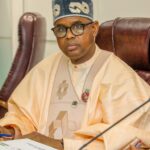
Mr Abdelaziz El Bouzdaini, representative of the Minister of Youth, Culture and Communication of Morocco, Mr Mohamed Mehdi Bensaid
In his remarks, Morocco’s Minister of Youth, Culture and Communication, Mr Mohamed Mehdi Bensaid, reinforced the central role of information in achieving spatial justice, arguing that “equity goes beyond infrastructure and investment.”
Bensaid was represented by Mr Abdelaziz El Bouzdaini, Secretary-General of the Department of Communication at the ministry.
“Spatial justice is not limited to the distribution of investments and infrastructure.
“It also requires balanced recognition of territories in the public space, fair visibility of their dynamics, and faithful representation of their realities,” the minister said.
He said public media and news agencies played an essential public service role in ensuring inclusive narratives, especially in an information environment marked by speed, multiple sources, and credibility challenges.
According to him, the territorial anchoring of press agencies remains critical to the quality of public debate and social stability.
Bensaid reaffirmed Morocco’s commitment to South-South cooperation in the media sector.
He asserted that FAAPA provided a vital institutional framework for African news agencies to share expertise, strengthen professional capacity, and build a more coherent African information space. (NAN) (www.nannews.ng)
Edited by Kevin Okunzuwa