









follow and like on:










By Aisha Gambo, News Agency of Nigeria (NAN)
At 12 midnight, Saude Tanimu (not real name), was resting on her bed, half asleep waiting for her husband’s return. Suddenly, she heard his voice, shouting and raining abuses on her.
She didn’t say anything as she sensed trouble. Her silence worsen the tense situation. Within seconds, she found herself on the floor and her stomach hit to the ground .
Her husband, a transport union member, seems not to be in his right mind, he dragged her from the bed and threw her on the floor.
Even though he knew his wife was pregnant, he continued hitting her on the back insisting they must go to her parent’s house.
Tanimu was dragged outside her matrimonial home in the middle of the night, her head slammed against a tap.
Luckily a neighbour came out to intervene, confronting her husband and helping her escape into a nearby house for safety.
Once she escaped the torture, she noticed something strange, the baby she’s carrying was not moving; a situation that terrified her.
Habiba Musa(not real name) has a similar case as Tanimu; she also received a fair share of abuse from her husband.
She said her husband would refuse to provide food ingredients for cooking whenever they had misunderstanding, even though he knew she was pregnant.
She said that he constantly called her awful names and insulted her parents.
” There was a time we had a misunderstanding due to the plate I served him food with; I was busy with my phone when he forcefully grabbed the phone and slapped me twice.
” As if that was not enough, he beat me until I got fractured on my hand,” she said.
According to the United Nations, violence against women is any act of gender-based violence that results in, or is likely to result in, physical, sexual, or mental harm or suffering to women.
This include threats of such acts, coercion or arbitrary deprivation of liberty, whether occurring in public or in private.
However, Sexual and Gender-based Violence (SGBV) refers to any harmful act that is perpetrated against a person’s will and is based on gender norms and unequal power relationships.
For many women, the danger does not come from strangers but from intimate partners who maybe husbands, boyfriends, or former partners within the supposed safety of their homes.
The World Health Organisation (WHO) estimates that nearly one in every three women worldwide has experienced physical or sexual violence in their lifetime.
This violence, it says, may be carried out by an intimate partner or by someone else, but its impact is long-lasting, affecting women’s health, dignity, and freedom.
The data shows that intimate partner violence is the most common form.
More than a quarter of women aged 15 to 49 years who have ever been in a relationship report that they have been physically or sexually abused by a partner at some point in their lives.
In the African region, which includes Nigeria, the prevalence of intimate partner violence is among the highest in the world with about one-third of women affected.
The 2018 Nigeria Demographic and Health Survey (NDHS) found that among women aged 15 to 49 years, 31 per cent have experienced physical violence and 9 per cent have experienced sexual violence.
The Minister of Women Affairs, Imaan Sulaiman-Ibrahim, has said that over 30,000 cases of Gender-Based Violence (GBV) were officially reported to the Ministry between 2020 and 2024.
Where do survivors seek help?
The NDHS survey found that half of women who have experienced physical or sexual abuse never sought help to stop the violence; for those who did, women’s own families were the most common source of help.
This clearly explains why survivors like Tanimu and Musa did not report the matter to authorities earlier.
Tanimu had been enduring violence in her 13 years marriage, with her drug addict husband hardly going a week without insulting or beating her.
She said she never wanted to take her husband to court or involve the police; not because the violence was small, but because of love and dignity.
She explained that she does not want to disgrace him publicly because they share two children and she is pregnant with his third child, noting that he has been responsible for providing food, clothing, school fees, and other household necessities.
This perspective changed the day she noticed the baby she was carrying was no longer moving.
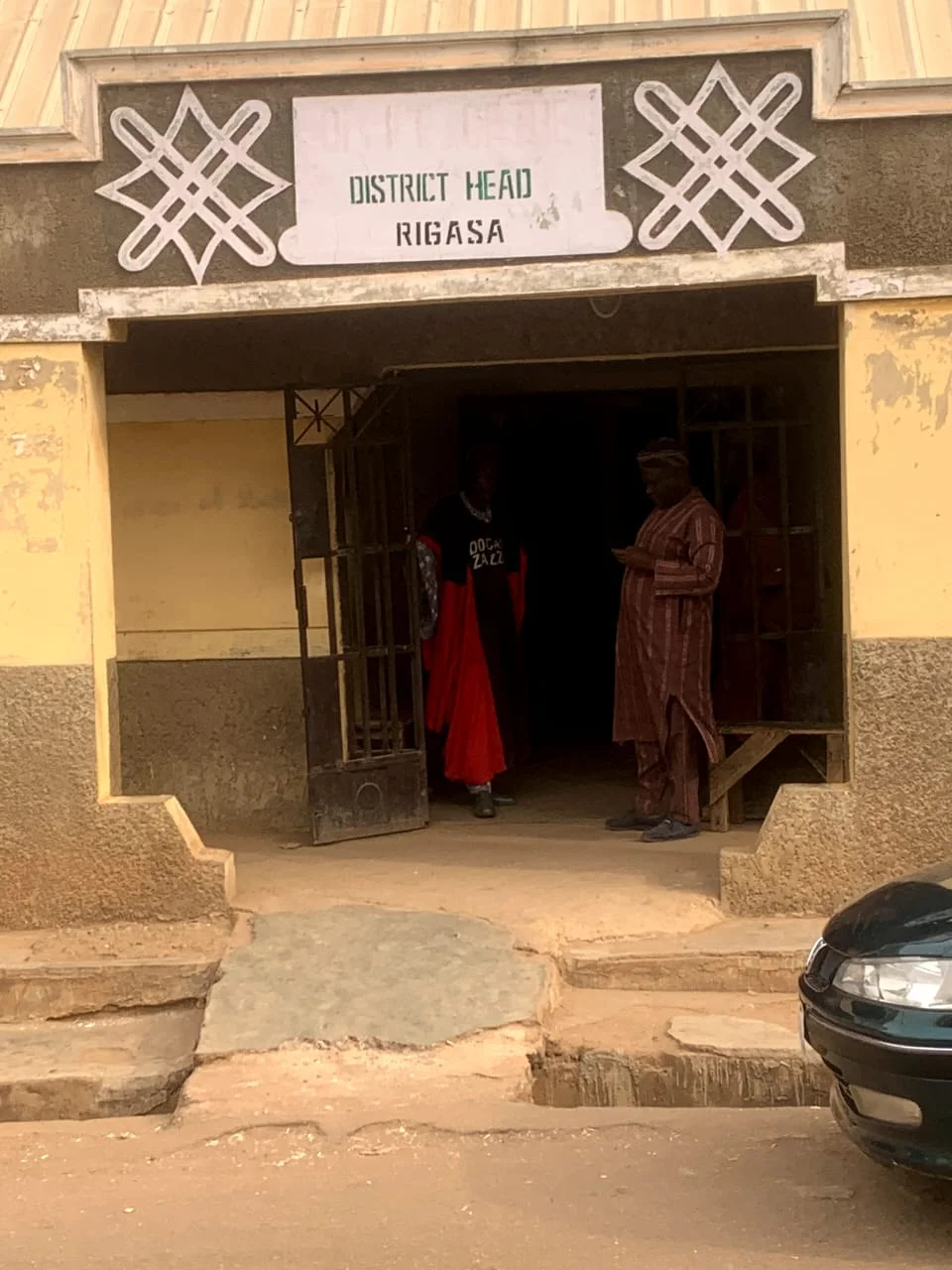
She decided to involve the traditional institution in the Hakimi’s Office, the District Head of Rigasa, a community at Igabi Local Government Area of Kaduna state.
As a resident, she has heard news of how the office helped solved marital and other social issues through mediation and confidentiality.
So, she decided to give it a trial after getting her father’s approval.
A day after the battery, Tanimu reported to the district head’s office and narrated her ordeal.
The three-man committee in charge of treating such cases summoned her husband with an invitation letter.
When he appeared, he acknowledged hitting his wife but explained that it was due to her disobedience and lack of respect for him.
He said he occasionally abuse drugs hence his irrational behaviour but promised to stop after a stern warning by the committee.
For Habiba, it was her husband that reported to the office complaining of her cold attitude towards him, saying she no longer agrees for intimacy and have been telling him to divorce her.
He wanted the office to assist him talk senses into his wife and admitted that he hit her once during a misunderstanding.
More was unravelled when Musa was invited to the office. She explained how he left her hungry when he’s angry, refused to allow her pay visit to friends and family, insulted her parents and broke her hand.
He was ordered to always provide food for his wife, allow her visit her family and desist from disrespecting her parents.
The Hakimi(District Head) Office
The office operates a three-man committee comprising a representative of Igabi Local Government Area, an official from the Ministry of Human Services and Social Development and a traditional title holder from the Rigasa community.
The committee resolves cases relating to marriage and other social issues with the support and approval of the Hakimi, who is the District Head of Rigasa, Alhaji Muhammad Idris.
According to Shehu Adamu, a welfare officer at the local government, about 50 cases were filed at the office in 2025. Of these, 35 cases were resolved, while others were referred to the court, struck out, or ended in divorce.
Most of the matrimonial cases handled by the committee involve lack of food provision by husbands, domestic abuse, failure to send children to school, and child abuse.
Adamu explained that most cases are resolved within a day. “We invite both parties, listen to their complaints and counter-complaints, and then find a way forward,” he said, noting that in most cases, men are found to be at fault.
According to him, some complainants approach the office directly, while others are referred by the police, village heads, or beneficiaries who have previously used the service.
Many prefer the Hakimi Office because it’s close to the people, confidential and free, unlike police stations or courts where fees are often required.
Formal invitation letters signed by the office are sent to respondents and in cases where language or religious differences pose challenges, matters are referred to ethnic or religious leaders for effective resolution.
However, the office does not handle cases where one party rejects the settlement and if a respondent refuses to honour an invitation, the case is referred to a court within the community.
One of the major challenges facing the committee was inadequate funding to support logistics.
In some instances, the office liaise with the National Union of Road Transport Workers (NURTW) to assist with transportation.
The Sarkin Samari, who also serves as a youth development officer, Salisu Sani said all proceedings were documented in writing, and both parties sign the agreement as proof of settlement.
What happens after settlement?
The work of the office does not stop at signing agreement by parties, they monitor activities of the people reported to ensure terms of settlement were strictly adhered to, while defaulters cases were taken to courts.
” We work in synergy with all the village heads, religious leaders and vigilantes group to monitor cases of domestic abuse that has been treated in the office.
” They give us feedback about the perpetrators , whether they have stopped or not; in most cases they stop because they know the office is watching but in cases where they fail, we take them to court with the evidence of the settlement,” he explained.
On the impact of the this system on beneficiaries, Tanimu stated that eversince she reported her ordeal to the district head’s office one month ago, her home has been quieter. The insults and beating has stopped.
Before then, peace was rare. Almost every week, she says, disagreements between her and her husband would end the same way, either with harsh words or with blows.
Musa’s case was no different, her husband has changed for the better. She said he allowed her to go visit her family and stay for a while, adding that he had also apologised to her.
The district head’s office plays a role beyond mediation, combining community-based monitoring with the threat of legal action to enforce compliance.
By using its network of traditional leaders, religious authorities and vigilante groups, the office creates a system of accountability and offers survivors a measure of safety.
For women like Saude Tanimu and Habiba Musa, the follow-up has translated into tangible change, quieter homes, restored dignity and a chance at peace, demonstrating that sustained oversight, not just signed agreements, can make settlements meaningful.(NAN)
**If used, credit the writer and the News Agency of Nigeria (NAN).
follow and like on: