



















By Suleiman Shehu
The Oyo State Government has been commended for demonstrating leadership in reducing its Female Genital Mutilation (FGM) prevalence from 65 per cent to 18 per cent.
Prof. Oladosu Ojengbede, Director, Centre for Comprehensive Promotion of Reproductive Health (CCPRH), University College Hospital (UCH), Ibadan, gave the kudos at a media briefing in Ibadan.
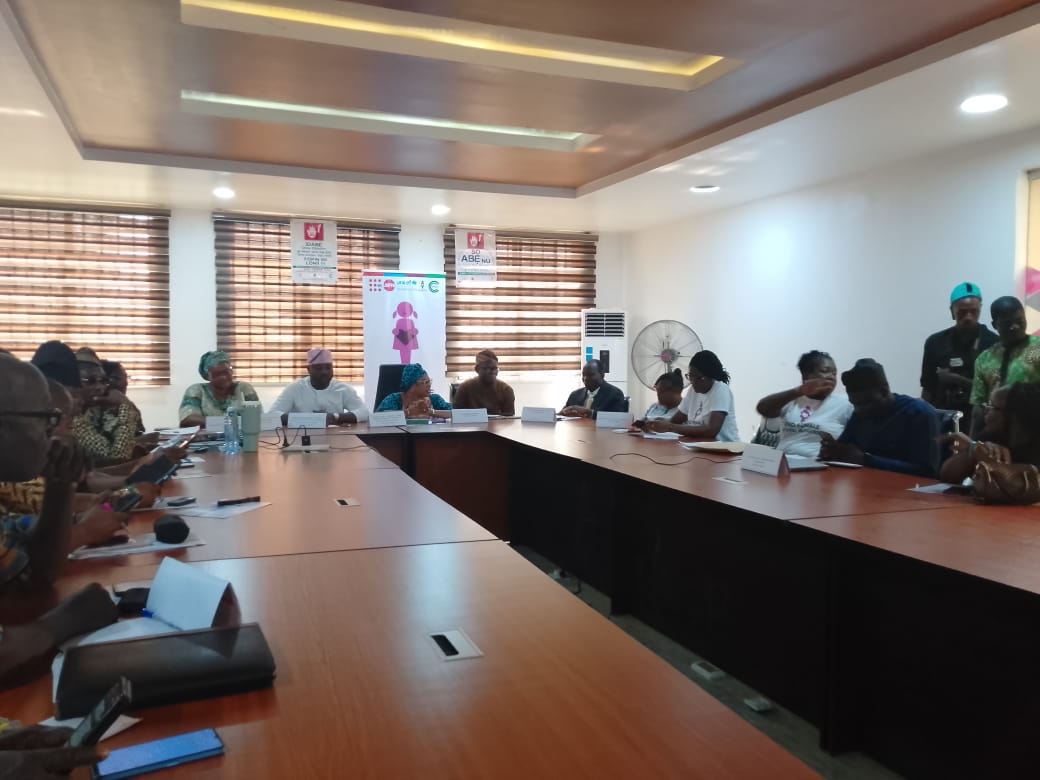
The News Agency of Nigeria (NAN) reports that the briefing, co-organised by the Oyo State Correspondents’ Chapel, was held to commemorate the 2026 International Day of Zero Tolerance for FGM.
According to the consultant, FGM’s prevalence in Nigeria has declined to 14 per cent, while that of Oyo State, which was previously 65 per cent, has declined to 18 per cent.
Ojengbede attributed the progress to the UNFPA-UNICEF Joint Programme, advocacy, legislation, community engagement and survivor leadership, among others.
“Oyo State has demonstrated leadership in reducing FGM prevalence, so the task before us now is to protect these gains and accelerate progress towards zero.
“Let Oyo State continue to lead, not only in reducing prevalence, but in showing what is possible when political will, community action, and smart investment come together,” he said.
He, however, said that caution must be taken, calling for sustained commitment and investment to see FGM through to the very end in Nigeria.
In his remarks, the Oyo State Commissioner for Justice and Attorney-General, Abiodun Aikomo, said the state has a robust Violence Against Persons Prohibition (VAPP) law, which criminalises FGM.
Aikomo, represented by Mrs Olajumoke Yusuf, Coordinator, Sexual and Gender-Based Violence at the Ministry of Justice, said FGM convicted offenders risk a four-year jail term or N500,000 fine.
“The objective of the law is to prevent violence against persons, so if people can cultivate the culture of speaking out, we will be able to prosecute and secure the conviction of FGM offenders,” Aikomo said.
Also, Olufunke Comforter, Chairman, House Committee on Women Affairs and Community Development, Oyo State House of Assembly, said FGM posed a great danger to the girl child.
Comforter highlighted effective legislative, budgetary provision and policy continuity as factors that could help in eradicating FGM in Nigeria.
In his remarks, Dr Akintunde Kehinde, Permanent Secretary, Oyo State Ministry of Health, called for the incorporation of religion and traditional leaders in the fight against FGM.
“FGM must also be incorporated in our health system, hospital and clinic; we must embrace partnership, be committed and not stand alone.
“Most people who are supposed to fight FGM are the ones encouraging perpetrators to go scout free,” he said. (NAN)(www.nannews.ng)
Edited by Moses Solanke