














By Sarafina Christopher
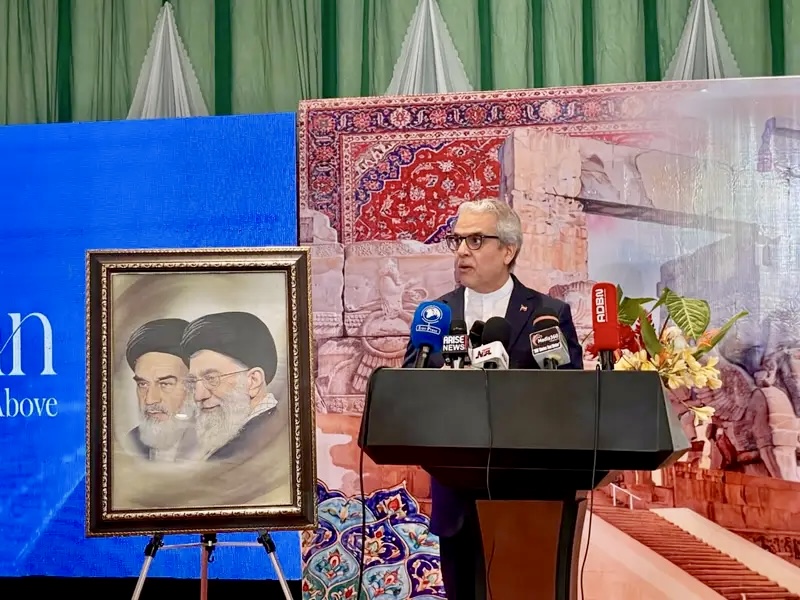
Iran’s Ambassador to Nigeria, Mahdavi Raja, has reaffirmed his country’s commitment to deepen bilateral relations with Nigeria, through bilateral cooperation across key sectors, including shared economic resilience and technological progress.
The envoy made this known on Monday in Abuja during the country’s 47th anniversary celebration known as the Victory of the Islamic Revolution of Iran.
The ambassador described Iran and Nigeria as influential regional players with longstanding friendly ties rooted in mutual respect and shared interests.
“Nigeria holds a special place in Iran’s foreign policy.
“At the same time, Iran’s capabilities in energy, agriculture, healthcare, technology, education and engineering services position it as a reliable partner for Nigeria’s sustainable development,” Raja said.
He added that Nigeria’s large market, human resources and strategic role in West Africa offered vast opportunities for mutually beneficial cooperation.
The ambassador also expressed appreciation to the Federal Government of Nigeria, members of the diplomatic corps and invited guests for honoring the occasion.
Nigeria’s Minister of Foreign Affairs, Amb. Yusuf Tuggar, in his remark, said Nigeria recognised Iran as an important country in the Middle East and a valuable member of the international community.
Tuggar, represented by Bukar Hamman, the ministry’s Director, Regions Department, said relations between both countries was guided by mutual respect and constructive engagement through bilateral channels and multilateral platforms, including the UN.
According to him, economic relations between Nigeria and Iran had expanded steadily over the years, covering sectors such as energy-related products, agriculture, manufacturing inputs and consumer goods, reflecting the complementary nature of both economies.
“Nigeria remains committed to peaceful coexistence, respect for sovereignty and the peaceful resolution of disputes through dialogue and adherence to international law,” he said.
Also speaking, Gov. Bala Mohammed of Bauchi State said Iran remained an important partner for Nigeria, particularly in trade, investment and the promotion of economic self-reliance.
Mohammed disclosed that an Iranian company was establishing a lead and zinc industry in Bauchi State aimed at developing a full value chain rather than exporting raw materials.
He added that discussions were ongoing with Iranian investors in agriculture and livestock development, including modern ranching and breeding technologies to boost productivity.
“We are here to learn, strengthen bilateral relations and reassure Iranian investors that Nigeria is a friendly country where they can do business without impediments,” the governor said.
Earlier, the Iranian Ambassador also described the anniversary as a moment of national reflection and renewed international engagement.
He noted that the 1979 Islamic Revolution represented the collective will of the Iranian people to reclaim national sovereignty, independence and dignity.
“The Islamic Revolution was not merely a transfer of political power; it marked the beginning of national sovereignty, popular governance and the rejection of domination,” he said.
Raja noted that in spite of decades of external pressure and sanctions, Iran had recorded significant achievements by relying on indigenous capacity, social cohesion and skilled human capital.
According to him, Iran has made steady progress in science and technology, expanded knowledge-based companies and achieved major advances in emerging technologies and the health sector.
In the economic sphere, he said Iran had strengthened industrial production, increased non-oil exports and laid the foundations for a diversified and resilient economy, in spite of difficult global conditions.
He added that improvements in healthcare coverage, pharmaceutical self-sufficiency, housing development, access to clean water and communication infrastructure, had contributed to better living standards for its citizens.
Raja further said that Iran was pursuing a balanced and dynamic diplomacy focused on dialogue, multilateralism and cooperation, while expanding relations with neighbouring countries, emerging powers and international organisations.
“Iran considers itself a responsible and independent actor at regional and global levels and remains committed to peace, stability and sustainable development,” he said.
The ambassador also addressed recent challenges facing Iran, including economic pressures, security incidents and external military and media campaigns.
He stressed that Iran remained committed to protecting its citizens, upholding public order and pursuing diplomacy based on mutual respect.
“The fundamental principle of diplomacy is respect for sovereignty and mutual interests.
“Negotiations based on threats and force cannot be effective,” he added.(NAN)
Edited by Mark Longyen