









Warning: Undefined array key "HTTP_USER_AGENT" in /home/u310331633/domains/nannews.ng/public_html/wp-content/plugins/ultimate-social-media-plus/libs/sfsi_widget.php on line 2027
Warning: Undefined array key "HTTP_USER_AGENT" in /home/u310331633/domains/nannews.ng/public_html/wp-content/plugins/ultimate-social-media-plus/libs/sfsi_widget.php on line 2027










By Funmilayo Adeyemi
Dr Samira Jibir, Founder and Chief Executive Officer of Glisten International Academy, says developing students’ creativity will nurture talents and position Nigeria as a tech hub.
Jibir who spoke at the 2026 Glisten Project Fiesta in Abuja on Wednesday, said the exhibition reflected a transformative approach to education, positioning students as drivers of innovation, stability, scalability, sustainability and economic growth.
She recalled that during the COVID-19 lockdown in 2020, students developed ‘Mairabot’, a smart humanoid robot designed to support safer healthcare delivery and reduce exposure to infectious diseases.
According to her, efforts to secure technical partners to scale the innovation were unsuccessful, in spite of its potential relevance to emerging health threats, including Lassa fever outbreaks in some states.
” In 2020, during the COVID lockdown, our students innovated Mairabot, a smart human robot that was created for the sole purpose of supporting safer healthcare delivery and reduce human exposure to infectious diseases.
“We tried to find technical partners to scale it up to no avail. Lassa fever is ravaging in some states now and has taken the life of a medical doctor and one is currently on admission.
“At Glisten, we refuse to stop; We updated Mairabot and expanded its functionality to include examination surveillance alongside other groundbreaking projects,” she said.
She urged stakeholders to partner the school to prevent innovative projects from being abandoned.
She also harped on the need to strengthen research, scale students’ innovations and invest in projects with economic viability to transform education into a driver of national development.
Also speaking, Prisca Godwill, who is Registrar of Glisten Pro-Learn Institute, said the exhibition aimed to display students’ long-developed projects and promote holistic STEAM-based learning.
She said early exposure of children to innovation, recycling and entrepreneurship would nurture problem-solving abilities and meaningful contributions to society.
Godwill added that the competition featured multiple categories, including STEAM, agro-preneurship and robotics, with recognition awards to encourage participation.
She expressed optimism that the initiative would inspire broader adoption of practical, technology-driven education across schools.
Mrs Rukayat Agboola , FCT President of the National Association of Proprietors of Private Schools (NAPPS), said the initiative aligned with global technological development and encouraged creativity among learners.
Agboola called for government support through grants, recognition and encouragement to strengthen innovation and help students embrace self-employment rather than depend solely on white-collar jobs.
She urged private schools to integrate creative and technology-driven learning into their curricula to prepare children for global competitiveness.
Also, Dr Neemat Abdulrahim, Director, Federal Capital Territory (FCT) Education Resource Centre (ERC), described STEAM education as a tool for creativity, innovation and entrepreneurship capable of driving economic growth.
Abdulrahim said early exposure of pupils to practical problem-solving would enable them to become self-reliant and potential employers of labour in the future.
She added that innovation was not dependent solely on funding, noting that locally available materials could support practical learning in public and private schools.
Some students showcased inventions, including a hydroelectric power generator designed to convert flowing water into electricity for homes and offices.
A pupil demonstrated a wind-powered model school built from recycled materials to highlight renewable energy use and environmental sustainability.
A science teacher, Mr Madu Ogochukwu, said the device applied Faraday’s law of induction and could be expanded using larger turbines connected to fast-flowing water sources.
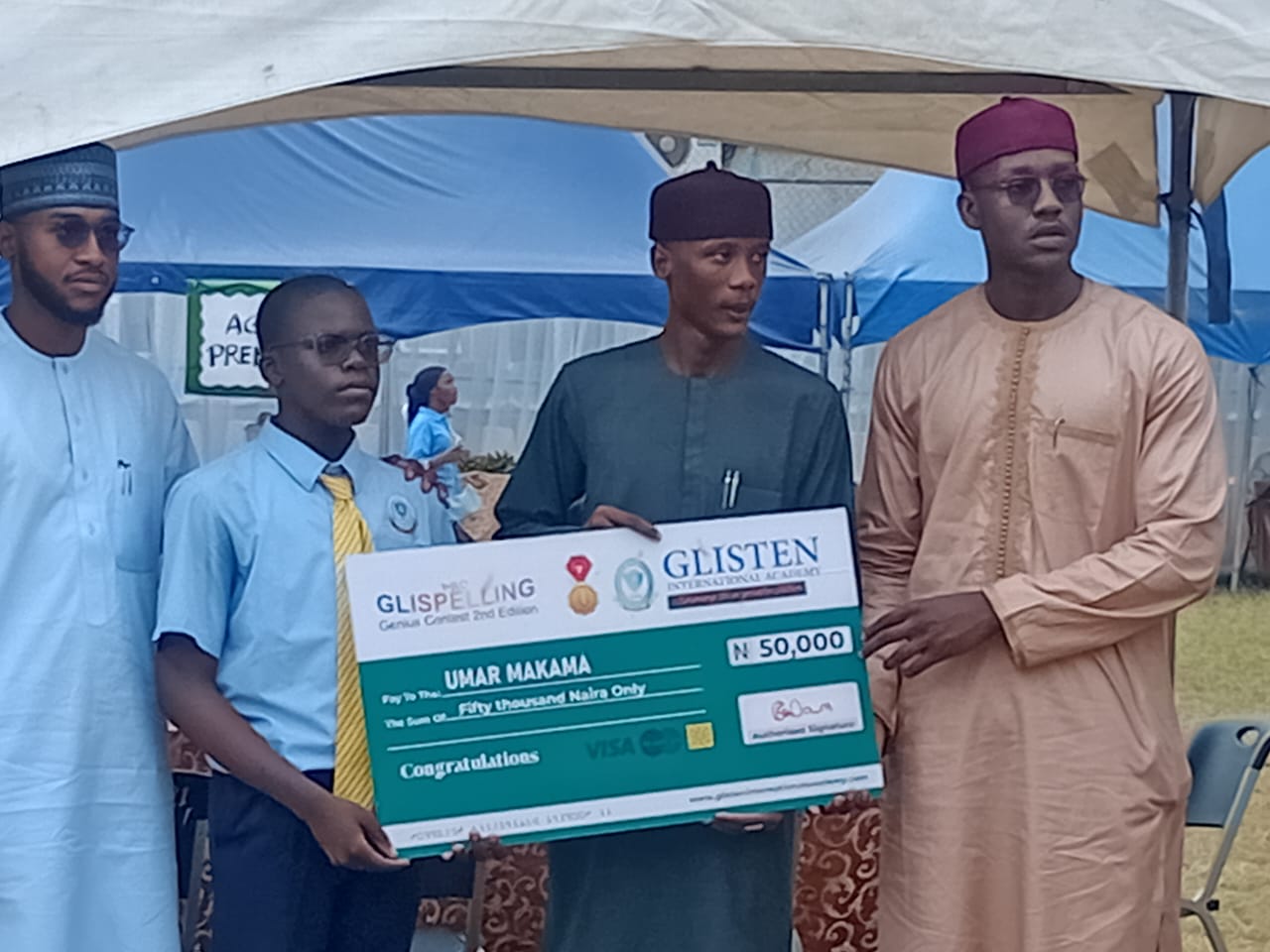
The News Agency of Nigeria (NAN) reports that a creativity award of N200,000 was given to the nursery exhibitors for their creative displays and outstanding presentation at the exhibition. (NAN)(www.nannews.ng)
Edited by Samdra Umeh