

















By Rita Iliya
The Federal government, through the International Fund for Agricultural Development (IFAD) Value Chain Development Programme (VCDP), has recorded remarkable gains in rice and cassava production in Niger State.
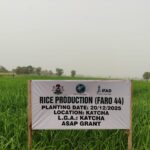
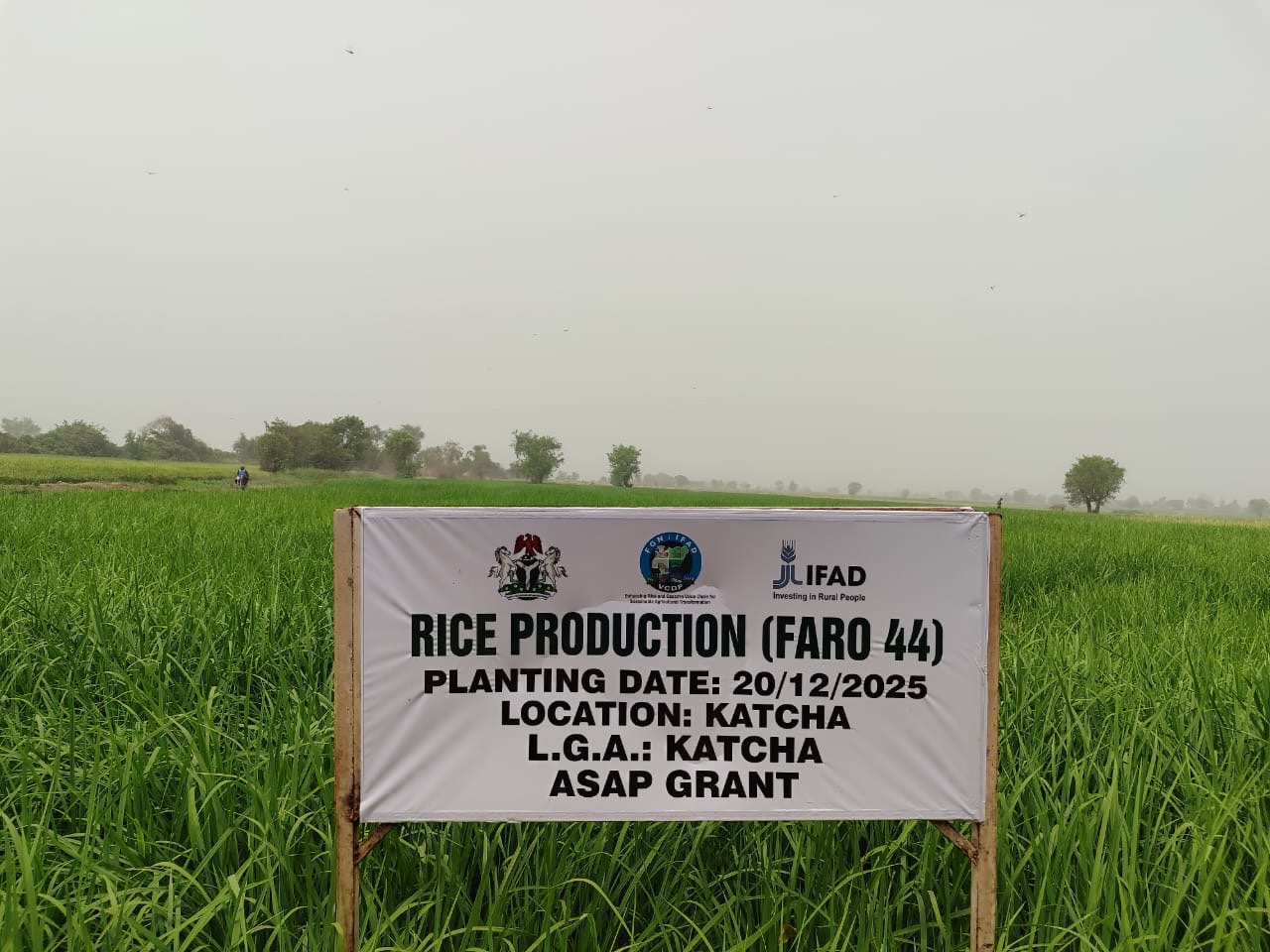
The News Agency of Nigeria (NAN) reports in Katcha on Saturday that this follows the rollout of the Adaptation for Smallholder Agriculture Programme (ASAP) grant.
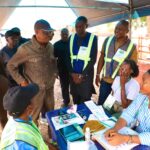
A field tour by VCDP officials to intervention sites in Katcha and Bida Local Government Areas showcased expanded farm sizes, bumper harvests and thriving waste-to-wealth enterprises among beneficiaries of the climate-resilient initiative.
The tour, which included visits to the Bangi Farmers Cooperative and Emiworo community in Katcha and Dabarako Cassava Processing Centre in Bida aimed to assess the impact of improved rice seeds and climate-smart technologies provided under the ASAP grant.
NAN reports that the ASAP is a global initiative of IFAD, integrated into Nigeria’s VCDP framework, designed to channel climate finance directly to smallholder farmers and enhance resilience in food systems.
In Niger State, the programme covers Bida, Borgu, Edati, Katcha, Mokwa, and Wushishi local government areas.
It is supporting producers, processors, marketers, women cooperatives, and youth groups engaged in the rice and cassava value chains.
Hajiya Hadizat Isah, State Programme Coordinator of VCDP, said that the grant commenced in March 2025 in Niger and Kogi, two of the nine states participating in VCDP nationwide.
She said that there were 18,710 beneficiaries for Niger, out of 24,000 farmers supported in the two states, with 1,410 beneficiaries in Katcha LGA alone cultivating about 500 hectares under the scheme.
She explained that the core objective of ASAP was to enhance climate resilience, promote sustainable production systems, and improve waste management through innovative waste-to-wealth technologies.
Isah added that farmers received improved and climate-resilient rice seeds, high-yield cassava stems including Vitamin A varieties, while processors were equipped to convert rice husks and cassava peels into valuable products.
At Emiworo community in Katcha, members of the Emiworo Women Cooperative demonstrated briquettes produced from rice husks, a project aimed at reducing waste, curbing deforestation, and generating alternative income streams.
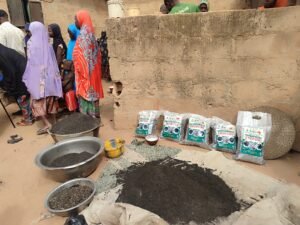
Similarly, cassava processors at Dabarako Processing Centre in Bida LGA showcased equipment that converts cassava peels into animal feed, supporting livestock production and reducing environmental pollution.
Halima Ibrahim, a beneficiary from Emiworo community, said the training on rice husk conversion had improved her livelihoods, adding that proceeds from briquette sales now support household income.
Ahmed Mohammed, a rice farmer in Katcha, expressed gratitude for the improved seeds, saying farmers were already recording bumper harvests.
“Our markets are full of paddy. We can now sponsor our children in schools without stress,” he said.
Nathaniel Gana, an Extension Agent in Katcha LGA, said the programme ensured proper distribution and monitoring of equipment, adding that farmers were trained in Good Agronomic Practices and climate-smart agriculture.
Beyond seed distribution, the intervention included construction of bunds for water retention, erosion control through planting grasses and shrubs, drilling of tube wells, and deployment of 1,200 solar-powered irrigation pumps to support year-round farming.
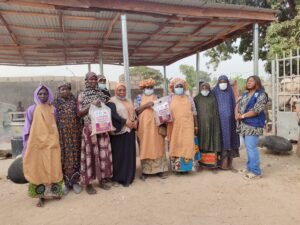
Other equipment distributed included 36 cassava peel conversion machines, 50 rice husk briquette machines, 110 power tillers for bund construction, laptops and mobile phones for climate information dissemination, alongside training on digital extension services. (NAN) (www.nannews.ng)
RIS/OJI/IS
========
Edited by Maureen Ojinaka/Ismail Abdulaziz