











By Ephraims Sheyin
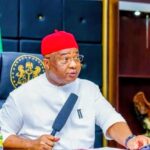
As the 2027 general elections approach, Gov. Hope Uzodinma of Imo has urged the Federal Government and states controlled by the All Progressive Congress (APC), to publicise achievements as their continued silence was being exploited by the opposition.
“There are gains, but a gap persists. There is a disconnect. Cynicism remains because the communication of reform outcomes has not matched the pace of the reforms themselves.
“The opposition has exploited this gap with relentless propaganda. The problem is not policy failure. The problem is a communication failure. And that failure is on us.”
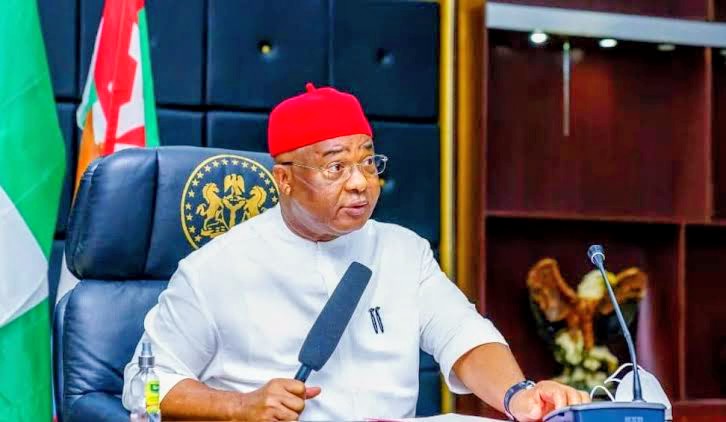
Uzodinma spoke in Abuja at the recent Progressive Governors Forum (PGF)’s Renewed Hope Ambassadors Summit.
The Imo governor, who is the PGF Chairman, emphasised the need for the leaders to “reinvent our identity, unify our structures and bring us into one indestructible, strong and united family driven by one unassailable vision and focus”.
He said that all instruments must be mobilised to “bridge the gap between the profound transformative work President Bola Tinubu has done, and is still doing, for Nigeria, and the lived reality of millions of Nigerians who have not yet felt its full impact”.
According to him, those entrusted with the responsibility of translating policy into public awareness must fully embrace that role.
He reminded the audience that included President Tinubu, governors and ministers, that Nigeria was at a defining democratic phase and was being tested by economic shocks, digital misinformation, geopolitical uncertainty, and rising citizen expectations.
He said that hopes were rising as Mr President was reforming the nation’s macroeconomic architecture, repositioning fiscal systems, rebuilding public infrastructure, strengthening security apparatus, expanding digital inclusion, and managing democratic competition.
“In such a season, clarity becomes national security. Citizens today are more informed, but not always more accurately informed.
“Social media amplifies speed, but not necessarily context. Reform, by its nature, creates discomfort before it creates stability.
“The central democratic challenge before us is how we ensure that structural reform is understood, defended, internalised and translated into citizen trust at the grassroots.
“This is crucial because policy success without citizen understanding creates perception gaps. And perception gaps weaken democratic legitimacy. This is why we are here.”
While noting that decisions that secure long-term national stability rarely generate immediate applause, he recalled that when Tinubu assumed office on May 29, 2023, he inherited an economy in distress.
“We all know this. Even our opponents know this. The signs were everywhere: depleted foreign reserves, runaway inflation, crippled oil production, and a subsidy regime that was bleeding the treasury dry whilst enriching a few.
“Previous administrations had postponed the day of reckoning until it could be postponed no longer, else the nation would collapse.
“Tinubu did what needed to be done: he front-loaded the reforms in the nation’s interest. And for us in the ruling party, the benefits of these reforms have thankfully kicked in just as we approach the end of the political cycle.
“Some might say this was too great a risk, but it has paid off. And the enemies of Nigeria are not happy.
“It is, therefore, not only our partisan duty, but our patriotic obligation to propagate these results to every man, woman, and youth until every Nigerian, including our opponents, acknowledges the good work of our great party and our beloved President.
“Fortunately, the facts are on our side. We just need a bit of storytelling to get our message across in the midst of all the malicious noise,” he said.
Uzodinma recalled that in May 2023, the nation’s foreign reserves stood at $32 billion in gross terms.
“As at Feb. 5, 2026, they stood at $49 billion, an eight-year high, representing a 53 per cent increase.
“In 2023, the net usable reserves were approximately $3 billion. Today, they stand firmly in the high thirties.
“In May 2023, headline inflation was 22.4 per cent and rising. Food inflation was 24.6 per cent and accelerating. By December 2025, after thorough review, headline inflation had declined to 15.15 per cent. Food inflation, which peaked at nearly 40 per cent, now stands at 10.84 per cent and is poised to drop even further.
“From rice to garri, to beans, yams, potatoes, pepper, and tomatoes – prices keep falling. These are real outcomes, not projections.
“Also in May 2023, Nigeria was producing roughly one million barrels of crude oil per day. Today, our output averages 1.5 million barrels per day, with recent peaks reaching 1.6 million when condensates are included. Our OPEC quota remains 1.5 million barrels per day. Whilst we have not yet consistently met it, we have moved from chronic underproduction to the threshold of compliance.
“Again, in May 2023, Nigeria imported virtually every drop of refined petrol at a cost of approximately $20 billion annually. All four of our refineries were shut down. Today, the Dangote Refinery, with a capacity of 650,000 barrels per day, is operational, and the sector now has the confidence of investors with several other large refineries under construction.
“Our import dependency has been drastically reduced. This is energy security. We can all attest to the recent gains of the naira, and analysts have predicted that the naira will rise to under N1,000 to the dollar before the year ends.
“That is the power of reforms. Courage and vision have paid off.”
Uzodinma also spoke on the national minimum wage which was N30,000 in 2023.
“Today, it is N70,000,” he noted.
He also recalled that in May 2023, the Federation Account Allocation Committee distributed N10.14 trillion to all tiers of government.
“This year, the projected allocation is approximately N41 trillion. That is a fourfold increase in resources available to states and local governments,” he said.
He also recalled that in the past, states were not permitted to regulate their own electricity markets.
“Today, several states, including Imo, have taken advantage of the Electricity Act to build their own power infrastructure. This is the federalism we have always talked about. This administration has made it real.
“Again, Diaspora remittances, which hovered around $200 million per month in 2023, now average $600 million per month. That is a 200 per cent increase,” he noted.
Uzodinma also spoke on the tax reforms and described the move as “a far-reaching revolution”.
He recalled that in June 2025, Tinubu signed four Tax Reform Acts into law, consolidating over 60 disparate taxes into fewer than 10 clear statutes.
“These reforms took effect on Jan. 1, 2026, and they represent the most comprehensive fiscal overhaul Nigeria has seen, since 1999.
“What does this mean for ordinary Nigerians? Every worker earning N800,000 or less annually now pays zero income tax. If you earn the N70,000 minimum wage, you keep every kobo.
“Small businesses with turnover below N50 million are exempted from company income tax, capital gains tax, and the development levy. Companies that hire new workers receive a 50 per cent tax deduction on those salaries for three years.
“Companies that raise wages for their lowest-paid employees receive a further 50 per cent deduction. This administration is using the tax code to reward job creation, not penalise it.
“Agricultural enterprises enjoy a five-year corporate tax holiday from the commencement of operations. VAT remains at 7.5 per cent – one of the lowest rates in Africa – with basic food, education, healthcare, and transport zero-rated to protect the poorest households,” he noted.
According to him, Nigeria now has a unified, modern, digitally-administered tax system that protects the vulnerable, incentivises enterprise, and aligns with global standards.
He also spoke on the Nigerian Education Loan Fund (NELFUND) scheme.
“As of February 2026, NELFUND has disbursed N184 billion in interest-free loans to nearly one million students across 265 public tertiary institutions.
“Over 1.5 million students have applied. This is social investment at scale, and it did not exist 30 months ago.”
He identified other achievements to include infrastructure delivery with roads and Rail modernisation projects being consolidated, while power sector reform efforts are being intensified and Port process digitisation improving trade facilitation timelines.
On social protection, he said that targeted cash transfer systems have been restructured to improve reach and transparency.
In security, investment in intelligence coordination and multi-agency collaboration continues to strengthen national response capability, he added.
“These reforms are not cosmetic. They are foundational. They require courage. And courage in governance is the rarest currency in democracy,” he declared.
He regretted that despite the outcomes and the solid gains, a disconnect in communication had made it impossible for people at the grassroots to appreciate the feats.
He reiterated that cynicism had persisted because the communication of reform outcomes had not matched the pace of the reforms themselves.
He urged the leaders to ensure a cohesive publicity policy and strengthen communication channels for maximum effect.
He also called for institutionalised grassroots templates instead of outlets that were personality-driven.
“We must work out system-driven channels. We need replicable models: ward engagements, listening sessions and sector dialogues,” he explained.
He also called for a clarity of roles between party structures and mobilisation platforms.
“Where roles are unclear, duplication emerges. Where duplication emerges, discipline weakens,” he stated.
Uzodinma said that the goal of the Summit was to close those gaps through architecture, “not rhetoric”.
He also advocated ideological clarity to serve as a guide to APC-led governments at the centre and in the states.
“Without such clear guide, we shall become vulnerable to internal contradiction,” he said.
He also suggested the adoption of a unified messaging guide and standardised core talking points, noting, however, that such should not eliminate state uniqueness.
He urged states to adopt structured formats for ward town halls, community sessions, youth policy dialogues, women empowerment engagements, and sector-specific stakeholder briefings.
He urged PGF members to interface between government performance and citizen awareness.
“You are the ones who must take these numbers, these outcomes, these reforms, and translate them into stories that resonate in every ward, every market, every town hall,” he said.
He emphasised the need for Renewed Hope Ambassadors at the zonal, state, local government, ward and polling unit levels.
State government information machinery, led by Commissioners for Information and supported by media units in every ministry is also another pillar, while APC structures, led by state chairmen, secretaries, women and youth leaders, ward and polling unit executives should also be involved.
“The PGF must develop a unified communication template to ensure synergy across all pillars.
“This template will provide the data, the talking points, and the visual aids needed to make the case for Renewed Hope in every corner of Nigeria,” he stressed.
While acknowledging the enthusiasm amongst many Nigerians in support of Mr President’s re-election bid, and the spontaneous formation of support groups, he urged the APC Secretariat to screen and approve such groups to ensure that message harmony is achieved and maintained.
“We must avoid a situation where different structures are singing from different hymn sheets and potentially contradicting each other,” he said.
Uzodinma also called for coherence of substance.
“When the federal government undertakes reform, states must echo clarity. When states deliver projects, the party must amplify results. When misinformation emerges, the response must be factual and immediate.
“Governance communication is no longer peripheral. It is central to democratic consolidation,” he said.
The Imo governor
commended Tinubu for choosing long-term national interest over short-term applause, pointing out that transformation requires patience while restructuring requires courage.
“We, at the subnational level, stand as partners, not spectators. We stand ready to align policy, mobilisation, and communication with your national direction,” he stated.
As the party prepares for the 2027 polls, analysts share Uzodinma’s opinion that the fortunes of the APC at all levels will be largely determined by how its achievements are communicated to the ordinary Nigeria voter. (NAN)
Edited by Philip Yatai