

















By Angela Atabo/Emmanuel Oloniruha
Abuja,March,2,2026(NAN)The Independent National Electoral Commission (INEC) and the National Peace Committee(NPC) have declared that the 2027 General Election will be critical to Nigeria’s democratic experience.
say Nigeria is at a “very critical stage” in its democratic evolution, urging political actors to abandon the “politics of power” and embrace people-centred governance.
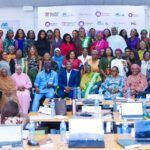
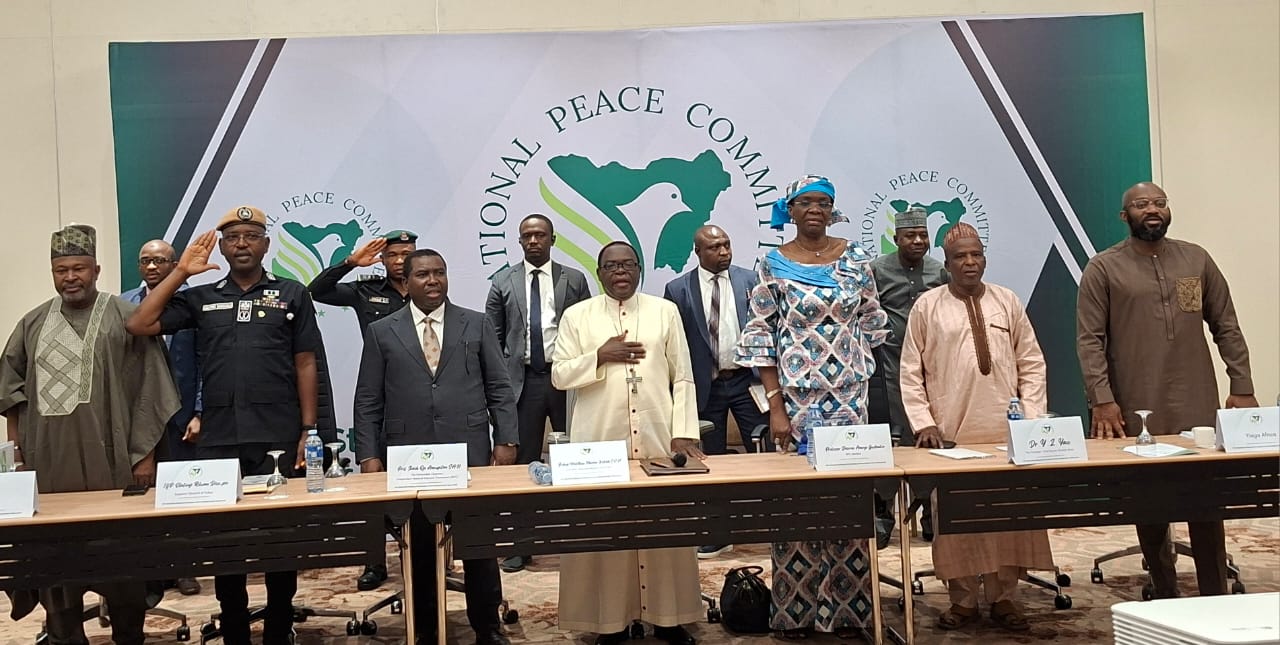
They made the declaration was at an NPC engagement with electoral stakeholders tagged ‘Briefing and Presentation of the Annotations to the Peace Accord’, on Monday in Abuja.
The engagement was organised by the NPC in collaboration with The Kukah Centre, with additional support from the European Union.
According to the Chairman of INEC, Prof. Joash Amupitan, Nigeria’s electoral landscape remains diverse, highly complicated, and extremely competitive
Amupitan said that since independence, politics had often been pursued in ways that undermined national development.
He said, “The problem we have had since independence is that we have been involved in politics, but let me say politics in the wrong way. We play the politics of power as against the politics of the people.
“At this crucial stage of development, when we should be breaking the level of underdevelopment and getting counted among developed nations, we still find ourselves bogged down by issues that ought to have been muted years ago.”
According to Amupitan, this misplaced political focus has hindered national development and kept the country from advancing alongside its global peers.
He described the recurring electoral challenges as “unfortunate monsters” that should be confronted decisively to safeguard democracy.
He stressed that democracy and development are interconnected, noting that countries once behind Nigeria economically have progressed by strengthening democratic institutions.
The INEC chairman revealed that the commission was reviewing its regulations to improve electoral processes ahead of 2027.
He disclosed plans to introduce Geographic Information System (GIS) mapping of polling units and develop improved voter interaction platforms.
He said that INEC was also working to sanitise the voter’s registers by eliminating duplicate entries and removing deceased persons and vowed to continue to collaborate with law enforcement agencies to combat vote buying among others.
In his remark,the NPC Chairman,Abdulsalami Abubakar,represented by the NPC Convener,Bishop Mathew Kukah, acknowledged growing scepticism about politicians’ commitment to the Peace Accord.
“There is an increasing feeling that maybe what we are doing in the Peace Committee is just wasting our time, because people are saying the politicians who sign this accord have no intention of living by it,” he said.
Abubakar emphasised that ensuring compliance with the Peace Accord is a collective responsibility involving citizens and civil society groups.
He explained that the newly annotated Peace Accord aligned its provisions with relevant constitutional sections to enhance its moral and legal authority.
Reflecting on its origins, he said, since its establishment in 2014, the Peace Accord had since served as a platform for dialogue, mediation and confidence building among political actors, with support from the European Union.
Abubakar stressed that while laws were essential for credible elections, discipline and good faith from political leaders were indispensable.
“INEC can only conduct free, fair and credible elections depending on how we conduct ourselves.The responsibility of safeguarding our democracy rests with all of us.”
He reaffirmed the NPC’s commitment to working with political parties, security agencies, INEC and civil society to ensure peaceful and credible polls.
Representing the Police, the Commissioner of Police in charge of Election Planning, Monitoring and Evaluation, Abayomi Shogunle, said the police had adopted a predictive analytics model to enhance election security planning.
Shogunle explained that the model, tested during the Anambra governorship election and FCT polls, analyses past election data to anticipate potential flashpoints.
He also called for urgent efforts to curb misinformation, fake news and disinformation during elections and reiterated the commitment of the force to continue to collaborate with the INEC, political parties, civil society and other security agencies.
Meanwhile, the Chairman of the Inter-Party Advisory Council (IPAC), Yusuf Dantalle, has described the last general elections as largely credible but raised concerns about provisions in the Electoral Act 2023.
Dantalle argued that aspects of the law narrowed political participation and disadvantaged smaller parties, particularly in relation to mandatory direct primaries and the financial burden associated with compliance requirements.
He also called for greater independence in the appointment and funding of INEC leadership, arguing that the electoral body should be insulated from political influence to maintain credibility.
The Convener of the Nigeria Civil Society Situation Room, Yunusa Ya’u,warned of declining voter turnout and eroding public trust and also expressed disappointment that mandatory electronic transmission of results was not fully entrenched in the amended law, in spite of strong public demand.
Ya’u also raised concerns about what he described as a drift towards a “choiceless democracy,” citing high-profile defections to the ruling party and the shrinking space for opposition politics.
Also speaking ,Executive Director of Yiaga Africa, Samson Itodo, said the compressed timelines introduced by the 2026 Electoral Act posed significant risks ahead of the 2027 general elections.
Itodo said that while some provisions of the Act were commendable, others such as shortened funding timelines for INEC and high financial thresholds for party registration could undermine electoral integrity and inclusiveness.
He also called for clearer guidelines on electronic transmission of results and urged political actors to treat election technology infrastructure as critical national assets.(NAN)(www.nannews.ng)
Edited by Bashir Rabe Mani