










By Hafsah Tilde
Dr Mac McClelland, the Chairman of The Luxury Council International, says leaders need to develop the mindset to strike a balance between flexibility and stability to lead successful organisations.
In an interview with the News Agency of Nigeria (NAN) on Friday in Abuja, he said that agile leadership was a necessary management requirement for success in an organisation.
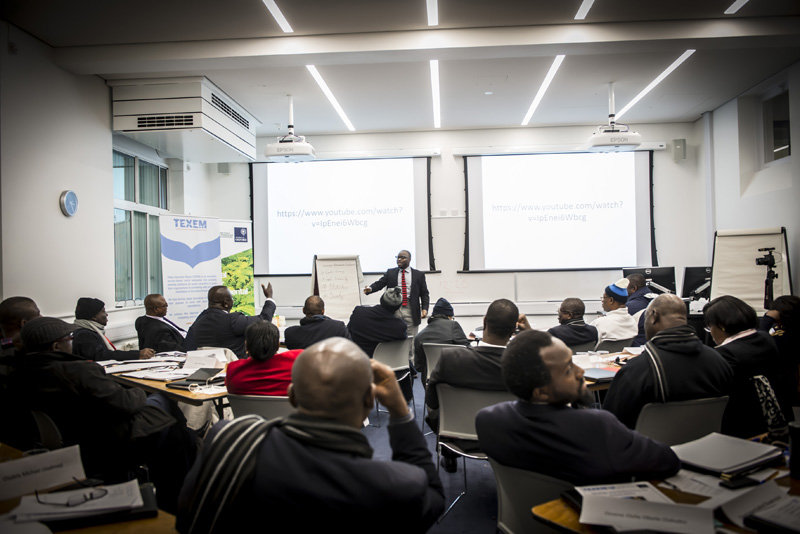
McCleelland, who is a Former US Marine, Global Advisor to World leaders and award nominated author, said he would speak at the session on “Resilience in a Volatile World: Inspiring Transformation Successfully” from Feb. 8 to Feb. 22 organised by TEXEM.
He said he would share insights into why leaders should be more agile in the present uncertain times at the capacity development programme.
McClelland also elaborated on topics that would lead to lively discussions and peer-to-peer learning during the upcoming programme.
“Agility is the driving force that enables organisations to anticipate change, adapt quickly and accelerate growth in an unpredictable world.
“To foster agility, leaders must first cultivate a learning culture where curiosity, continuous development, and adaptability become the norm.
“The most resilient organisations encourage a growth mindset, ensuring that challenges are embraced as opportunities.
“Dangote Group exemplifies this approach by consistently investing in workforce development, enabling the company to navigate economic shifts while sustaining long-term success.”
McCleeland added that another crucial factor in fostering agility is prioritising open communication and collaboration.
He said that organisational silos could be a major barrier to adaptability, slowing down decision-making and innovation.
He said that leaders should create environments where information flows seamlessly across departments, encouraging faster and more effective responses to emerging challenges.
“Empowering teams to make autonomous decisions is also essential in creating an agile organisation. When employees are trusted to take ownership of their work, they become more creative, engaged, and resilient.
“Micromanagement stifles agility, whereas decentralised decision-making fosters innovation.
“This is evident in Flutterwave, the Nigerian fintech leader, where employees are encouraged to take bold, high-impact decisions, enabling the company to dominate Africa’s payment ecosystem in record time.
“Above all, leaders must lead by example—embracing experimentation, taking calculated risks, and learning from failures. Agility starts at the top, and organisations that adopt a “fail-fast, learn-fast” mentality are better positioned to refine strategies based on real-time insights.”
He said that TEXEM’s upcoming programme would provide deeper insights into how leaders can integrate these strategies into their leadership approach to build more responsive and resilient organisations.
He said that change was inevitable, yet resistance is a natural human response to uncertainty.
He said that leaders who succeed in driving transformation understand that effective communication is the key to reducing resistance.
“Clearly articulating the why behind the change fosters transparency and trust, making it easier for teams to align with the organisation’s vision.
“Ethiopian Airlines successfully executed its ambitious expansion by ensuring that all employees understood the strategic rationale behind the move, creating a sense of collective purpose.
“When individuals feel that they have a voice and their concerns are acknowledged, they are more likely to support and champion the transformation.”
He added that providing adequate support and training also plays a significant role in easing transitions.
He said that employees often resist change when they feel unprepared to adapt.
“Investing in the necessary training helps teams develop the skills and confidence needed to navigate new realities.
“The Central Bank of Nigeria has recognised this by consistently providing leadership training to equip teams with the competencies required to manage financial reforms effectively.”
He noted that resistance to change was often rooted in fear—fear of uncertainty, fear of failure, and fear of the unknown.
“Addressing these fears directly through open dialogue fosters trust and makes transitions smoother.
“For example, Nigeria’s banking sector reforms were initially met with scepticism, but through proactive engagement with stakeholders, industry leaders were able to build trust and ensure compliance.
“Setting clear expectations while remaining supportive is equally important. Employees need reassurance, but they also need firm direction to navigate change successfully.”
McCleeland said that mastering this delicate balance, leaders can cultivate a workplace where innovation thrives, and employees remain engaged, even amid significant transformation.
He pointed out that for organisations to remain agile, they must commit to continuous improvement and a culture of innovation.
“Investing in training and skill development ensures that teams are equipped to adapt to rapidly changing market conditions.
“When employees continue to learn and refine their abilities, they become more agile and proactive. Organisations that prioritise learning, like Dangote Group and Safaricom, consistently outperform competitors by staying ahead of industry trends.
“Recognising and rewarding creativity and calculated risk-taking further reinforces a culture of agility. Employees are more likely to experiment and propose bold ideas when they know their contributions are valued.
“Companies that celebrate innovation—whether through incentives, recognition programmes, or internal innovation labs—create a cycle of continuous improvement that strengthens long-term resilience,” he said.
McCleeland said that sustaining agility requires visionary leadership that not only anticipates market shifts but also takes proactive steps to innovate.
He added that encouraging decentralised decision-making is another essential aspect of sustaining agility.
He said that building strategic partnerships also strengthens long-term resilience.
“Organisations that collaborate with other businesses, government entities, and research institutions are better positioned to navigate complex challenges.
“Partnerships provide access to new technologies, market insights, and resources that can drive sustainable growth.”
On why leaders should attend the TEXEM programme, he said they would gain actionable insights, learn from world-class faculty, and connect with influential decision-makers.
He said that the programme’s proven methodology would ensure that learning is engaging, practical and immediately applicable.
He said that they would also have the chance to connect with C-suite leaders, industry experts, and policymakers, fostering relationships that can drive strategic partnerships and business growth.
He said speakers at the programme include Ambassador Charles Crawford and Bradley Jones, Executive Director of the UAE-UK Business Council.(NAN) (www.nannews.ng)
Edited by Ismail Abdulaziz