





Democracy
By Emmanuel Oloniruha
A former Head of State, Gen. Yakubu Gowon, says in spite of the imperfections in democracy, the era of military rule must remain behind Nigeria.
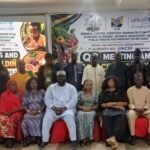
Gowon stated this in Abuja at the unveiling of a book titled “Military Factor in Nigerian History, 1960-2018” by the Historical Society of Nigeria (HSN), as part of activities to mark the association’s 70th anniversary.
He said that while the military and its various regimes had contributed monumentally to the peace and economic development of Nigeria, it must continue to support the advancement of democracy and national development.
“The era of military governance is and must remain behind us. Democracy, despite its imperfections, provides the best framework for national development and popular participation.
“The armed forces must fully embrace their constitutional role as defenders of the nation’s territorial integrity, not as administrators or political actors,’’ he said.
Gowon, who chaired the occasion, said that the military factor in Nigerian history is neither a simple story of heroism nor villainy.
He described it as a complex narrative of an institution that had been deeply intertwined with the country’s national journey.
The former head of state observed that the question of whether the military has been a hero or villain in Nigeria’s development journey is perhaps the most contested.
“With the wisdom that comes from age and reflection, I believe the answer lies somewhere in between. On one hand, the military preserved national unity during the civil war.
“We built infrastructure, created states to bring the government closer to the people, and at times restored order when civilian structures faltered.
“Our armed forces have distinguished themselves in peacekeeping operations across Africa and beyond.
“On the other hand, I must acknowledge that military rule stifled democratic development, sometimes violated civil liberties, and created structures that enabled corruption.
“The interruption of our democratic journey in 1966, 1983, and the annulment of the June 12, 1993 elections represented dark chapters in our history that we must confront honestly.
“However, by acknowledging these mistakes, we pave the way for a brighter, more democratic future,’’ Gowon said.
Reflecting on the civil war in Nigeria, Gowon described it as the most painful episode in Nigeria history, “but one that ultimately reaffirmed our commitment to national unity.’’
Commenting on the current security challenges, Gowon said that addressing it demanded a military that is technologically sophisticated and intelligence-driven.
He also advised the armed forces to become more integrated with civilian institutions and society.
He said the military should not stand apart from the people but should be seen as an essential component of the national fabric, working in tandem with civilian authorities
According to him, the Nigerian military must continue to play a vital role in regional security while strengthening the nation’s defence capabilities.
Former Chief of Defence Staff, retired Gen. Lucky Irabor, in his keynote address, also said that the military had made immense contributions to the peace and development of Nigeria.
Irabor said that in terms of development, the military had been engaging in the construction of roads, bridges, dams, and several other tasks that have boosted economic development in the country.
“Diplomatically, the military has been active. Their participation in various peace and peace enforcement efforts across Africa and the rest of the world have boosted the image of the country globally.
“On the other hand, the military regimes have had both positive and negative impacts on our national development journey.
“The political, economic, and social development of the country have been shaped by military regimes in multiple ways.
“The outcomes of the infrastructural developments and back-to-back military regimes are eloquent testimonies,” he said.
He also listed some of the achievements and interventions of military regimes to the establishment of the National Youth Service Corps programme, development of shipping lines, among others.
Irabor, however, said that in spite of the positive contributions, the issues of human rights and perceived suppression of public freedoms during military regimes had come under very serious scrutiny.
Commending the forum for unveiling the book, he said it was very important to appreciate the past and set goals and visions for the future.
He expressed optimism that the book will inspire dialogues, debates, and deeper inquiry into the forces that shaped, going to further shape the development of the country.
The book reviewer, Prof. Patrick Ukase, described the 598 pages book as a well researched book that analysed the various military regimes in the country.
Ukase said that the book under review was a comprehensive examination of Nigeria’s military’s multi-faceted role in shaping the nation’s political, social, and economic landscapes.
Ukase said that the book, structured into six thematic areas, encompassing 27 chapters, offered a nuanced analysis of the military’s influence on Nigeria’s post-colonial development trajectory.
“It is a vital resource and highly recommended for the Nigerian military, other security forces, scholars, students, policymakers, and security professionals.
“It is a well-researched, comprehensive work that offers a valuable perspective on the history, structure, contributions, and policies of the Nigerian military,’’ Ukase said.
The Acting President of the Society, Prof. Zara Kwaghe, said the idea of the book was conceived at the 2024 annual conference of association, in recognition of the military’s major role in the unity and development of Nigeria.
Kwaghe said that Nigeria military had been strategic in keeping the country together, urging Nigerians to keep supporting them.
She urged the military to continue to do what they have been doing to help the nation to stay together and to move forward in peace. (NAN)(www.nannews.ng)
Editted by Abdulfatai Beki and Yakubu Uba