


By Olasunkanmi Onifade
The Forum for African Women Educationalists (FAWE) Africa has emphasised that investing in girls’ education is a matter of justice and human rights, not charity.
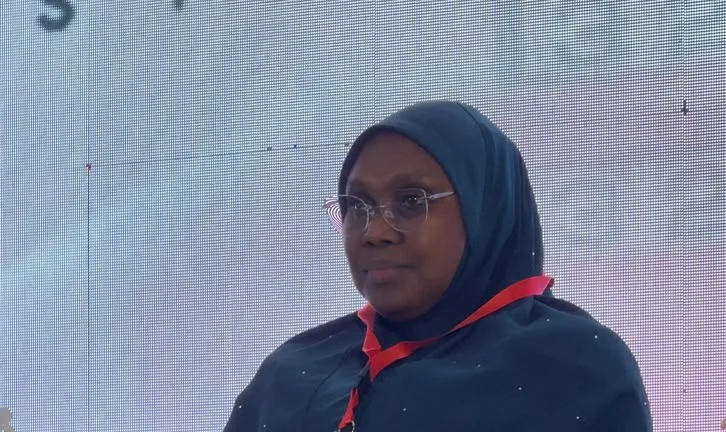
FAWE Africa Executive Director, Mrs Martha Muhwezi, made the call in Abuja at the 21st FAWE Nigeria National Annual Conference on Monday.
The conference was themed “Education as a Tool for Reparative Justice: Centering Nigerian Girls and Women for Systemic Change”.
It brought together stakeholders to discuss and promote gender-transformative policies in education.
Muhwezi was presented by Senior Advocacy and Partnerships Officer FAWE Africa, Catherine Asego.
Muhwezi urged governments, educators, and civil society actors to strengthen advocacy for gender-transformative policies, ensure safe learning environments, and equip teachers to foster equality in classrooms.
“Across our continent, women and girls have long endured structural injustices; from child marriage and gender-based violence to exclusion from STEM, leadership, and economic participation.
“These inequalities are not accidental; they are the result of systemic barriers deeply rooted in history,” she said.
Muhwezi said education remained one of the most effective instruments of reparative justice as it restores dignity, rights, and voice, giving girls the power to challenge inequity and transform society.
“When a girl is educated, she does more than improve her life, she changes the trajectory of her family, her community, and her nation,” she said.
She added that education must serve as a restorative and adaptive force that addresses historical inequities while equipping young Africans to navigate climate and social transformation challenges.
The Executive Secretary of the National Commission for Colleges of Education (NCCE), Prof. Paulinus Okwelle, said reparative justice requires deliberate investment in bridging educational disparities that limit the progress of women and girls.
Okwelle, represented by the Assistant Director, New Programmes and Institutions, Mrs Felicia Opara, said prioritising women in education guarantees sustainable transformation across governance and economic sectors.
He also called for concrete policies linking teacher training to gender equity outcomes.
The National Chairperson of FAWE Nigeria, Mrs Fiddere Kaibo, stressed the need to address lingering inequities holding back millions of women and girls in Nigeria.
“Education is the most powerful mechanism for justice; it transforms not only individuals but entire societies,” she said.
Kaibo noted that FAWE had championed gender-responsive pedagogy, the Safe Schools Declaration, and School-Related Gender-Based Violence (SRGBV) programmes, which have strengthened teacher capacity and improved school safety.
“These interventions have inspired thousands of girls to stay in school and pursue their dreams,” she said.
The News Agency of Nigeria (NAN) reports that FAWE Nigeria, established in 1996, advocates for girls’ education and addresses barriers to access, retention, and performance through policy advocacy and community projects.
As a member of the pan-African FAWE network, founded in 1992 by five women ministers of education, FAWE Nigeria works to ensure that every girl can go to school, stay in school, and complete her education. (NAN)
Edited by Tosin Kolade

Comments