







By Mark Longyen
The Economic Community of West African States (ECOWAS) has expressed its commitment to regional integration through strategic projects that promote regional trade, boost agriculture and bolster the environment.
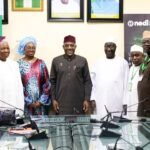
ECOWAS Commission President, Dr Omar Touray, made this known on Wednesday in Abuja at the opening ceremony of the ECOWAS initiative on economic integration through trade, environment and agriculture.
The News Agency of Nigeria (NAN) reports that the theme of the event was: “Regional Interventions Towards Economic Integration in West Africa.”
It is a series of technical meetings organised by ECOWAS to foster regional economic development and integration.
Touray, represented by Vice President Damtien Tchintchibidja, said ECOWAS was implementing initiatives to accelerate regional integration, promote trade, boost agriculture, protect the environment, and accelerate inclusive regional economic growth.
“ECOWAS is implementing a portfolio of strategic projects aimed at strengthening industrial development, promoting trade, boosting agricultural productivity, improving food and nutritional security, and accelerating inclusive economic growth in all member states.
“From promoting the free movement of goods and services, to accelerating infrastructural development and maintaining peace and security, our journey has not been without challenges.
“However, it has been marked by resilience and a steadfast commitment to regional integration.
“These initiatives aim to give operational content to ECOWAS Vision 2050 and the broader objectives of the African Union’s Agenda 2063,” Touray said.
He said that agriculture remained the backbone of the sub-region’s economy, employing millions, but noted that notwithstanding various interventions, the sub-region still faced a high level of food insecurity.
According to the commission’s president, 12 per cent of West African people are currently suffering from food insecurity.
“Guided by the ECOWAS Agricultural Policy (ECOWAP), our interventions aim to modernise production, strengthen value chains, and promote agribusiness that is inclusive and competitive.
“Furthermore, we are advancing the West Africa Fertiliser and Soil Health initiatives, which are critical for improving productivity, restoring degraded lands, and ensuring sustainable food systems.
“By investing in soil health and fertilizer access, we are laying the foundation for resilient agriculture that can feed our people and create jobs for our youth and women,” he said.
Touray said environmental protection through plastic pollution management was another key priority, stressing that tackling plastic waste would safeguard ecosystems, protect public health, and create opportunities for recycling industries that generate jobs.
He said that ECOWAS was also unlocking new opportunities for enhancing intra-regional and continental trade through harmonised policies, effective elimination of tariff and non-tariff barriers and liberalisation of markets.
The commission’s president said that ECOWAS was also committed to advancing regional strategies that would promote renewable energy, sustainable land use, and resilience against climate shocks.
“This is to allow for more Trade in both goods and services through the operationalisation of the ECOWAS Trade Liberalisation Scheme and African Continental Free Trade Area.
“Furthermore, ECOWAS continues to make significant advancements towards leveraging technology to accelerate structural change through the implementation of the E-Commerce Strategy.
“As we continue towards economic integration, we take this opportunity to present these interventions as stepping stones toward realising this long-term vision of shared prosperity and sustainable development,” he added.
Sen. Abubakar Kyari, Nigeria’s Minister of Agriculture and Food Security, said that trade, agriculture and the environment were bound together by the shared reality that each one shaped the success of the others.
According to him, the three sectors cannot not be treated as separate pillars because they form a system whereby agricultural productivity drives regional trade, while environmental stewardship protects the foundation upon which both depend.
Kyari noted that ECOWAS had translated Africa’s agricultural priorities into regional action through the ECOWAS Agricultural Policy, adopted in 2005, “which currently guides agricultural planning and investment in West Africa.”
He said that Nigeria’s agricultural policy was in full alignment with “the ECOWAS vision of a West Africa that feeds itself, trades with confidence and grows together.”
The minister said that ECOWAS member states’ collective commitment remained the foundation on which regional prosperity would be built, adding that their strength would reflect the strength of their collaboration.
Kyari called for harmonised efforts across member states, the strengthening of regional standards, deeper coordination in policy implementation and the continuous exchange of knowledge.
“The task before us is to translate our shared aspirations into practical and achievable actions.
“Therefore, strengthening regional quality control, harmonising standards and improving access are essential for the region’s agricultural future,” he said.
Nigeria’s Minister of Environment, Balarabe Lawal, described the event as a pivotal moment in the region’s collective aspiration to promote sustainable economic growth, deepen regional integration and strengthen environmental governance.
He said that ECOWAS’ integrated approach toward enhancing trade policies, agricultural systems, environmental standards and industrialisation, aligned with regional value chains of enhanced food security, market access, and transition to green economy.
The minister expressed Nigeria’s commitment to working collaboratively with all ECOWAS member states to harmonise regional standards, promote knowledge exchange, and build capacity for effective implementation.
Lawal said that plastic pollution remained one of the most universal environmental challenges confronting the sub-region.
He added that across West Africa, over 2 million tonnes of plastic waste were generated annually.
“Inadequate waste management systems, increasing urbanisation, and the exponential growth in plastic consumption have created serious threats to human health, biodiversity, coastal ecosystems, and agricultural productivity.
“With a significant percentage ending up in waterways, drainage channels, ocean bodies or open dumps, this poses major risks to food security, climate resilience, public health and economic livelihoods,” he said.(NAN)
Edited by Kevin Okunzuwa