






By Sumaila Ogbaje
Nigeria on Monday inched closer to adopting a national Disarmament, Demobilisation and Reintegration (DDR) framework, with a renewed focus on victims, communities and former survivors of violent extremism.
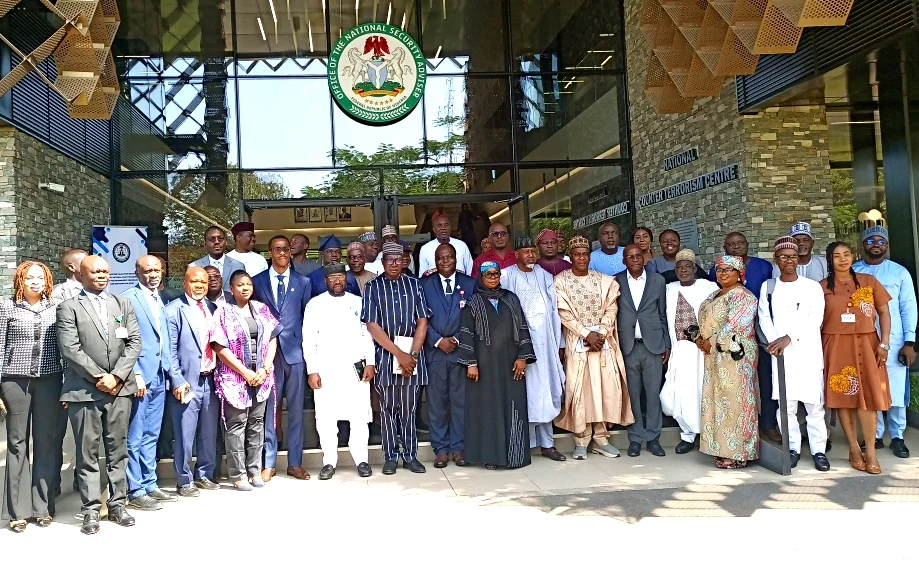
The National Coordinator, National Counter-Terrorism Centre (NCTC), Office of the National Security Adviser, Maj.-Gen. Adamu Laka, disclosed this at a national validation workshop in Abuja to harmonise months of stakeholder consultations held across the six geopolitical zones.
Laka, represented by the Director of Intelligence, Brig.-Gen. Peter Gbor, said the proposed policy was designed to break recurring cycles of conflict and rebuild trust among affected populations.
He described the framework as “one of Nigeria’s most people-centred peacebuilding tools in recent years”.
“For more than a decade, many communities have lived with fear, loss and trauma.
“This framework is not just about managing ex-combatants; it is about restoring dignity to victims, supporting communities to heal, and offering those willing to renounce violence a structured pathway to return to society,” he said.
Laka added that victims’ protection, community consent and accountability remain non-negotiable pillars of the proposed national programme.
The Director of Preventing and Countering Violent Extremism (PCVE) at NCTC, Amb. Mairo Abbas, said the document was the outcome of extensive engagements with victims, traditional rulers, women’s groups, youth organisations, security agencies and community-based groups.
Abbas emphasised that reintegration cannot succeed without genuine community participation.
She said the centre had visited communities and listened to people who had endured kidnapping, displacement, sexual violence and the loss of livelihoods.
“Communities told us what they want: safety, fairness and a process that protects victims while giving repentant individuals a genuine chance to start afresh. This framework reflects their voice.
“Social healing is as important as security. Reintegration must protect the vulnerable—especially women and children—while strengthening local resilience to prevent re-recruitment,” she added.
Head of Administration, African Union Counter-Terrorism Centre (AUCTC), Dr Usman Hussain, described Nigeria’s model as a strong continental example, noting that DDR processes remain critical for stabilising communities emerging from violent conflict.
He said the AU would continue to support Nigeria with technical expertise, training and exposure to regional best practices.
“Across Africa, we see the consequences when former combatants return to violence because communities are not prepared or victims are not protected.
“Nigeria’s inclusive approach—bringing together victims, local leaders, security agencies and development partners—is exactly what the AU advocates.
“A well-designed DDR process reduces communal tension, prevents revenge attacks and restores social cohesion. This framework has the potential to transform lives and strengthen national resilience,” he said.
Similarly, the Team Lead of the UK-supported SPRiNG Programme, Dr Ukoha Ukiwo, said the UK Government was proud to support Nigeria in developing what he called “a future-shaping peacebuilding instrument”.
According to him, global experience has shown that peace becomes sustainable when individuals are given credible alternatives to violence.
Ukiwo said the SPRiNG programme had worked closely with the NCTC and other Nigerian stakeholders over the past year, supporting consultations that shaped the emerging framework.
“We are pleased to see Nigerians defining the path forward. This is how national ownership is built,” he said. (NAN)(www.nannews.ng)
Edited by Yakubu Uba