


By Mercy Omoike
The Mycotoxicology Society of Nigeria (MSN) in collaboration with the Standards Organisation of Nigeria (SON) has moved for the detection and early prevention of mycotoxins in Nigeria’s agro-produce.
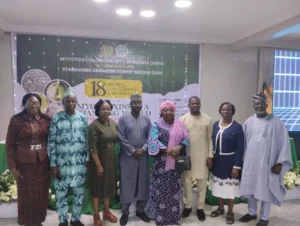
The News Agency of Nigeria (NAN) reports that farmers and agriculture stakeholders were educated on risk management of mycotoxins at the NSN 18th annual conference hosted by SON on Monday in Lagos.
The annual conference had the theme: “Mycotoxins in a Changing World: Risk, Management and Innovations.”
NAN reports that Mycotoxins are toxic chemical compounds produced by certain moulds that can contaminate food and pose serious health risks to humans and animals.
Common examples include aflatoxins and fumonisins, which can be found in cereals, nuts, and dried fruits.
Its exposure can occur through ingestion, inhalation, or skin absorption, leading to a range of health issues from acute illness to long-term effects like cancer.
Speaking at the conference, the MSN National President, Prof. Yemisi Jeff-Agboola, represented by Dr Danladi Abba, MSN Vice President (North), noted that all hands must be on deck to address the menace.
“This gathering is more than an academic event. It is a historic, convergence of science leadership and collective responsibility for the health of our nation and our continent.
“These subjects; climate change and emerging mycotoxin risk in food and meat are determining environmental realities reshaping fungal ecology and mycology profile,” Jeff-Agboola said.
He said advances in mycotoxin detection monitoring and surveillance system exploring, tools and technology would ensure faster and more reliable data for decision making.
According to him, step up in regulatory standard, policy and communication reflecting on how laws, guidelines and communication strategies can protect the population and market from mycotoxins.
“Innovative strategy for mycotoxin indicator in the agricultural value chain helps us in practical intervention and reduce contamination.
“Our research in climate change and emerging mycotoxin rates in food and feet is not merely academic. It is existential.
“We are the watchmen standing watch over the safety of our food system in an increasingly unstable war transition,” Jeff-Agboola said.
On his part, the Director-General and Chief Executive Officer, SON, Dr Ifeanyi Okeke represented by Mrs Talatu Ethan, the Director of Corporate Affairs, reiterated the organisation’s continuous support to ensure food safety in the country.
“This gathering is another labyrinth gathering of scientists, regulators and professionals committed to ensuring food safety, protecting public health and strengthening our nation’s trade and competitiveness.
“This year’s theme, which is particularly relevant for our national context, captures the intricate relationship between food safety, public health and economic development.
“We must emphasise the ultimate need for effective management of micro therapy contamination in food and agricultural produce.
“For a developing economy like ours, where agriculture remains a big pillar of our livelihood and exportation, addressing the menace of mycotoxins most especially, not only for protecting consumers, but also for enhancing the global acceptability of Nigerian agro products.
“As the national standard body, SON is deeply invested and interested in this mission.
“We will continue to work closely with relevant institutions to develop and implement standards that support food safety, good agricultural practices and value additions across the agriculture value chains.
“Through laboratory testing, certification and conformity assessment programmes, we help to ensure that Nigerian products meet both local and international standards, thereby contributing to food security, improving public health and enhancing trade outcomes,” Okeke said.
He also commended the MSN for its advocacy on ensuring food safety in the country.
“MSN, I, commend your sustained efforts in driving scientific inquiry, advocacy and awareness of aflatoxin management.
“Over the years, this society has provided a critical platform for bridging the gap between digital research policy and practice, ensuring that scientific findings translate into improved standards and safer food systems,” he said.
Also in her keynote address, MSN board of trustees member, Dr Folashade Oluwabamiwo, called for collective responsibility in tackling emerging mycotoxins in Nigeria’s agriculture space.
“Our work today is experiencing profound environmental and social economic changes that are reshaping Agriculture and Food safety in ways we have never seen before.
“Climate change has intensified, temperature fluctuations altered rainfall patterns have increased the frequency of drought and heat waves.
“These unpredictable conditions create new technological niches where fungi that produce mycotoxins can survive and spread.
“This evolving reality demands that our monitoring, prevention and control strategies become far more adoptive, adaptive, proactive and technologically advanced than ever before.
“This is no longer the time where you only react after the problem has been detected. This is the time that we need to prevent the problem from coming up at all,” Oluwabamiwo said.
According to her, “The burden of mycotoxins extends far beyond scientific discussion. It is a multifaceted challenge that affects human health, food security and economic stability on a global scale.
“The future will belong to those who innovate boldly, collaborate meaningfully and make steadfast in their commitment to protecting communities and food systems.
“Let us reapply our collective dedication to ensuring that no farmer, no child and both nations suffer from preventable contamination, together, we can build a high a healthier, safer and more resilient future for all,” she said.
Mr Sakin Agbayewa, the Deputy Chairman All Farmers Association of Nigeria, urged all farmers present to make good use of the opportunity the work presented to them.
“This very topic cannot be overemphasised. It is topical, it is a burning issue, and it is key.
“We need to be alive to enjoy the fruit of our labour and we need to eat healthy to stay right, or we eat right to stay healthy.
“What will it profit us, after all the farming and everything, I will now spend the bulk of that money on health issues in hospitals.
“Even for Nigeria, it is not safe because the health issues are already overstressed, so we should not have more health issues due to mycotoxins.
“I urge all farmers here to listen and learn from what they will be teaching us today, so that we can apply them in our farming practices,” Agbayewa said.(NAN) (www.nannews.ng)
Edited by Chinyere Joel-Nwokeoma

Comments