

By Deborah Coker
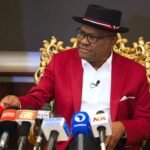
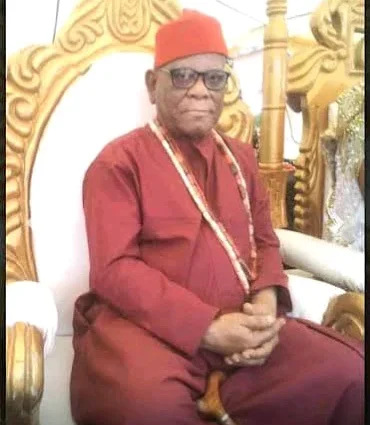
The Obuzor of Ibusa, Prof. Louis Nwaobishi, has affirmed that the Anioma people of Delta Notth are Igbo, citing history, language, and culture as evidence for their Igbo roots.
Nwaobishi was reacting to some recent divergent views, particularly that of the Asagba of Asaba, Prof. Epiphany Azinge, that the Anioma people were not Igbo, and that Asaba people were not migrants from Nteje, in Anambra.
However setting the records straight, the traditional ruler said that Anioma people have “unbreakable” Igbo identity, and traced the boundary error to the 1939 British revenge for Ekumeku resistance.
Linking the past to the present, he said that the current identity crisis in parts of Delta North was a continuation of the same British punishment meted out in 1939, after the Ekumeku War (1898–1914).
“The British never forgave us for the Ekumeku resistance because we fought them harder and longer than any other group west of the Niger.
“So when they drew the regional boundaries in 1939, they deliberately carved all Igbo-speaking communities west of the Niger out of the Eastern Region and dumped us in the Western Region as punishment and to weaken Igbo unity.
“The true East–West boundary was supposed to be far beyond Abudu in present-day Edo. The boundary between North and West is not the River Niger, just as the boundary between North and East is not the River Benue. Yet they used the Niger as a knife to split our people,” he said.
The traditional ruler also said that the agitation for the Anioma people to be returned to their Igbo ancestry started between 1938 and 1939, long before independence.
“Our fathers started protesting immediately. Traditional rulers from Aboh, Ibusa, Isele-Uku, and even Agbor were already writing petitions demanding that we be returned to our Igbo brothers in the Eastern Region.
“I am not the pioneer; I only continue what they started.
“After the war, when Imo, Anambra and other Igbo areas had solidified their identities, we coined the name ‘Anioma’ from Aniocha, Ndokwa, Ika, Oshimili to unite ourselves.
“In 1980, I personally founded a cultural organisation to protect and project that identity,” he added.
Nwaoboshi commended Sen. Ned Nwoko (APC-Delta) and lawmaker representing Delta North Senatorial District for resuming the struggle.
According to him, fortunately Ned Nwoko is our son. His father was among those who agitated in 1939. The struggle is in his blood.
The Obuzor said he was however shocked and saddened about the recent controversy on the identity of Anioma people.
“I heard with shock when it was reported that Asaba people did not come from Nteje. That is not true. Asaba is a direct child of Nteje.
“Previous Asagba of Asaba, including the late Prof. Chike Edozien, publicly acknowledged the Nteje origin during visits and interactions with Anambra monarchs.
“Identical cultural institutions: eight-quarter (ezi) system, Olieze title, coronation rites, and Ijele masquerade prove common ancestry.
“Nnebisi was the third son of Eze Nteje through Diaba, granddaughter of Eri. This is not a matter for debate; it is settled history among serious custodians of Anioma and Igbo tradition,” he said.
He, therefore, warned against what he called “political evisionism”.
“Let nobody rewrite our history because of today’s politics or fear of ‘South-South’ labelling.
“Whether in Delta, Anambra, Ebonyi, Imo, or Rivers, the language, names, culture, and ancestors are the same.
“It is time to awaken and embrace your brothers. We are one people. Nteje remains the mother, Asaba remains the child. Ibusa, Ogwashi-Uku, Ubulu-Uku, Aboh, Illah, Ebu; we all are traced to the same Igbo east, 100 per cent.
“Let us stand together and correct the injustice of 1939,” the Obuzor further said. (NAN)(www.nannews.ng)
Edited by Sadiya Hamza