

By Constance Athekame
The National Power Training Institute of Nigeria (NAPTIN) has expressed readiness to train no fewer than 1,500 engineers and technicians in the power sector to boost electricity.
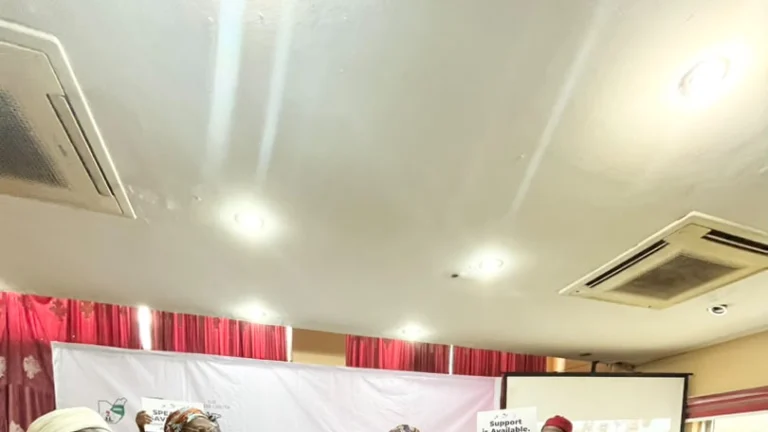
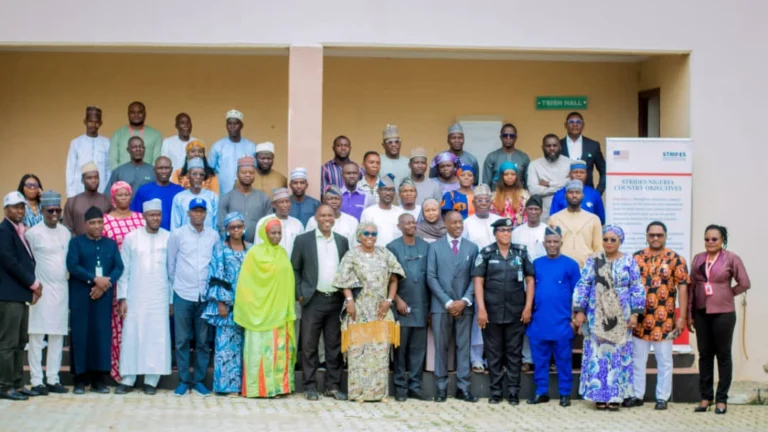
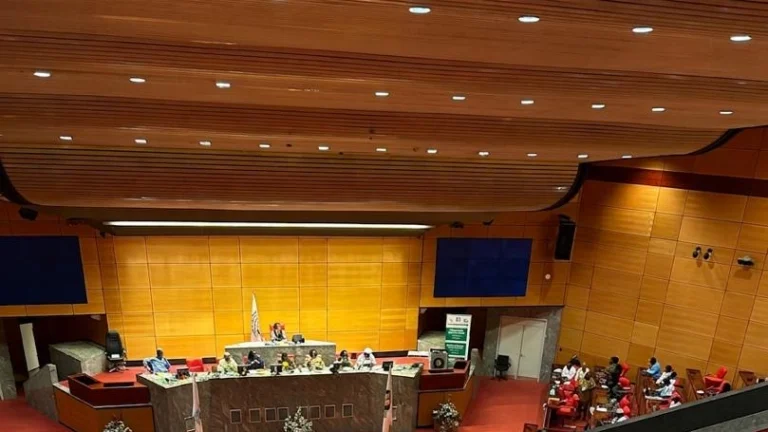
The Permanent Secretary, Ministry of Power, Alhaji Mamudah Mamman, said this in Abuja at a one-day Stakeholders’ Engagement for the Nigerian Electricity Supply Industry (NESI).
The engagement, under the project “Enhancing Vocational Training Delivery for the Nigerian Power Sector has the theme “Building a Skilled and Sustainable Workforce for NESI Transformation’’.
Mamman, represented by Mr Mustapha Babaumara, Director, Distribution Ministry of Power, said that a policy had been developed for NAPTIN to train the engineers and technicians.
“The ministry has developed a policy for NAPTIN to train about 1,500 engineers and technicians throughout the country in the next two years.
“This cannot be realised with the current financial status of NAPTIN, so we are encouraging stakeholders in the power sector to engage their staff and take advantage of their facilities to train personnel.
“This training is necessary for the safety of the state-of-the-art equipment that are put in place to be operated and maintained,” he said.
He said that the country had gone a long way in seeing that Nigerians experienced stable, reliable and affordable power sector.
“However, all these policies cannot be achieved without a skilled manpower in the sector.
“We need a strong manpower, both in the renewable energy sector and the conventional power supply system which I believe NAPTIN is up to that task with the present class of training facilities put in place,” he said.
Mamman said that the ministry was also encouraging the distribution, generation and transmission companies to key into the curriculum developed by NAPTIN to improve skilled manpower in their organisation.
“Power sector is not a sector that a fresh graduate can come in and start operating. You need to train them.
“I encourage everyone of us here to take advantage of the facilities in NAPTIN to get their personnel trained so that we can get a power sector of our dreams,” he said.
On his part, Mr Godfrey Ogbemudia, Programme Manager, Energy and Circular Economy, European Union (EU) delegation to Nigeria and ECOWAS, said that their organisation was funding two components of the NAPTIN project referred to as Component 1 and Component 2.
Ogbemudia said that the EU was also supporting NAPTIN and the Federal Government to develop a curriculum for Component 3.
“The EU supported NAPTIN in corporate development in Component 1 that focuses on curriculum development and we have helped the institute in developing over 65 new courses as well as revision of existing ones.
“We have also analysed NAPTIN’s customers’ management processes to identify opportunities for improvement and define new marketing processes to increase awareness of how the institution operates,” he said.
He said that the EU had done a lot in the solar market, adding that they were the first to start innovative private sector led mini-grids and interconnected mini-grids in the country.
“Now we have standards for several equipment in the renewable energy space. We are moving into other renewable energy resources like wind.
“We are currently supporting the Nigerian government through the Ministry of Power in developing a roadmap and action plan for wind energy in the country.
“The plan is to do on-site wind study for over a year in the country. So that should be starting very soon,’’ he said.
On small hydropower, he said “I am working with the United Nations Industrial Development Organisation to develop several private sector-led small hydropower projects across the country.
“I just came back from Bombay, where we are currently constructing the first small hydropower in Balanga Dam to commence before June next year.
“So, our target between 2021 and 2027 under our current programming is to support Nigeria to add 400 megawatts from renewable energy, translating into benefiting 5 million Nigerians,” he said.
Earlier, Director-General of NAPTIN, Mr Ahmed Nagode, said that the theme of the engagement, building a skilled and sustainable workforce for NESI transformation, was very instructive.
Nagode said that the success of every technical upgrade, every market restructuring, and every good modernisation effort hinged on one irreducible factor, a competent, agile, viral, and sustainable skilled workforce.
He said that without a sustainable skilled workforce, infrastructure remained underutilised, investments underperformed, and the national aspiration for stable and affordable power would remain elusive.
According to him, NAPTIN as the nation’s foremost power sector capacity development institute is acutely aware of this connection between human capability and sector performance.
“We recognise that despite our ongoing efforts, challenges persist. Skills gaps in emerging areas, misalignment between training outputs and industry demands, and fragmented collaboration mechanisms.
“These are the very barriers we are assembled here today to address. Therefore, the objectives of today’s engagement are clear and action orientated,” he said.
Nagode also said that there was need to move from consultation to structured and sustainable collaboration.
“In the sessions today, you will hear about our journey, our strategic direction, our readiness to serve as the central coordinating pillar for skill development in NESI.
“More importantly, we are to listen to your challenges, your needs, your advice, and your ideas for a true public-private partnership in human capacity building.
“I am confident that today’s discussion will yield not just communique, but concrete commitment to co-develop a specialised training programme.”
Nagode said that the discussion at the engagement would facilitate technical exchanges, integrate research into practise, and to ensure that stakeholders’ collective efforts were financially sustainable and strategically targeted. (NAN)(www.nannews.ng)
Edited by Kevin Okunzuwa
Comments