







By Justina Auta
The Federal Government says 41 million Nigerians previously at risk of blindness from trachoma have reduced to four million following successful interruption of mass drug administration in 116 endemic local government areas (LGAs).
This was disclosed during the Trachoma Quarterly Review Meeting convened to evaluate Nigeria’s progress toward eliminating trachoma, while highlighting key developments from national and state Neglected Tropical Diseases programmes coordinating implementation efforts across affected regions nationwide.
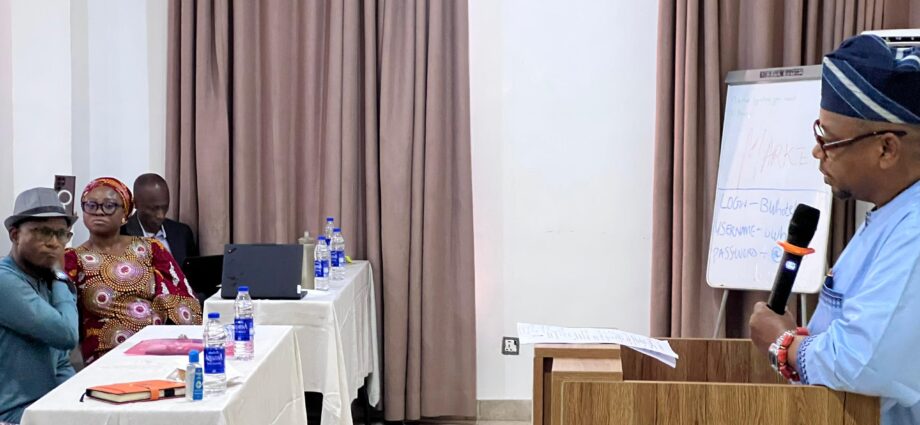
The event was organised by the Federal Ministry of Health and Social Welfare in collaboration with Sightsavers Nigeria and supporting partners in Abuja on Friday, bringing stakeholders together to strengthen action toward Nigeria’s trachoma elimination objectives.
Dr Fatai Oyediran, National Coordinator of the NTD Division, said 463 local government areas were mapped for trachoma elimination, with 134 identified as endemic and requiring intensified programme intervention.
He said the programme scaled up mass drug administration across all 134 endemic areas except Borno State due to insecurity, adding, “We have stopped MDA in 116 LGAs, showing programme progress.”
He explained that stopping mass drug administration in 116 of 134 endemic local government areas represented about 87 per cent disease reduction, demonstrating the programme’s remarkable success when compared with initial national baseline assessments.
He added that 41 million Nigerians initially at risk of blindness had been protected, with figures of affected individuals significantly reduced to fewer than four million following sustained nationwide intervention activities across various communities.
He said, “So you are looking at reducing the disease by about 61 million; we have about 36 million persons no longer at risk of trachoma. Great progress has been made.”
He noted that the meeting allowed stakeholders to review trachoma activities for 2025 and prepare coordinated plans for 2026, strengthening implementation strategies required to sustain progress toward long-term elimination goals nationwide.
While commending partners, he said, “We are looking between 2028 and 2029 in eliminating the disease in Nigeria” reaffirming government’s confidence in collaborative effort driving measurable progress toward nationwide trachoma elimination targets.
Prof. Adamu Mohammed, Chairman of the National Trachoma Task Force, said, “We are progressing, we are really making progress to promote elimination of trachoma in Nigeria,” emphasising substantial improvements achieved throughout national programme implementation.
He added, “From inception to now, we have achieved almost 90 per cent reduction in prevention of blindness from trachoma. Trachoma is a blinding disease, so achieving 90 per cent reduction is quite an achievement.”
He noted that “about 134 LGAs have been treated,” explaining that patients benefited from surgeries, improved clean water access, and strengthened environmental sanitation, all contributing to significant declines in trachoma transmission across affected states.
Prof. Joy Shuai’bu, Sightsavers Nigeria Country Director, highlighted their role in supporting national elimination efforts, noting that the organisation continued to steer Nigeria toward achieving its targeted trachoma elimination year of 2029.
She said, “We have also provided financial and technical support to implementing partners, the Federal Ministry of Health, and state partners across the 16 to 17 states where we have worked,” reaffirming Sightsavers’ long-term commitment.
She added that Sightsavers had been active in about 18 states, offering surgical interventions and antibiotic treatment, saying the organisation also participated fully in the National Trachoma Task Force providing technical programme guidance.
“With all that Sightsavers has done, we are proud to have been part of this long journey,” she said, adding that trachoma remained one of the easiest neglected tropical diseases for Nigeria to eliminate.
She added, “Among the five priority NTDs requiring preventive chemotherapy, trachoma stands out as one of the diseases nearing elimination in the near future,” underscoring significant programme impact nationwide.
The Country Director reaffirmed their commitment toward eliminating trachoma in Nigeria by 2029, emphasising continued collaboration with government and partners to strengthen the progress already achieved across affected communities nationwide. (NAN)(www.nannewsng.ng)
Edited by Abiemwense Moru