


By Patricia Amogu
The International Fertiliser Development Centre (IFDC) through its Soil Values programme funded by the Kingdom of the Netherlands, has launched activities for Nigeria’s 2025 World Soil Day with key agricultural institutions.
This year’s theme, “Healthy Soils for Healthy Cities,” drew the Minister of State for Agriculture, Sen. Abdullahi Sabi, alongside farmers, researchers, partners and other stakeholders.
The Minister said soil health remains essential to achieving food sovereignty and climate resilience, noting that soil provides most global food and vital nutrients for plant growth.
He said soils purify water, regulate climate, store carbon, reduce emissions and support biodiversity, making them central to Nigeria’s food systems and environmental stability.
He warned that Nigeria faces increasing soil degradation, erosion and pollution, which reduce yields, weaken food quality and threaten long-term food security and livelihoods.
The Minister noted that 33 per cent of Nigeria’s soils are degraded and said regenerating a few centimetres of soil can take nearly one thousand years.
He said World Soil Day helps create public and farmer awareness on soil conservation, sustainable practices, research support and stronger policies safeguarding national soil health.
He highlighted the Nigerian Soil Health Scheme for Farmers launched on Oct. 13, 2025, which provides location-specific fertiliser guidance and discourages wasteful, indiscriminate application.
The scheme promotes organic amendments, sustainable land management and technologies that improve soil health across Nigeria’s diverse agroecological zones.
The Minister commended partners including the German Agency for International Cooperation, OCP Africa, the Alliance for a Green Revolution in Africa and Sasakawa Africa for supporting the initiative.
Programme Director, Dr Alain Sy Traoré, said the 2025 sub-theme underscores the economic and climate importance of healthier soils for national and regional food sovereignty.
Deputy Programme Director, Dr Alimata Boundaogou, called for strengthened farmer resilience, better seeds and wider gender inclusion for women, youth and persons with disabilities.
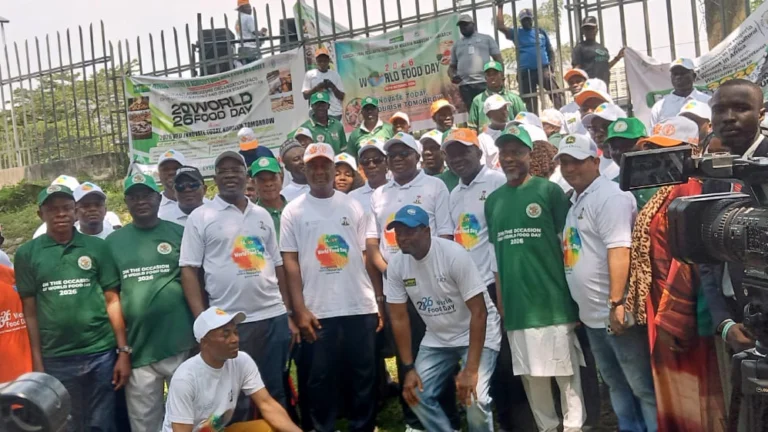
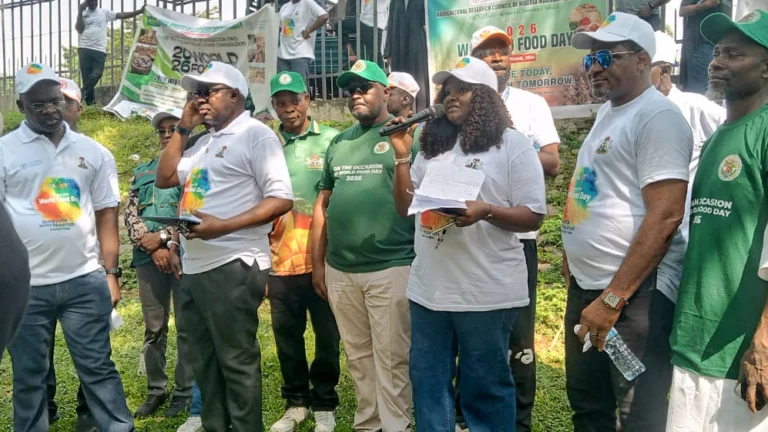
Day two featured an awareness march with farmers, students and partners advocating stronger soil protection actions.
Students also joined debates on restoring soil value and encouraging environmentally responsible agricultural practices among young Nigerians.
The Soil Values programme works across the Sahel, addressing droughts, conflict, desertification and climate risks that intensify soil degradation and harm rural livelihoods.
It aims to improve fertility on two million hectares and strengthen the resilience of 1.5 million farmers, with special focus on women and youth.
The programme promotes Integrated Soil Fertility Management and participatory landscape approaches that support widespread adoption of soil-enhancing technologies.
Its strategy combines Agroecology, Inclusive Markets and Enabling Environment pathways, supported by Clustering, Facilitation and Documentation pillars.
Soil Values is implemented by the IFDC with SNV Netherlands Development Organisation and Wageningen University and Research Centre.
Knowledge partners include the Center for International Forestry Research and World Agroforestry, the International Institute of Tropical Agriculture, ISRIC–World Soil Information and the International Water Management Institute.
IFDC operates in 27 countries, supporting smallholder farmers with sustainable, productivity-enhancing technologies through research and field interventions. (NAN)
Edited by Tosin Kolade
Comments