







By Philomina Attah
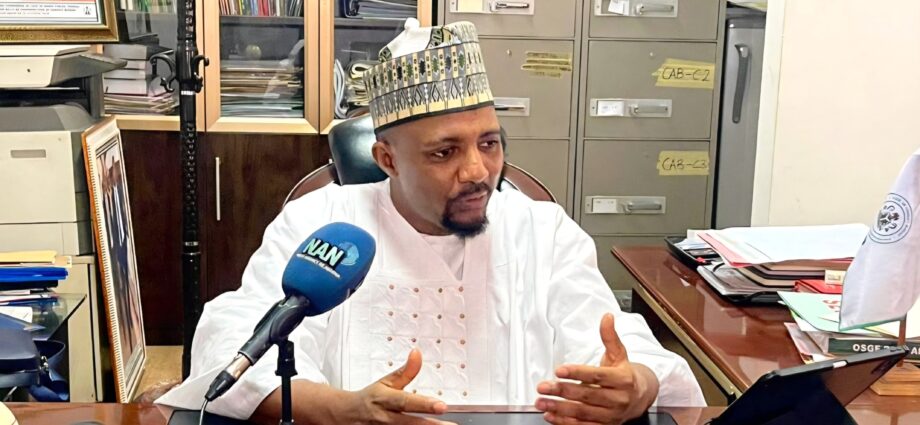
The Chairman of the Code of Conduct Bureau (CCB), Dr. Abdullahi Bello, says the bureau is the “centre” of Nigeria’s anti-corruption architecture.
Bello stated this on Sunday in Abuja in an interview with the News Agency of Nigeria (NAN)
“The CCB is the centre of the anti-corruption fight. Our work is intelligence.
“We have information on public servants through asset declaration,” he said.
He highlighted improved collaboration among anti-corruption agencies, noting that the CCB is working closely with the Economic and Financial Crimes Commission (EFCC).
Bello said the bureau is also working closely with Independent Corrupt Practices and Other Related Offences Commission (ICPC) and the Nigerian Financial Intelligence Unit (NFIU).
He cited instances where cases investigated by the ICPC were transferred to the CCB for further action, as well as ongoing efforts to formalise cooperation through memoranda of understanding with the EFCC.
When EFCC or ICPC request any information, we provide it within the limits of the law, and they use it for investigation, prosecution and convictions.
“The bureau, also receives intelligence from the NFIU, tax authorities and registries, reinforcing its central role as a hub for both input and output in the anti-corruption ecosystem,” he said
Bello said these efforts are already yielding results, pointing to Nigeria’s improved international ratings and the country’s recent exit from the grey list, led by the NFIU with support from other agencies.
He further disclosed that the CCB is pursuing asset recovery cases abroad and has secured interim forfeitures, steps he believes will further improve Nigeria’s global image once concluded.
“International organisations and embassies are now engaging the CCB, inviting us for discussions and support.
“This is happening because of the work we are doing.
“Once the CCB is fully resourced and doing what it is supposed to do, perceptions will continue to change,” he said.
The CCB boss stressed that improved staffing, technology, motivation and inter-agency cooperation are key to sustaining recent gains in the country’s fight against corruption.
Speaking on the challenges and reforms within the bureau, Bello said the issue confronting the CCB is not just about being understaffed, but about having the right skills and tools to deliver on its mandate.
“There are two different things: being understaffed and whether we have skilled staff members.
“What we are trying to do now is to improve the skills and knowledge of the workers we already have on ground so they can work in line with our new vision,” he said.
According to him, the bureau is focusing on capacity building, strategic recruitment and the deployment of technology to enhance efficiency.
He explained that automation, particularly the shift from manual to online asset declaration, would significantly reduce manpower needs while improving output.
“Sometimes, if you have technology, it might reduce the need for a bloated staff members.
“One staff member with enough skills, knowledge and the right tools can do the work of ten staff members.
“With the online system, one skilled officer can do the work of two or three officers under manual system,” Bello noted.
Beyond skills, the CCB chairman said workers’ motivation remained a critical priority, noting that welfare, salaries and allowances must be competitive to ensure integrity and performance.
“A staff member that is not motivated cannot give his best.
“We are working to ensure that workers of the Code of Conduct Bureau are paid in line with their counterparts in other law enforcement agencies.
“Once that incentive is there, they will be able to do their job properly,” he said.
Bello expressed optimism that with sustained reforms, stronger collaboration and better resourcing, Nigeria’s anti-corruption drive would record even greater progress in the coming years.(NAN)(www.nannews.ng)
Edited by Rotimi Ijikanmi