


By Sylvester Thompson
To transform Nigeria’s National Research and Innovation Fund (NRIF) from policy into practice, a critical first stakeholder workshop was convened to draft its operational roadmap for launch and governance across the country.
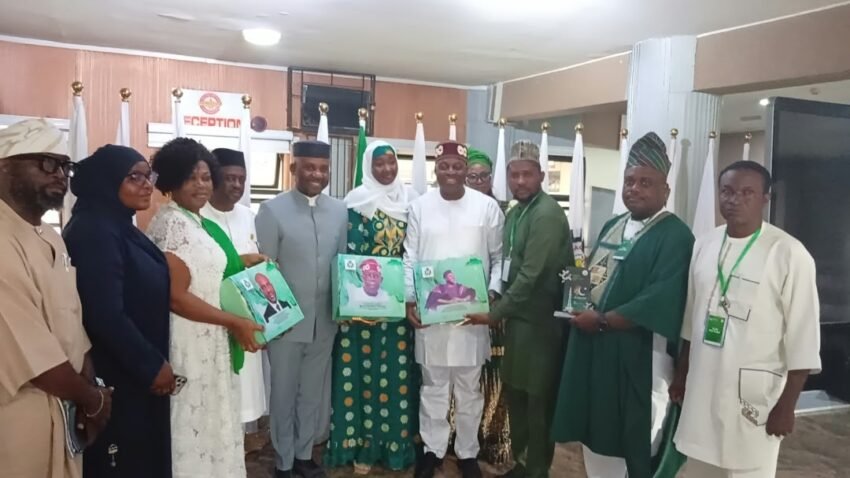
The three-day workshop, themed “Building Partnerships for Sustainable Innovation Financing,” commenced in Abuja on Monday and scheduled to conclude on Wednesday, Dec. 17, bringing together policymakers, academics, and industry leaders.
Dr Kingsley Udeh, Minister of Innovation, Science and Technology, declared the workshop open, urging universities and research institutions to prepare for a new era of funding driven by performance, relevance, collaborations, and national impact.
He noted that operationalising the NRIF bridged the gap between ideas and impact, linking laboratories to markets, research outputs to national prosperity, and ensuring that innovation directly contributed to Nigeria’s socioeconomic development agenda.
Represented by Permanent Secretary, Mr Philip Ebiogeh, Udeh described the NRIF as a cornerstone of national development, emphasising that it was a deliberate pillar of Nigeria’s long-term innovation and research architecture.
“The fund is not an isolated policy instrument; it is a deliberate pillar of Nigeria’s national development strategy,” the minister said, emphasising its potential to transform research, innovation, and industry collaboration across the country.
He described the NRIF as a legacy that would define the transformative era, stating its eventual assent would rank among the most consequential innovation reforms in Nigeria’s history.
Emeritus Prof. Abubakar Sambo, President of the Nigerian Academy of Science, delivered a keynote on “Financing Research and Innovation as a Catalyst for Nigeria’s Development”, emphasising that Nigeria’s approach could reshape national development strategies.
He added that the workshop’s deliberations would determine the country’s ability to empower indigenous scientists, create new industries, attract investments, and secure Nigeria’s position in the global knowledge economy.
Sambo said the NRIF could strengthen existing and develop new indigenous technologies, improve national security, enhance economic competitiveness, diversify the economy, and generate employment opportunities for young Nigerians.
Prof. Paul Onyenekwe, Director General of Sheda Science and Technology Complex (SHESTCO), outlined the workshop agenda, commending UNESCO for its support and technical guidance, which strengthened innovation ecosystems across Africa.
He noted UNESCO’s commitment to fostering partnerships that enhanced research, technological development, and knowledge-sharing, describing the event as a testament to collaborative efforts for sustainable innovation financing across Nigeria and the continent.
Sen. Aminu Abbas, Chairman of the Senate Committee on Science, Technology and Innovation, pledged full legislative support to ensure that NRIF, when presented to the National Assembly, would receive prompt attention.
Dr Tunji Alausa, Minister of Education, in a goodwill message, reaffirmed the ministry’s commitment to being a strategic partner, stating the NRIF would support tertiary institutions and technical colleges as incubators of national development.
Dr Enang Moma, representing UNESCO, presented the Sankore Project, aimed at strengthening UK-West Africa Science, Technology, and Innovation partnerships for sustainable development, data accessibility, open science, and commercialisation of research outputs.
She highlighted the project’s goal to empower communities to leverage innovation for societal progress, sustainable development, and enhanced opportunities for entrepreneurship, employment, and technological advancement across Nigeria and Ghana.
The News Agency of Nigeria (NAN) reports that the first day of the workshop included goodwill messages from various organisations, ministries, and MDAs.
This was followed by technical sessions where stakeholders began outlining actionable steps for the NRIF’s operationalisation and governance framework. (NAN)(www.nannews.ng)
Edited by Abiemwense Moru

Comments