



By Busayo Onijala
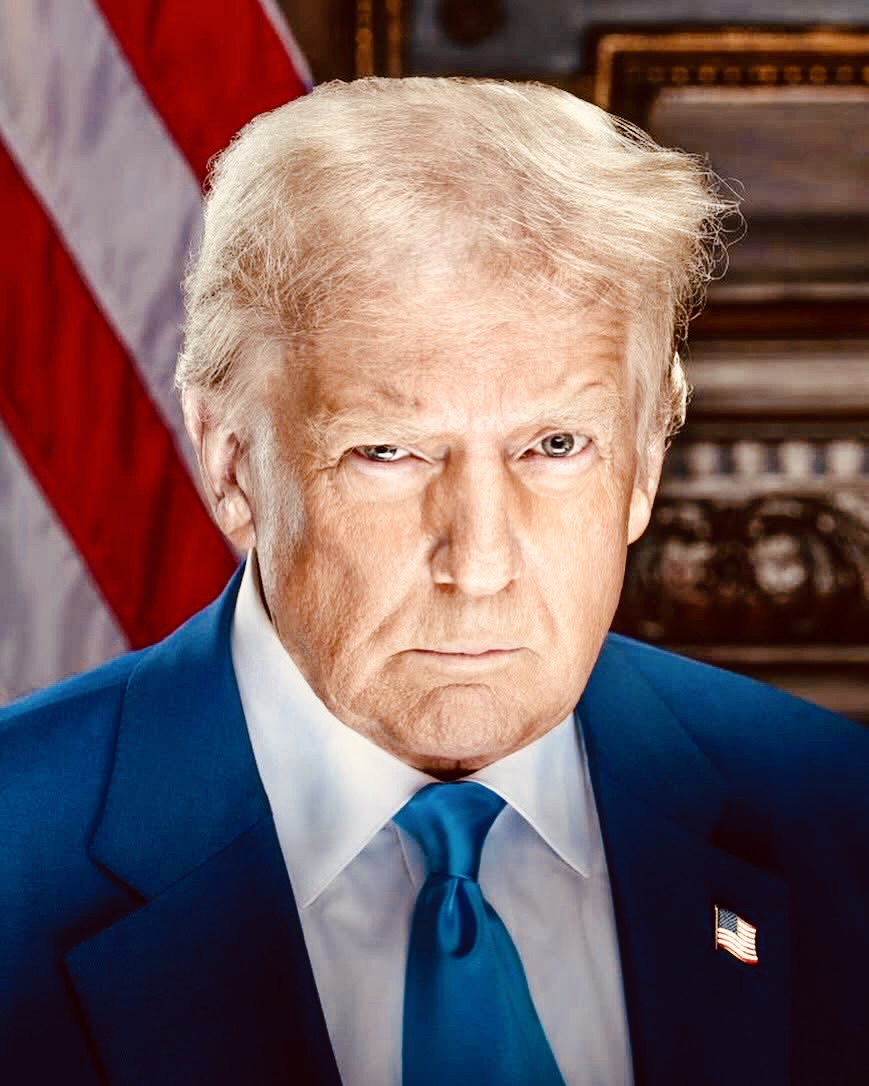
An international relations expert, Femi Ojumu, says the recent U.S. invasion of Venezuela, and the abduction of President Nicolas Maduro and his wife, undermine the United Nations Charter and principles.
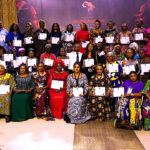
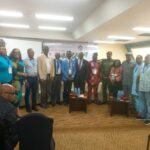
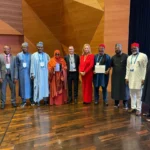
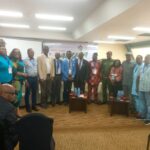
Ojumu made this known while speaking at a roundtable on issues arising from the U.S. intervention in Venezuela, hosted by the Nigerian Institute of International Affairs (NIIA) on Tuesday in Lagos.
The News Agency of Nigeria (NAN) reports that the U.S. special forces invaded the Venezuelan capital, Caracas, on Jan. 3 and abducted Maduro and his wife over alleged drug offences.
Ojomu, who is also the Principal Partner at Balliol Myers, LP noted that the development poses serious risks to global security and sets a very dangerous precedent.
He said the UN must return to its core principles as established under international law, tracing their roots to the 1648 Treaty of Westphalia.
The treaty entrenches sovereignty, territorial integrity, non-interference and diplomacy as pillars of global order.
“These principles are recurring themes throughout the UN Charter of 1945 and remain the glue that holds international relations together,” Ojumu said.
He identified Articles 1, 2 and 51 of the UN Charter as central to global peace and security, describing Article 2 on sovereign equality as “the bedrock of international relations today.”
Ojumu argued that the U.S. invasion violated these provisions, noting that Article 2 speaks clearly to sovereign equality, territorial integrity and non-interference.
He noted however that these have clearly not been applied in the U.S.–Venezuela saga.
The expert also stressed that Article 51 on collective self-defence could not justify U.S. actions, questioning what was being defended.
According to him, the frequent invocation of the “responsibility to protect” doctrine by powerful states lacked legitimacy without explicit authorisation by the UN Security Council.
Ojumu said U.S. foreign policy, driven by what he described as exceptionalism and unipolarism had completely capsized the established global orthodoxy of a rules-based order.
“The United States is acting as though it is above international law.
“If a UN member behaves like an outlaw, it sets a very dangerous precedent for global affairs,” he warned.
Turning to strategic options for the United Nations, Ojumu called for reform and democratisation of the UN Security Council, including a review of permanent membership and veto powers.
“It is not a silver bullet, but it will send a symbolic and important message that lasting change is long overdue.
“The UN should outrightly reject Hobbesian and Machiavellian approaches to force projection and de facto colonial expansion,” he said.
Ojumu further advocated people-centred, transparent and inclusive leadership within sovereign states, arguing that such governance reduced the likelihood of external intervention.
“I am not justifying invasion in any way, but responsible, democratic and inclusive leadership lowers, not raises, the probability of foreign aggression,” he said.
He criticised what he described as the U.S. acting as abductor, detainer, prosecutor, judge and jury in the Venezuelan case, saying it violated the legal principle of nemo judex in causa sua.
Ojumu also called for clearer legal definitions of when the duty to act or responsibility to protect could be invoked under international law, to avoid abuse.
He emphasised the need to uphold sovereignty and self-determination, insisting that each nation should freely pursue its own destiny without colonial shackles.
He added that UN member states must be allowed to choose alternative economic models and alliances, noting that “capitalism is just one economic model, and not an obligation.”
According to him, these steps are essential if the UN is to remain relevant in maintaining international peace and security in an increasingly volatile global order. (NAN) (www.nannews.ng)
Edited by Mark Longyen