









By Grace Alegba
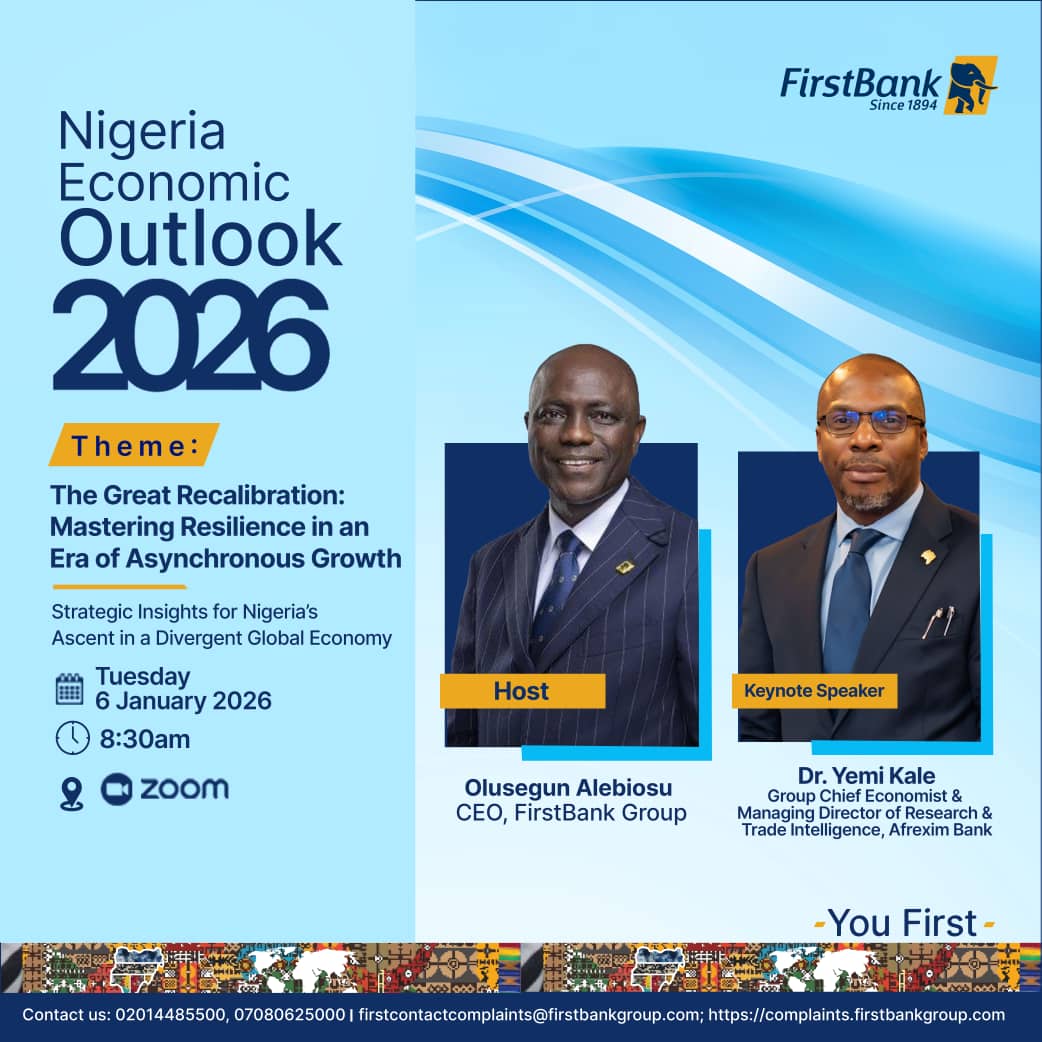
Nigeria’s economy is stabilising but remains fragile, requiring sustained reforms to unlock its full potential, says Dr Yemi Kale, Afreximbank’s Chief Economist.
Kale spoke on Tuesday at the Nigeria Economic Outlook 2026 hybrid event organised by FirstBank in Lagos.
The event was themed ‘The Great Calibration: Mastering Resilience in an Era of Asynchronous Growth’.
He said recent improvements in inflation trends, external reserves and exchange-rate flexibility had created “much-needed policy space” for economic management.
However, Kale warned that macroeconomic stability alone does not eliminate deep-rooted structural vulnerabilities within the economy.
He identified infrastructure deficits, energy shortages, high logistics costs, skills mismatches and security challenges as persistent constraints on productivity.
According to him, these factors prevent economic growth from translating into broad-based welfare gains for Nigerians.
Kale said addressing the constraints could unlock opportunities in digital innovation and agro-industrial value chains.
He added that services exports and deeper regional trade integration also present significant growth prospects for the economy.
The economist stressed that fiscal discipline and stronger institutions remain central to long-term economic resilience.
He said sustained infrastructure investment and human capital development are critical to improving productivity and competitiveness.
Kale noted that private sector participation and sustainable finance must support government efforts to drive inclusive growth.
He projected 2026 GDP growth of between 3.5 and 4.5 per cent under a baseline scenario.
Under an optimistic scenario, he said growth could reach between 5 and 6 per cent.
However, he warned growth could slow to between 2 and 3 per cent if reforms weaken.
Kale said the unified foreign exchange framework had restored market confidence and improved transparency.
He forecast the naira exchange rate at between N1,350 and N1,450 to the dollar.
External reserves, he added, could edge toward 45billion dollars if current policies are sustained.
Kale also warned that Nigeria’s debt level, though moderate at about 40 per cent of GDP, faces affordability pressures.
He attributed the concern to high debt servicing costs amid constrained fiscal revenues.
Kale urged policymakers to sustain reforms, strengthen economic resilience and ensure growth delivers large-scale job creation. (NAN)(www.nannews.ng)
Edited by Kamal Tayo Oropo