


By Hafsah Ibrahim Tilde, News Agency of Nigeria (NAN)
Every parent wants to see their child thrive, laugh, learn, and find their place in the world. But what happens when the world is not built to understand your child?
For parents of children with disabilities in Abuja, that question often comes with fear, frustration, and uncertainty. Special needs education in Nigeria remains a daunting challenge, with few dedicated schools, undertrained teachers, and a society still learning to embrace difference.
Many children are left at home, their potential locked away, not by their condition but by an unprepared system.
According to United Nation’s Population Fund 2021 data, there’s an estimation of 32 million people including children in Nigeria, who live with some form of disability.
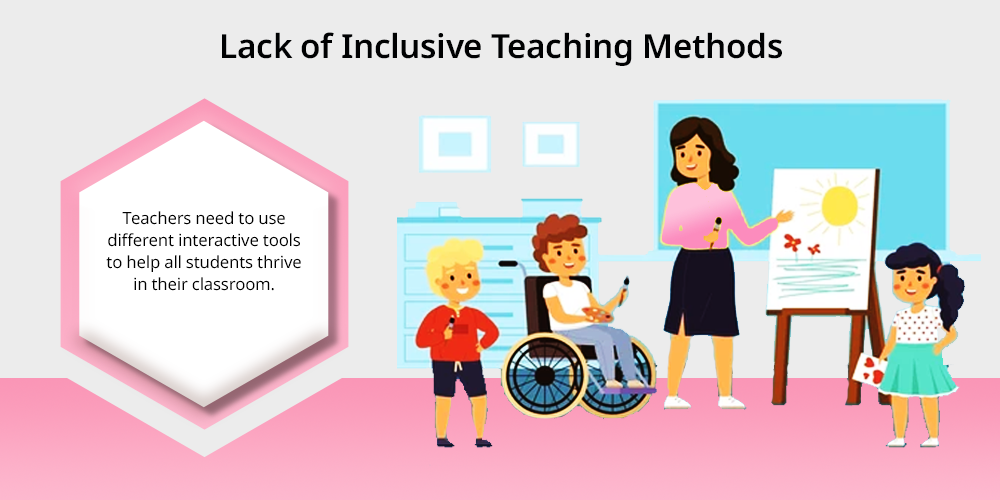
Children with disabilities experience disrupted education for various reasons including stigma and discrimination, inaccessible school infrastructure, delayed identification and diagnosis, and a lack of funding to support their needs.
(https://cscuk.fcdo.gov.uk/
With over 260,000 kids with disabilities, there are less than one per cent schools taking action to cater for the educational needs for children living with disabilities.
Tucked within Abuja is the NAFOWA Special Needs School; a quiet, determined effort changing this narrative.
An environment that is welcoming, heart-warming, lively, and without discrimination illuminates a child’s sense of belonging, and that is what makes NAFOWA Special Needs School different.
Here, every child is more than a diagnosis; they are a name, a personality, a possibility and inside its modest classrooms, the transformation is undeniable.
“We’ve seen children who barely spoke develop a lot of speech in the time they’ve spent here,” the head teacher, Blessing Imuh, said, her voice filled with pride.
The school’s approach, an Individualised Educational Programme (IEP), combines personalised education with therapy, ensuring each child’s learning pace is respected, while also building their confidence.
“This Individualised Educational Programme gives you the privilege to teach a child at a time, not teaching them collectively. It has really helped children to develop their self-confidence, to attain their academic tasks, to be self-confident.
“It has bettered their lives in so many ways because it’s a plan and the plan is being reviewed periodically in order to know if the child is actually attaining that goal that has been set for the child,” Imuh added.
“It’s not shameful to have a child with disability; disability has no regard for religion or class, it can happen to anybody,” Pandukur Garba, a therapist, said.
‘’Parents of children living with disability should seek early therapeutic intervention.
‘’Teaching children with special needs requires assistive technologies, instructional materials, and devices to assist them, and we need such equipment in the school.’’
Flying Lieutenant H. Garba, a parent of one of the students, said enrolling his son in the NAFOWA Special Needs School has given him a sense of security, because he knows his son is in good hands and they as parents can go to work rest assured.
Asked what subject she loved most, Olaedo Ekpe said “Mathematics”, and went ahead to show how to solve a mathematical problem with enthusiasm.
Ekpe joins her classmates during some classes in the NAFOWA Little Angels School, and also joins them for exams.
Mrs Rita Nanbol, mother of Pirnan, another parent, said her son has improved and is getting better compared to when he was admitted into the school. She mentioned how delighted she is seeing his improvement and how impactful the school has been for them.
Munnir Otse also told us how he loved coming to school and from his interaction with his teachers and fellow students, it was obvious how much comfortable he was in school.
For the supervisor of the NAFOWA Special Needs School, Mrs Seember Olarunwaju, every child is peculiar when you understand the personality of that child, and it is one of the reasons why the school uses the one-on-one method to teach the children, and catering to their needs.
The one-on-one teaching model used at the school mirrors what global education bodies describe as best practice for children with special needs.
UNESCO’s Global Education Monitoring reports emphasise that individualised instruction allows children with disabilities to learn at their own pace, increasing participation and confidence, especially in settings where standard classrooms often leave them behind.
UNICEF and the World Health Organization also highlight the importance of tailored learning plans combined with therapeutic support, noting that early, personalised intervention can significantly improve communication and functional skills.
At NAFOWA, this approach plays out quietly but consistently, each child assessed on entry, each plan reviewed over time, progress measured not against classmates, but against the child’s own starting point.
Every child is assessed when joining the school; the teacher and therapist identify the level of the child’s development and draft out a programme to suit the need of the child.
“We have a system that works for the teachers, therapists, and students. We appreciate everyone here. We make sure they feel seen, heard, and loved and that makes the team work efficiently.”
The journey is not perfect; the teachers admit that resources are limited, more therapists are needed, specialised tools are expensive, and public support is minimal.
‘’With more trained teachers, they’ll be able to achieve more in catering for the kids,’’ Garba said.
Due to the issue of proximity and financial constraints, (the school charges an average of N210,000 per child), some parents had to withdraw their kids from the school.
In a city that’s growing, the question remains: how many more children like Ekpe, Munir, and Pirnan are waiting at home, unseen, unheard?
The NAFOWA Special Needs School may not be the only solution, but it shows that with empathy, training, and patience, every child’s world can be expanded. Perhaps, it’s not just about special needs education, but about building a more attentive society, one child at a time.(NAN)
***If used please credit the writer and the News Agency of Nigeria (NAN).
Comments