









By Abiemwense Moru, News Agency of Nigeria (NAN)
In Nigeria, protein deficiency among under-five children remains a pressing public health concern.
Many families struggle to access affordable animal-based protein, leaving young children at risk of stunted growth, weakened immunity, and long-term developmental challenges.
Across rural communities, malnutrition quietly shapes futures, often invisible to policymakers and city dwellers.
According to UNICEF report on malnutrition, Nigeria has the second highest burden of stunted children in the world, with a national prevalence rate of 32 per cent of children under five.
An estimated 2 million children in Nigeria suffer from severe acute malnutrition (SAM), but only two out of every 10 children affected are currently reached with treatment.
Dr Phorbee Olapeju’s Non-Governmental Organisation (NGO), Food Agricultural Nutrition Network (FANN) is confronting this challenge head-on.
Based in Abuja, but operating nationwide, FANN bridges gaps in food, agriculture, and nutrition by combining research, community engagement, and strategic interventions.
Through evidence-based programmes, the NGO is redefining how communities address malnutrition and ensure children receive the nourishment they need.
FANN’s approach includes research and practical implementation, baseline surveys, focus group discussions, and dietary studies that provide crucial insights into local nutrition challenges.
These data-driven approaches allow FANN to design interventions tailored to community realities, and ensuring solutions are both relevant and impactful.
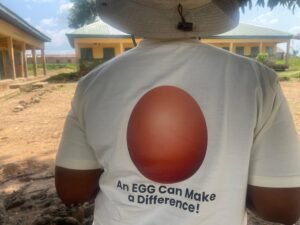
The organisation’s flagship programme, Egg-a-Child, targets under-five children in rural communities around Abuja, the Federal Capital Territory.
The initiative addresses protein deficiency by providing children with eggs, an affordable, nutrient-rich source of animal protein.

Eggs are nutritional powerhouses for kids, providing high-quality, complete protein that supports growth and development.
They also contain choline, which is essential for brain development, and omega-3 fatty acids that promote overall health.
In addition, eggs are rich in iron, helping prevent anaemia, and packed with vitamins A, D, B12, and E, which strengthen immunity, bones, and vision.
Easily digestible, eggs help children feel full and focused, supporting healthy development and daily energy needs.
Eggs, Olapeju explains, offer an accessible and practical alternative to costlier protein sources like fish or meat, making them ideal for rural households.
Before rolling out Egg-a-Child, FANN conducted extensive baseline surveys.
“Mothers and caregivers completed questionnaires detailing children’s dietary patterns and protein intake.
“These assessments revealed shocking gaps. Many children had never eaten eggs regularly, in spite of some families keeping chickens.
“Ignorance, low prioritisation, and economic constraints all contributed to insufficient protein intake,” Olapeju explained.
She said community engagement was critical.
“FANN worked closely with local leaders, healthcare workers, and caregivers to build trust, ensure transparency, and encourage participation.
“Community mobilisation was essential to overcome initial scepticism and logistical hurdles. By involving locals, FANN ensured the programme was embraced and owned by the communities it serves,” Olapeju said.
Olapeju said registered children received seven vouchers each, redeemable for eggs at primary healthcare centres.
She said caregivers brought their children and wards to designated centres where eggs were consumed on-site, preventing diversion and maximising nutritional benefits.
“Mothers prepared the eggs, boiled or fried, at the centres, contributing firewood, pots, and water.
“This participatory approach strengthened community ownership while delivering practical nutrition education.
“The results were swift and visible. By the fourth feeding session, researchers observed noticeable improvements in children’s health.
“Consistent egg consumption had a tangible impact. Energy levels increased, alertness improved, and many children appeared visibly healthier,” Olapeju said.
She said that the programme also integrated nutrition education for caregivers.
“Mothers, fathers, and community members learned about protein-rich diets, the importance of prioritising child nutrition, and how to make the most of locally available resources.
“Behavioural change is just as important as providing food,” Olapeju said.
She said affordability and sustainability were central to FANN’s strategy.
Eggs, Olapeju said, costing roughly N5,500 per 30-piece crate, were chosen over more expensive alternatives.
She said contributions from patriotic Nigerians funded the initiative, allowing it to operate without foreign donors.
“This grassroots support demonstrated the community’s commitment to improving child nutrition.
“Egg-a-Child spanned three rural communities, Figba, Burum and Tarku Shara carefully scheduled around local agricultural cycles.
“FANN paused interventions during peak bean harvesting to respect community priorities, illustrating sensitivity to local practices.
“The programme also used 24-hour dietary recalls and diet quality questionnaires to track children’s protein intake and identify gaps.
“Findings confirmed that animal-based protein consumption among young children was irregular or non-existent.
“The on-site feeding model proved highly effective,” she said
Olapeju said children, initially reluctant to eat eggs, were encouraged by peers and caregivers, fostering acceptance and sustained participation.
She said community collaboration amplified outcomes: parents and local leaders helped prepare eggs, manage logistics, and ensure every registered child received the proper allocation.
Olapeju said FANN also partnered with primary healthcare centres to provide medical referrals for malnourished children.
This integrated approach, she said, ensured that vulnerable children received both nutritional and medical support, strengthening the overall impact of the initiative.
She said the programme’s success sparked behavioural change.
“Caregivers reported increased energy and vitality among children, reinforcing the value of protein in daily diets.
“Families began prioritising nutrition consistently, reflecting FANN’s emphasis on education alongside food provision.”
Looking ahead, she said, FANN planned to expand its interventions.
Olapeju said future programmes aimed to establish household-level egg production, combining chicken rearing with child nutrition to create sustainable, community-led food security solutions.
She added that the caregivers would continue receiving education on proper egg consumption, ensuring that eggs produced at home are allocated to children rather than sold or consumed elsewhere.
“The Egg-a-Child initiative exemplifies solution-driven actions. It identifies a pressing public health issue, implements a practical intervention, and measure outcomes using evidence-based data.
“Insights from FANN’s work can inform policy and scale similar initiatives nationwide, offering a replicable model for addressing protein deficiency across Nigeria.
“FANN’s approach emphasises community ownership, accountability, and empowerment.
“By engaging caregivers, healthcare staff, and local leaders in programme delivery, we foster long-term sustainability and ensure the intervention’s benefits extend beyond the duration of direct NGO involvement.”
Olapeju said scheduling interventions around local agricultural cycles and cultural practices ensured that programmes were practical, culturally sensitive, and widely accepted.
Through Egg-a-Child, FANN illustrates the power of combining research, community engagement, and practical solutions as well as proving that local action can create tangible, measurable health improvements for children.(NANSoJo)
***If used, please credit the writer and the News Agency of Nigeria.