


By Sumaila Ogbaje, News Agency of Nigeria (NAN)
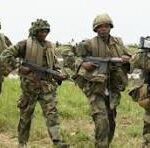
The Nigerian Army stands out as a principal bulwark of national security, chalking significant operational gains across multiple theatres of conflict and insecurity.
With insurgency, banditry, kidnapping and communal violence persisting in various parts of the country, the Army’s role as foot soldiers of stability has been pivotal in safeguarding lives and defending the nation’s territorial integrity.
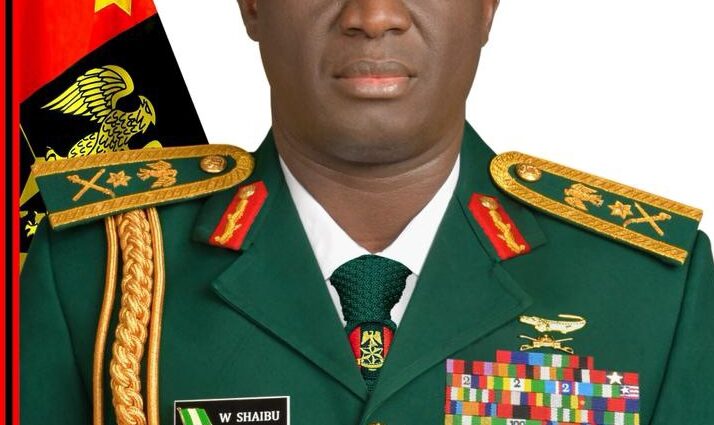
Under the leadership of Chief of Army Staff (COAS), Lt.‑Gen. Waidi Shuaibu, the Nigerian army deepened its operational focus in 2025, emphasising a combination of tactical innovation, enhanced training, joint operations and strengthened civil‑military cooperation.
In his address to troops during the Christmas season in Abuja, Shuaibu acknowledged that the year had been “eventful, demanding and operationally rewarding”, attributing the army’s successes to the gallantry, dedication and resilience of its personnel.
Operational Focus in a Complex Security Environment
Nigeria’s security environment in 2025 remained fluid and multifaceted. In the North‑East, remnants of Boko Haram and ISIS‑linked cells continued sporadic attacks, while in the North‑West and North‑Central, bandits and criminal networks carried out kidnappings and raids.
Meanwhile, separatist agitation and communal clashes in parts of the South compounded the Army’s operational responsibilities.
In response, the Nigerian Army sustained a robust operational tempo, joint task forces conducted coordinated counter‑terrorism and counter‑banditry campaigns that yielded tactical victories in multiple regions, often in conjunction with sister services and security agencies.
According to the army chief, troops intensified operations that led to the elimination of numerous insurgents and bandits, the arrest of key suspects, and the rescue of kidnapped civilians, saying the outcomes reflected the Nigerian army’s drive to protect lives and secure affected communities.
Some of the key operational successes recorded by the Nigerian army as highlighted by the Director of Defence Media Operations, Maj.-Gen. Michael Onoja, included mass arrests and surrenders of terrorists and their collaborators during the year under review.
The military reported 4,375 arrests of terrorists and suspects, along with 1,616 surrenders of terrorists and family members, as well as rescue of 2,336 kidnapped civilians across Nigeria in 2025, indicating pressure on insurgent networks and a major humanitarian and security achievement.
In the North-west alone, the 8 Division Nigerian Army under Operation FANSAN YAMMA reportedly rescued 1,023 kidnapped victims, foiled planned kidnap plots and disrupted terror cells in strategic areas, including Abuja and other regions, preventing large-scale operations by criminal networks.
In the North East theatre, troops cleared multiple Boko Haram/ISWAP hideouts, capturing informants and disrupting logistics and supply chains critical to extremist operations.
The army also reported successful offensive operations deep into areas like Sambisa Forest, dismantled terrorist camps, destroyed IEDs and weapons stockpiles, and reduced insurgent safe havens.
Troops also recovered 189 AK-47 rifles, 4,338 rounds of ammunition seized, 305 motorcycles used for raids seized, 4,123 stolen livestock recovered and neutralisation of several high-profile bandit leaders.
Army operations in the Niger Delta under Operation Delta Safe destroyed 503 illegal oil refining sites and apprehended hundreds of oil thieves, directly undermining the finances that feed insecurity.
Seizing weapons, detonators, explosives, and even surveillance drones cut off resources and prevented planned terror attacks.
A defining feature of the Army’s 2025 campaign has been enhanced jointness, coordinated action with the Nigerian Air Force, Navy and other security agencies.
Top military leadership has emphasised that unity of effort, intelligence sharing and interoperability are critical to defeating sophisticated adversaries.
This approach has played out on the ground, with Nigerian Army units working in concert with air assets and marine units to tighten pressure on criminal networks and degrade their operational capabilities.
Notably, this synergy has seen Nigerian troops exploit actionable intelligence provided by air surveillance and combine it with precision ground manoeuvres, yielding measurable results in disrupted criminal activity.
Shuaibu has repeatedly highlighted the vital role of discipline, steadfastness and courage in the field.
In his Christmas message to troops, he noted that their sacrifices remain the backbone of the nation’s peace and stability, reinforcing the ethos that lives saved and communities protected are the true measure of military success.
Protecting Civilians and Upholding Human Rights
In spite of the intensity of operations, the Nigerian army has stressed adherence to human rights and protection of civilians. Military leadership has often reiterated that the Army’s actions are guided by constitutional mandates and international norms, ensuring that operations are conducted with respect for non‑combatants.
In mid‑year engagements, the Army’s presence contributed to enhanced security along major transport corridors, improving civilian confidence in state protection, particularly in the Northwest and North‑Central regions. Analysts say that insulating vulnerable communities from criminal influence remains a strategic triumph with lasting impact.
Community Engagement and Civil Support
Beyond kinetic operations, the Nigerian Army strengthened its civil‑military engagement in 2025. Through outreach programmes, medical assistance missions, and infrastructure support in conflict‑affected zones, troops worked to build trust with local communities.
Military leaders believe that fostering positive relations with civilians not only enhances intelligence gathering but also undermines the social support networks upon which criminal elements rely. This approach, according to defence analysts, has led to improved local cooperation across key operational areas.
Government Support and Strategic Backing
The government’s backing played a crucial role in sustaining the Nigerian Army’s operational capacity. Defence authorities, including the Minister of Defence, acknowledged that the security landscape demands continuous adaptation.
At the Chief of Army Staff Annual Conference 2025, President Bola Tinubu, represented by Vice‑President Kashim Shettima, reaffirmed the administration’s commitment to mobilise all military assets to eliminate security threats and protect Nigerians.
Tinubu underscored enhanced procurement of mine‑resistant ambush‑protected vehicles, armoured fleets, and refurbished armoured fighting vehicles as part of efforts to boost operational readiness.
In his remarks, the Minister of Defence, Gen. Christopher Musa, stressed that, in spite of the persistent challenges, the operational capacity of terrorist groups, bandits and other criminal elements had been significantly degraded across multiple theatres, attributing those gains to comprehensive planning, execution and inter‑agency coordination.
Modernisation, Training and Innovation
Operational progress in 2025 was also shaped by renewed focus on modernisation, training and professional development.
The Nigerian army intensified programmes aimed at enhancing tactical proficiency, leadership skills and technical competence among personnel.
Prominent among these were troop training exercises, simulations and specialist courses designed to equip soldiers with skills relevant to contemporary conflict environments.
In addition, the army’s investment in specialised platforms, including the continued expansion of its Aviation Unit, has added a new dimension to operational flexibility, enabling faster troop deployment and logistics support in difficult terrain.
Challenges and the Road Ahead
In spite of the gains of 2025, security challenges remain formidable and fluid. The evolving tactics of insurgent and criminal networks require constant innovation.
Military analysts caution that while tactical victories are significant, the broader security architecture must be reinforced through socio‑economic development, enhanced governance, and sustained community engagement.
Nevertheless, government and defence officials affirm that the Nigerian army will continue to adapt its strategies and strengthen partnerships with domestic and international agencies to secure enduring peace.
In 2025, the Nigerian army stood as a testament to resilience and resolve, which through intensified operations, strategic leadership and unyielding commitment to national security, strengthened its role as the nation’s foot soldiers of stability, protecting lives, securing communities and asserting the state’s authority in troubled regions.
While security challenges persist, the achievements of 2025 signal that with sustained effort, unity of purpose and robust support, Nigeria’s army remains capable and determined in its mission to defend the nation and safeguard its people. (NANFeatures)