



By Ahmed Ubandoma
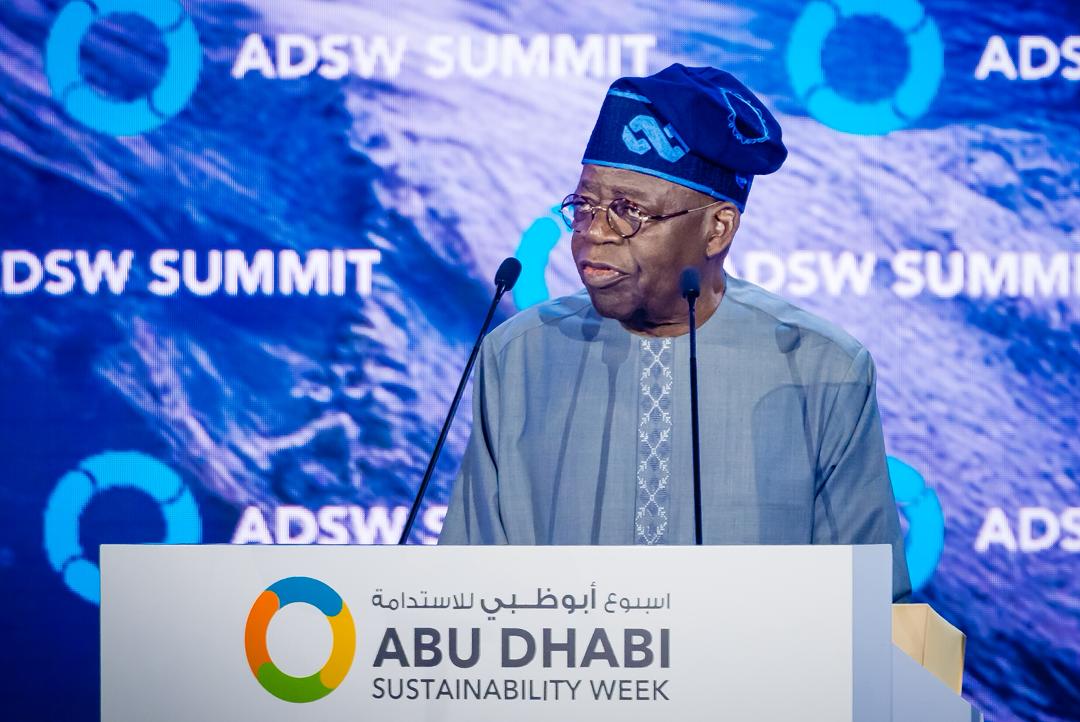
President Bola Ahmed Tinubu’s participation in the 2026 edition of the Abu Dhabi Sustainability Week (ADSW) marked a transformative shift in Nigeria’s foreign policy and economic strategy.
The ADSW summit, a premier global platform for sustainability, clean energy and climate finance offered Nigeria a high-visibility stage to showcase its economic reforms, climate action plans and investment opportunities.
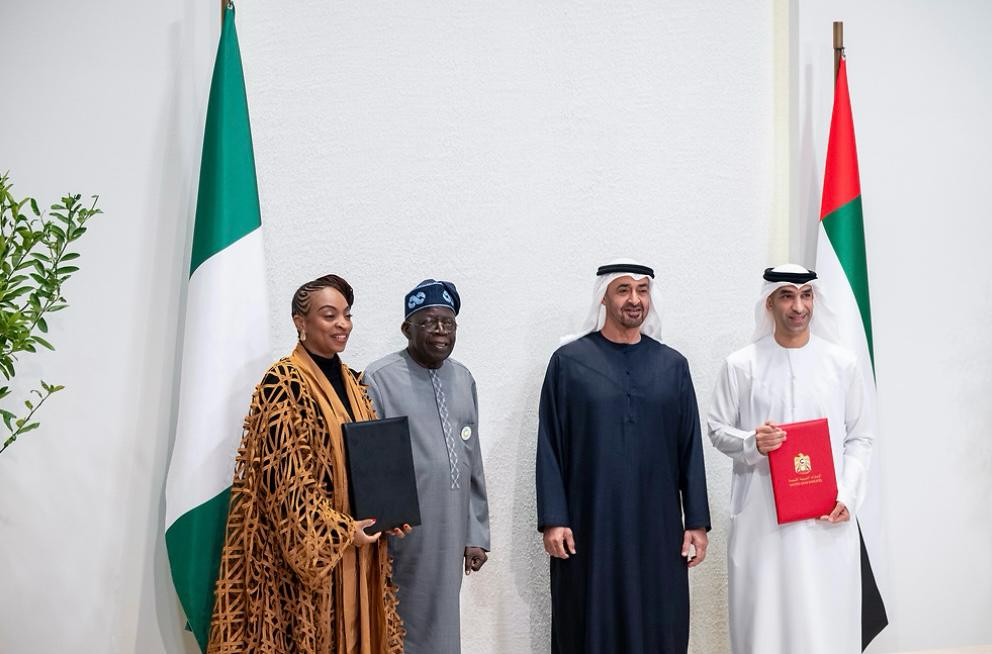
President Tinubu`s visit in company of Nigeria`s Ministers of Trade and Investment, Finance and coordinating Minister of the Economy and that of Budget and Planning moved beyond mere diplomacy, resulting in the signing of the Comprehensive Economic Partnership Agreement (CEPA) with the UAE, a landmark deal poised to integrate Nigeria more deeply into the global green economy and Middle Eastern trade corridors.
The President used the occasion to articulate Nigeria’s integrated approach to climate and economic growth while courting foreign capital and forging deeper partnerships.
At the event, he also announced the co-hosting of INVESTOPIA in Lagos in Partnership with the UAE in February this year.
President Tinubu described CEPA as a historic and strategic agreement that would also enhance cooperation in aviation, logistics, agriculture, and climate-smart infrastructure, creating enduring opportunities for the people of the two countries.
He stated that Investopia would bring together investors, innovators, policymakers, and business leaders to transform opportunities into commitment and ideas into investment.
”We warmly invite our partners to join us and help build the next chapter of sustainable and shared prosperity for Nigeria, Africa, and the world, ” President Tinubu said.
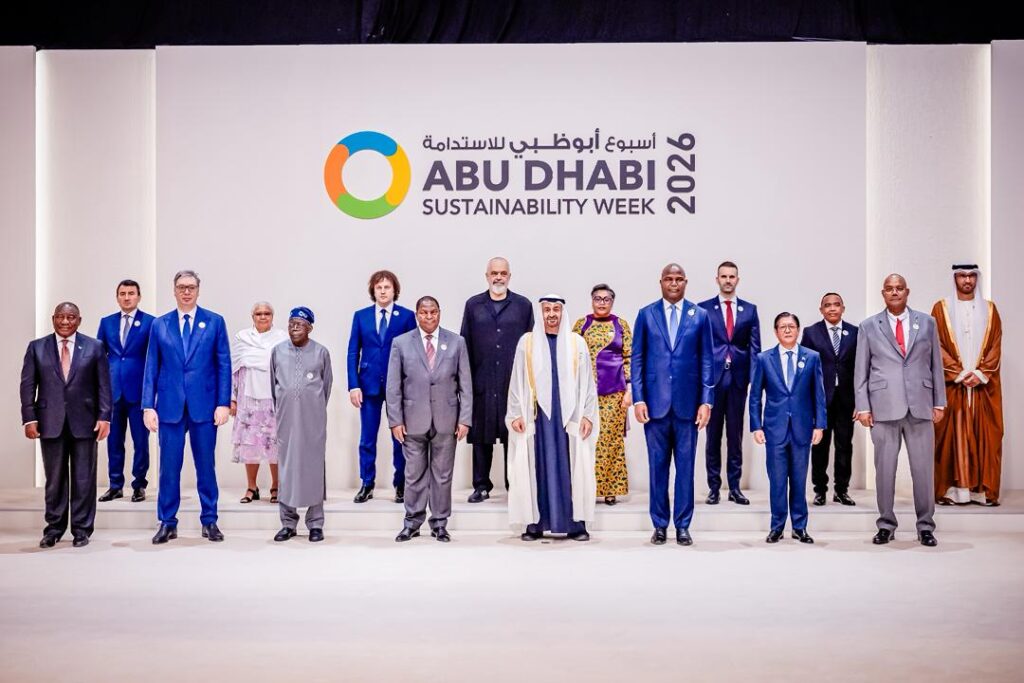
President Tinubu told the Summit that Nigeria aimed to mobilise up to $30 billion annually in climate and green industrial finance as it accelerates energy transition reforms and expands nationwide electricity access.
”The foundation of every modern economy is electricity. As an emerging economy in the Global South, we understand the delicate balance between industrialisation and decarbonisation, ensuring neither is pursued at the expense of the other.
”We are calling for a fundamental shift in the global financial architecture: a move away from the restrictive requirement of sovereign guarantees, which unfairly penalise developing economies.
”Instead, the focus should be on blended finance and first-loss capital mechanisms that allow private sustainable capital flows directly into our green projects without further straining national balance sheets,” he said.
According to President Tinubu, Nigeria has strengthened its climate governance framework with the adoption of a National Carbon Market Activation Policy and the launch of a National Carbon Registry.
He explained that these measures are aimed at improving transparency and investor confidence.
President Tinubu highlighted the Electricity Act 2023 as a central pillar of Nigeria’s energy reforms, noting that it enabled decentralised power generation and distribution to underserved communities.
He added that Nigeria’s climate investment drive includes a $500 million distributed renewable energy fund backed by the Nigeria Sovereign Investment Authority, as well as a $750 million World Bank programme expected to expand clean electricity access to more than 17.5 million people.
President Tinubu reaffirmed Nigeria’s target of net-zero emissions by 2060, under its Energy Transition Plan, while pursuing industrial growth and universal energy access.
He invited foreign investors to partner in Nigeria’s lithium and critical minerals sector, stressing that the government prioritises local processing and value addition.
President Tinubu noted that Nigeria’s ongoing economic reforms are producing tangible results, including a 21 per cent growth in non-oil exports.
”These reforms, alongside wider fiscal and monetary measures, are delivering results. Non-oil exports have grown by 21 per cent, supported by a more diversified product base. Capital importation has risen, and Nigeria now has over 50 billion dollars in investment commitments across key sectors.
”We are ready to work with partners across the world to ensure that the next era of development is not only green and inclusive, but just and enduring,” he said.
After signing the CEPA document, the Minister of Industry Trade and Investment Dr Jumoke Oduwole, said the Agreement was designed to deepen economic cooperation, expand market access for Nigerian goods and services, and support economic diversification in line with President Tinubu’s Renewed Hope Agenda.
“ Under the CEPA, Nigerian exporters will benefit from the elimination of tariffs on over 7,000 products entering the UAE market. Agricultural and industrial goods will enjoy immediate duty-free access, while tariffs on machinery, vehicles, electrical equipment, apparel, and furniture will be phased out within three to five years.
“ The Agreement also allows Nigerian businesses to establish operations in the UAE and grants business visitors and professionals improved mobility to explore trade and investment opportunities.
‘’The Agreement is expected to significantly improve Nigeria’s investment climate by providing clarity and confidence for UAE investors in Nigeria’s productive sectors.
‘’Nigeria, in return, will gradually eliminate tariffs on about 6,000 products, mainly industrial inputs, capital goods, and machinery, while maintaining its Import Prohibition List.
Nigeria also made commitments across 99 service areas in 10 sectors, strengthening its productive capacity and service economy. Strategically, the CEPA positions Nigeria as a key gateway for global investors seeking access to Africa, particularly the African Continental Free Trade Area.
“It has already attracted strong interest from UAE institutional investors in infrastructure, agriculture, real estate, digital banking, and logistics. With coordinated implementation by relevant government agencies, the Agreement is expected to accelerate trade, investment, job creation, and Nigeria’s integration into global value chains” the Minister explained.
Speaking at the sidelines of the summit, Director-General of the National Council on Climate Change Mrs Tenioye Majekodunmi, expressed confidence on Nigeria`s ability to attract more foreign investments with the dynamic and focused leadership provided by the President.
“The leadership of President Bola Tinubu has been instrumental in repositioning Nigeria as a credible climate actor on the global stage and his participation at a summit like this demonstrates Nigeria`s seriousness about attracting green investments and strengthen international cooperation.
“ The key takeaways here is the transition of Nigeria from a passive participant in climate talks to a proactive economic partner, leveraging “green” diplomacy to secure “gold” standard trade concessions,” she said.
Mr Sadeeq Suleiman, a Nigerian Businessman based in Abu Dhabi commended the President for taking the bold steps to conclude the signing of the remaining part of the trade agreement with the UAE.
Suleiman also appealed for stakeholders to follow-up and ensure that every part of the agreement is implemented for mutual benefits.
**If used pleased credit the writer and the News Agency of Nigeria.