







By Felicia Imohimi
No fewer than 2,913 smallholder women farmers have accessed improved essential agricultural services through ActionAid’s Scaling Up of Public Investments in Agriculture (SUPIA II) project between July 2022 and December 2025.
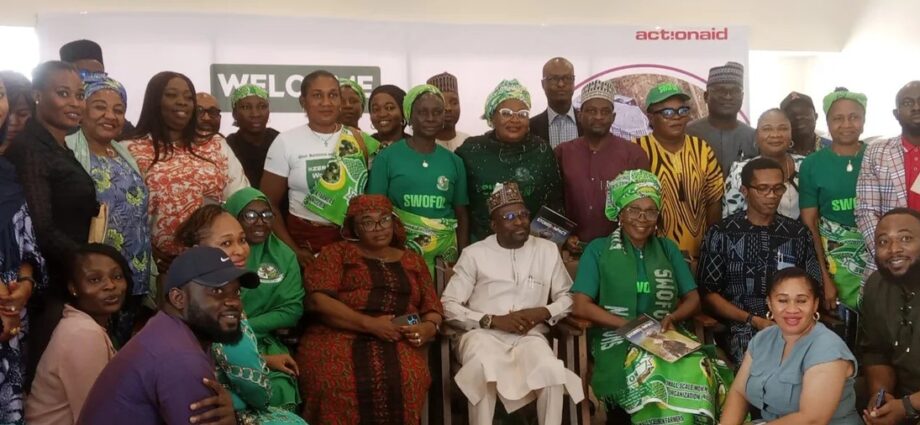
Mrs Suwaiba Dankabo, Deputy Country Director of ActionAid Nigeria, disclosed this at the SUPIA II Project Learning Meeting in Abuja to mark the project’s close-out.
Dankabo said the project, implemented by ActionAid Nigeria and ActionAid International, was designed to scale up public investments in agriculture by strengthening political and budgetary commitments.
According to her, the initiative aims to drive inclusive and sustainable agricultural transformation at state, national and continental levels, with a focus on improving the productivity, livelihoods and overall well-being of smallholder women farmers.
She explained that the project achieved this through targeted advocacy for increased, inclusive and gender-responsive public investment in agriculture.
Dankabo said the project was implemented at the national level and in eight focal states of Bauchi, Gombe, Ondo, Kwara, Kogi, Ebonyi, Delta and the FCT, while also engaging regional and continental platforms to influence broader policy processes.
“This multi-level engagement enabled the project to generate strong evidence, deepen policy dialogue and build strategic partnerships across key institutions and stakeholders.
“Through strategic engagement with government at federal and state levels, civil society organisations and farmer networks, the project recorded remarkable milestones,” she said.
She listed the achievements to include increases in agriculture budgets at national and state levels, introduction of new budget lines to strengthen food and nutrition security, and improved access to agricultural services for 2,913 smallholder women farmers.
According to her, these outcomes have translated into enhanced productivity and improved livelihoods.
Dankabo commended government officials, donor partners and civil society organisations for their commitment to strengthening public investment in agriculture and advancing inclusive, sustainable agricultural development in Nigeria and across Africa.
She noted that the meeting provided an opportunity to reflect on lessons learnt, share best practices, and identify pathways for sustaining and scaling the gains recorded under the SUPIA II project.
“It is also a moment to reaffirm our collective responsibility to ensure that public investments deliver tangible and equitable benefits, especially for women, young people and persons with disabilities,” she said.
Also speaking, Ms Constance Okoke, International Projects Manager at ActionAid International, said the project enabled farmers across Africa to better understand agricultural policies and public investment processes.
Okoke said the initiative deepened advocacy efforts on public financing for agriculture, while building the capacity of women farmers to engage government and other non-state actors on budget formulation and implementation.
She said the project amplified women’s voices across the continent, helping them to view agriculture not merely as subsistence, but as a viable business and livelihood.
“The project has empowered women to hold governments accountable to their commitments on agricultural investment and the right to food,” she said.
Mr Azubike Nwokoye, Food Systems Specialist at ActionAid Nigeria, said sustaining the project’s impact would require scaling up public investment in agriculture and improving the quality of budget releases.
He stressed the need for continued engagement with women farmers, young people and other stakeholders to ensure increased allocations and effective utilisation of agricultural funds.
Meanwhile, Mrs Comfort Sunday, FCT Coordinator of the Small-Scale Women Farmers Organisation of Nigeria (SWOFON), said the project had enabled women farmers to participate in government policies and programmes.
Sunday said her participation in the project had improved her farming skills, enabling her to cultivate diverse crops and improve her family’s livelihood. (NAN) (www.nannews.ng)
Edited by Tosin Kolade