










By Folasade Akpan
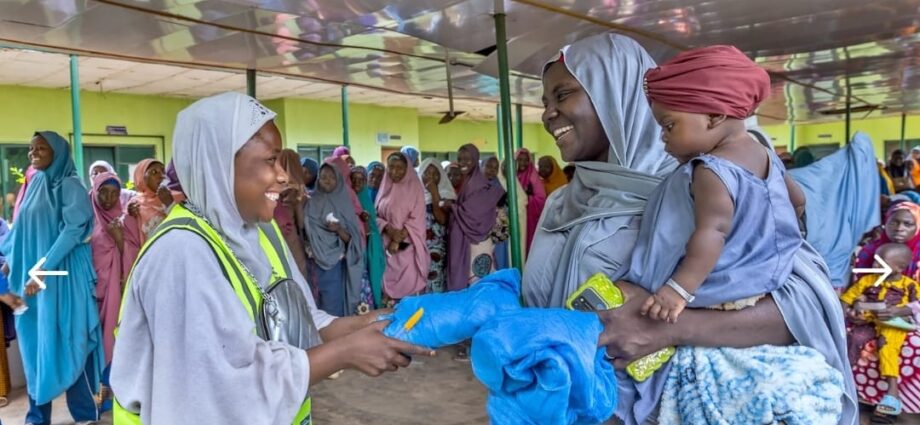
A report by the Society for Family Health (SFH) says its 2025 malaria intervention programme in seven states protected no fewer than 49 million Nigerians through integrated prevention campaigns.
The report made available to the News Agency of Nigeria (NAN) in Abuja on Thursday, said the intervention combined Insecticide-Treated Net (ITN) distribution and Seasonal Malaria Chemoprevention (SMC).
It said the campaigns were implemented during the peak malaria transmission period to boost population-level protection, particularly among children under five years.
NAN reports that the 2025 World Malaria Report shows Nigeria recorded the highest malaria burden globally, with an estimated 68.46 million cases and about 30.3 per cent of global malaria deaths.
According to the SFH report, the integrated approach it employed strengthened state health systems and positioned communities for sustained malaria prevention gains.
It added that by combining ITN and SMC, SFH aligned with World Health Organisation and national best practices to maximise protection during seasonal transmission peaks.
The report said the benefitting states were Delta, Kaduna, Kano, Katsina, Niger, Taraba and Adamawa.
According to the report, ITN distribution alone provided protection for 45.09 million people across the six ITN implementation states.
It added that SMC using Sulfadoxine-Pyrimethamine and Amodiaquine (SPAQ) protected 4.17 million children under five years during the intervention period.
The report said the approach ensured broad household coverage through nets while directly protecting the most vulnerable children through preventive treatment.
SFH said ITN microplanning and implementation were carried out in Delta, Kaduna, Kano, Katsina, Niger and Taraba states.
It said Kano recorded the highest ITN reach with 14.67 million people protected.
According to the report, Katsina recorded 8.1 million beneficiaries, while Kaduna reached 9.05 million people.
Niger State recorded 6.25 million beneficiaries, while Delta accounted for 6.09 million people protected through the ITN campaign.
The report added that Taraba recorded 1.66 million beneficiaries during the mass distribution exercise.
On SMC implementation, SFH said Adamawa and Kano states were covered under the chemoprevention campaign.
It said 1.08 million eligible children were reached in Adamawa, while 3.08 million children benefited in Kano.
The report noted that the SMC intervention was delivered in four cycles at 28-day intervals in both states.
SFH said it trained and deployed 96,066 health workers and community volunteers as mobilisers during the campaigns.
“These mobilisers helped to build community trust, acceptance and ownership of malaria prevention efforts,” the report stated.
It said the intervention was implemented in collaboration with the National Malaria Elimination Programme and State Ministries of Health, alongside other partners.
The report added that data-driven microplanning, digital tools and community engagement improved efficiency, accountability and reach.
NAN reports that SFH is a public-health non-governmental organisation that has implemented malaria programmes nationwide through partnerships and major donor funding. (NAN) (www.nannews.ng)
Edited by Yakubu Uba