


By Folasade Adeniran
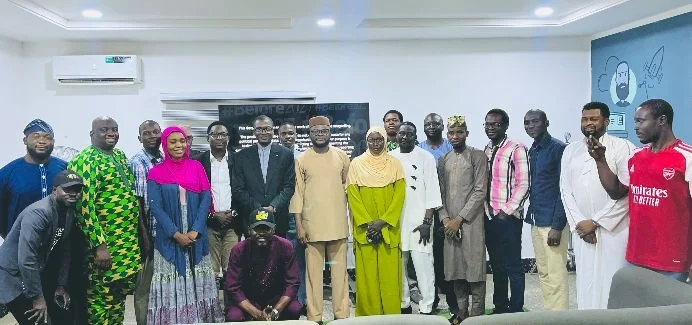
The Nigerian International Film Summit (NIFS) on Friday night unveiled the maiden Lagos edition of ‘Ubuntu Café’, to promote networking and collaboration among Nigerian creatives.
This is in partnership with the British Council Nigeria, Programme for African Leadership (PfAL), and the London School of Economics and Political Science (LSE).
The News Agency of Nigeria (NAN) reports that the event brought together filmmakers, artists, poets, fashion designers, cultural leaders and other practitioners across the creative industry value chain, to exchange ideas and explore opportunities for cross-sector and cross-border partnerships.
Founder of NIFS, Ijeoma Onah, said the initiative was designed to place film at the centre of the creative ecosystem and connect practitioners from other sectors to its opportunities.
Onah explained that film could serve as a platform to promote other creative expressions such as fashion and music by providing visibility and recognition for practitioners.
“What we are trying to do is place film at the centre of the creative industry and help people in other sectors access opportunities within it.
“Fashion designers, for instance, can showcase their work through films, while musicians can gain exposure by being featured in productions.
“These are low-hanging opportunities that can elevate people across the creative space,” she said.
Onah noted that the gathering was intended to create an informal platform where creatives could meet, connect and build partnerships beyond major festivals and formal events.
According to her, such interactions have reduced in recent years, and the Ubuntu café provides an avenue to intentionally bring people together to spark collaborations and business opportunities.
“We want to do this more often because when people meet, meaningful connections and partnerships are formed. If you don’t intentionally create such platforms, those opportunities may never happen,” Onah said.
Also speaking, Donna McGowan, the British Council Nigeria Country Director, said the event was supported under the organisation’s Festival Connect Fund, which aims to foster collaboration between creatives in Sub-Saharan Africa and the United Kingdom.
McGowan said Ubuntu Café was inspired by the African philosophy of community, adding that the initiative celebrates creativity, culture and intellectual exchange while encouraging partnerships across art forms.
“It is about bringing people together to celebrate African creativity, exchange ideas and spark new partnerships. At its core is community, the belief that ‘I am because we are’.
“We have people from different artistic fields, students and established professionals. When different voices come together, it is fascinating to see what can emerge,” she said.
McGowan noted that while similar gatherings had been held in London, the Lagos edition marked the first time Ubuntu Café was hosted in Africa.
McGowan added that there were plans for follow-up sessions in London and other parts of the region, with opportunities for more editions in Lagos depending on stakeholder engagement.
Media entrepreneur, Chude Jideonwu, who also spoke at the event, encouraged creatives to develop the courage to tell authentic African stories and embrace originality.
He urged practitioners to focus on local content and alternative storytelling that reflects African realities and experiences, adding that not every story needs to appeal to everyone.
Jideonwu emphasised the need for creatives to take pride in their uniqueness and consistently produce content that projects African identity and perspectives.
Programme Director of LSE and PfAL, Mr Tosin Adebisi, who is also the founder of Ubuntu Café, said the gathering was conceived at LSE in 2022 as a unique African space for ideas, culture and connection.
Adebisi said his years of observation showed African creatives have talent, but many lack access to opportunities, which collaboration can provide.
He urged creatives to remain open-minded and embrace partnerships that could help expand their reach and impact.
Also speaking, Head of Arts at the British Council Nigeria, Mr Harry Kesiena, said the council would mark 81 years of operations in Nigeria this year, describing the period as one defined by research, impact and sustainable collaborations.
Kesiena highlighted the council’s consistent efforts to create platforms for Nigerian creatives to grow, connect, and showcase their talents, citing the council’s impactful journey.
The programme featured diverse exhibitions by no fewer than 15 practitioners across the creative and cultural value chain. (NAN) (www.nannews.ng)
Edited by Olawunmi Ashafa
Comments