



By Victor Okoye, News Agency of Nigeria (NAN)
As countries compete through ideas, culture is becoming an important tool for economic growth and international influence, not just raw materials.
For Africa, long seen only for its resources, the question is now who is using its culture wisely and how governments support it.
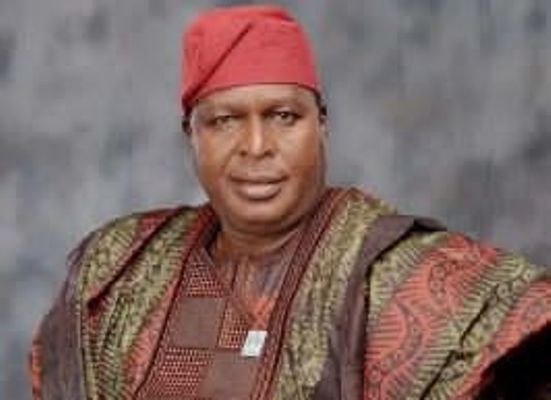
This makes the recent award for Otunba Olusegun Runsewe as Icon of Crafts, Culture and Hospitality in Africa even more important.
The award, given at the 2nd World Crafts Forum in Kuwait, brought together policymakers, artisans, and cultural leaders from over 60 countries.
It shows the world is starting to value Africa’s culture not just as heritage, but as a way to grow the economy.
Globally, the shift is already well established.
UNESCO estimates that the creative economy generates over $2.25 trillion annually, accounting for nearly three per cent of global GDP and employing close to 30 million people worldwide.
Cultural tourism further reinforces this momentum, with the World Tourism Organisation estimating that tourism supports one in every ten jobs globally.
Within this global context, Africa’s creative sector; though largely informal and underreported, already sustains millions through crafts, festivals, heritage tourism, fashion and performance.
The African Development Bank projects that with coherent policy frameworks and sustained investment, Africa’s creative industries could generate over $20 billion annually, especially for youth and women.
Nigeria mirrors both the promise and the paradox of this sector.
Data shows that more than 4.2 million Nigerians are engaged in creative industries, with the potential to create an additional 2.7 million jobs if supported through targeted reforms.
Yet, in spite this scale, the sector contributes only about 1.2 per cent of GDP, far below its potential and behind peer African economies.
The Federal Government has since projected that Nigeria’s creative economy could contribute up to $100 billion to GDP by 2030, underscoring a growing recognition that culture is no longer peripheral to development planning.
Cultural economist and development consultant, Dr Amina Lawal, argues that Africa’s challenge is not cultural scarcity but institutional neglect.
“Cultural production across Africa is vibrant. What is missing are strong policy frameworks, financing mechanisms and institutional continuity.
“Recognition like this matters because it reframes culture as an economic system, not merely identity expression,” she said.
It is within this policy gap that Runsewe’s career acquires relevance beyond personal achievement.
For more than three decades, he has advanced a consistent proposition; that African culture is not ceremonial alone, but a viable engine for employment, tourism, national branding and social cohesion when properly institutionalised.
Rather than episodic showcases, his approach has emphasised continuity, building systems rather than staging spectacles.
Over time, he has helped reframe African crafts from souvenirs into repositories of history, indigenous knowledge and economic dignity.
From wood and clay to fabric and metal, crafts function as living archives of civilisation.
President of the Federation of Tourism Associations of Nigeria (FTAN), Mr Nkereuwem Onung, describes Runsewe as one of the few cultural administrators who consciously linked policy with market outcomes.
“He understood early that culture must pay its way. When artisans earn livelihoods, culture survives. When it depends only on festivals, it fades,” Onung said.
As former Director-General of the Nigerian Tourism Development Corporation (NTDC), Runsewe pursued cultural tourism as a branding and economic strategy.
His “Tourism is Life” campaign repositioned Nigeria at major global tourism platforms, including FITUR Madrid, ITB Berlin, World Travel Market London and the Arabian Travel Market in Dubai.
Nigeria’s Tourism Village at the 2010 FIFA World Cup in South Africa and cultural showcases at the 2018 World Cup in Russia further demonstrated how soft power could be projected beyond traditional diplomatic channels.
Tourism analyst, Mrs Lola Adeyemi, notes that such visibility mattered.
“Those platforms countered narrow narratives about Nigeria and Africa. Culture humanises nations in ways statistics cannot,” she said.
Yet, Nigeria’s experience also exposes a structural weakness.
In spite abundant cultural assets, creative industries remain marginal in development planning, attracting limited public funding and weak private-sector investment.
Consequently, culture continues to rank among Nigeria’s most underutilised economic resources.
Runsewe’s tenure as Director-General of the National Council for Arts and Culture (NCAC) from 2017 sought to address this imbalance.
Under his leadership, culture was repositioned as a tool for unity, peacebuilding and livelihoods.
Participation in the National Festival of Arts and Culture (NAFEST) expanded nationwide, strengthening inter-cultural dialogue in a country often strained by identity divisions.
Beyond festivals, NCAC scaled up skills acquisition programmes for youths and women, deliberately linking cultural practice to entrepreneurship.
Thousands benefited from training in crafts, fashion, performance and cultural enterprise, shifting culture from performance to production.
Community craft leader, Mrs Zainab Musa, said the impact was significant.
“For many women, crafts became income, not hobby. That shift changed how families and communities value culture,” she noted.
Runsewe also introduced the “37 Cultural Wonders of Nigeria,” encouraging states to identify and commercialise unique cultural assets.
Policy experts describe the initiative as a decentralised development model, enabling sub-national identities to drive tourism and local economies.
At the continental level, his election as President of the World Crafts Council, Africa Region positions African artisans within global policy and market conversations often dominated by Europe and Asia.
His role as Chairman of the Africa–China Culture and Arts Exchange Society further reflects the expanding intersection between culture, diplomacy and South–South cooperation.
Culture and diplomacy scholar, Prof. Emmanuel Ojo, emphasises the importance of such representation.
“When Africans shape global cultural governance, it affects market access, pricing and narrative control,” he said.
Beyond culture, Runsewe’s leadership extends into sports administration.
As President of the Nigeria Golf Federation, he introduced the World Handicap System and convened Nigeria’s first National Stakeholders’ Conference on Golf within weeks of assuming office; reflecting a consistent institutional reform mindset.
His recognitions, including the national honour of Officer of the Order of the Niger (OON), mirror the breadth of his engagement.
Equally significant was his role in recovering and renovating the Abuja Arts and Culture Market, a 2.5-hectare facility valued at N9.8 billion, now evolving into a major cultural and tourism destination after years of encroachment.
Urban development expert, Mr Tunde Balogun, describes such interventions as catalytic.
“Cultural markets anchor tourism, jobs and small businesses. Preserving them is economic planning, not sentiment,” he said.
Ultimately, his continental recognition therefore raises a wider policy challenge for Nigeria and Africa.
If culture can generate jobs, foster unity and project influence, why does it remain peripheral in national planning? Why do artisans continue to operate informally despite their proven economic value?
Stakeholders maintain that recognitions of this nature should catalyse renewed investment in cultural institutions, strengthen regulatory frameworks and deepen private-sector participation.
Beyond policy and funding, they argue that such honours must also inspire African youth to see creativity not as a last resort, but as a viable and respected career path.
Ultimately, Africa’s future will not be secured by extraction alone. It will be defined by creation, expression and the confidence to shape and project its own narratives. (NANFeatures)