


















By Martha Agas
The Health Policy Research Group (HPRG), University of Nigeria, Nsukka, is seeking the establishment of urban health units nationwide to improve access to quality healthcare services in urban slums.
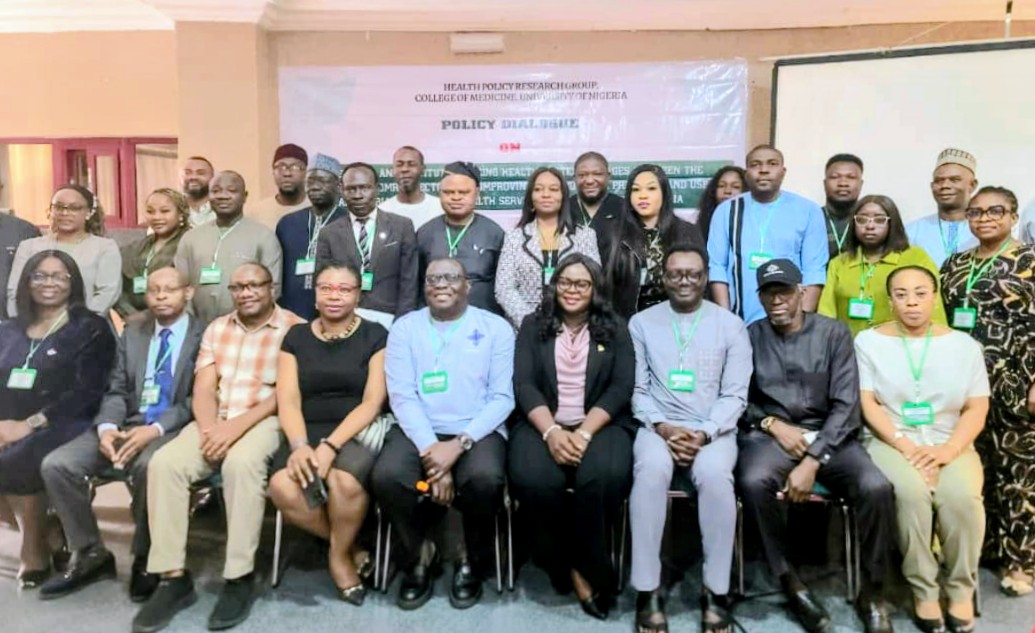
The group made the call during a policy dialogue on Thursday in Abuja.
The theme of the dialogue was: `Developing and Institutionalising Health Systems Linkages Between the Public and Informal Sectors to Improve Equitable Provision and Use of Appropriate Essential Health Services in Urban Slums in Nigeria’.
Speaking at the event, HPRG Coordinator Prof. Obinna Onwujekwe, said urban slums were often neglected and perceived as needing less intervention than rural areas, in spite largely relying on Informal HealthCare Providers (IHP).
Onwujekwe underscored the importance of the urban health units in linking the IHP with the formal health system.
He said the move would guarantee the provision of quality health care services to urban slums, which he described as critical for their wellbeing and productivity.
He said that the HPRG through the Community-Led Responsive and Effective Urban Health Systems (CHORUS) project in Nigeria conducted a study across eight slums in Enugu which revealed the dominance of IHPs, weak referral pathways and poor supervision.
He said the project’s intervention showed that linking informal and formal providers significantly improved care quality, especially in diagnosis, follow-up advice, documentation and supervision.
According to him, the intervention included the establishment of urban health units and the creation of community governance and accountability structures, which demonstrated the effectiveness of linking the two systems.
“The study was prompted by investigations that revealed that the urban slums are usually neglected with focus on rural areas.
“A lot are suffering in urban slums with a large concentration of informal providers there and they are not linked to the formal system.
“So, nobody actually knows what they are doing.
“They are like an ungoverned space but we know that if they are linked, we will be able to know what they are doing and to help them improve on what they are doing as services,” he said.
He said the Enugu Government had adopted their recommendation to establish an urban health unit, recognising the importance of urban health
“So, there is an urban health unit in the ministry of health and the state primary health care agency with urban desk officers.
“The officers are to make sure that they sustain what we have done at the project and to keep improving the health system within urban slums and urban areas in general,” he said
According to him, the aim of the policy dialogue is to share the evidence of the project at the national level for it to be adopted and scaled up in the country.
He added that the dialogue aimed to explore ways to contextualise the urban health units and other parameters they deployed in their interventions that proved effective in improving health systems in different states.
He emphasised linking informal health care providers with formal systems, noting that the informal sector delivers over 50 per cent of health services overall and more than 90 per cent in urban slums
“These informal people will be there forever. They were there before the formal, they will still be there and they are quite important in providing services to poor people.
“So, we must bring them into the formal sector, train them and support them for the well-being of all the people,” he said. (NAN)
Edited by Bashir Rabe Mani