



By Ginika Okoye
Stakeholders in the financial and capital market sectors have called on African governments to invest in infrastructure and encourage innovations to support long-term productivity and integration.
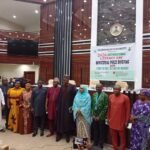
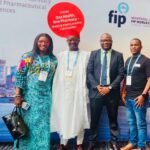
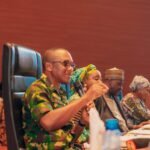
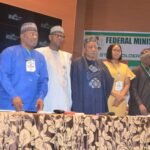
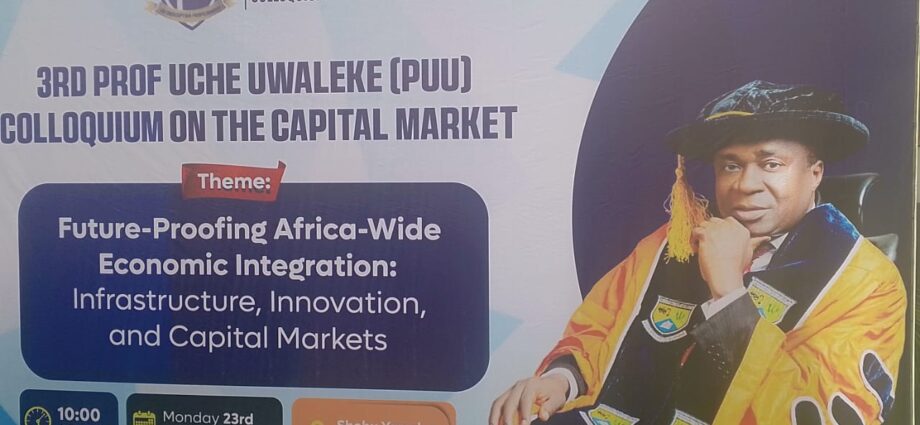
The stakeholders made the call at the 3rd Prof. Uche Uwaleke PUU Colloquium on the Capital Market, in Abuja.
They said that coordinated investment in transport networks, energy systems and sustainable Africa-wide integration required macro-economic convergence, price stability and fiscal discipline.
Sen. Osita Izunaso, the Chairman, Senate Committee on Capital Market and Institutions, said that strong market required strong governance.
Izunaso said that strengthening capital market would help mobilise long-term finance, support cross border investment, and allocate resources efficiently across the continent.
He said that sound legislation, effective oversight, and credible regulatory institutions were fundamental to investment confidence.
Ms Patience Oniha, the Director-General of the Debt Management Office (DMO), said that the country’s capital market had evolved facilitating government issuance of bonds even in crisis.
Oniha said that the DMO was committed to supporting the development of the country’s capital market.
Shamsedeen Ogunjimi, the Accountant-General of the Federation, commended Uwaleke for organising the colloquium at a time when the continent faced both historic opportunities and structural challenges.
Ogunjimi said that African capital markets had expanded steadily but remained shallow relative to global peers.
He said that the African Continental Free Trade Agreement (AfCTA) was expected to increase inter-Africa trade significantly, particularly in manufactured goods, services, and value-added exports, thereby reducing dependency on commodity-driven growth patterns.
According to him, trade integration cannot be sustained without strong financial integration.
“Market must provide long-term capital, infrastructure financing, and cross-border investment platforms,” he said.
Mairiga Katuka, the Chairman of the Securities and Exchange Commission (SEC), said that the commission was unwavering in its mandate to regulate and develop a fair, dynamic, and efficient capital market.
“We will continue to prioritise investor protection, deepen market participation, encourage product innovation, and advance sustainable finance in line with global best practices.
“However, we recognise that regulation alone cannot drive market expansion.
“Meaningful growth requires strong collaboration between regulators and operators, between the public and private sectors, and importantly, between academia and industry,” he said.
Uwaleke, the Convener, said Africa lagged behind in terms of economic integration.
He said that African economies were operating in silos, adding that the volume of intra-African trade was still very low.
“African countries do not trade amongst themselves. Much of the imports we do today, we import from countries outside Africa.
“The concern of this colloquium is to change the narrative, for African countries to talk more with each other.
“That is why the pillars include infrastructure because you cannot integrate without adequate infrastructure, you cannot integrate without roads, without power, without ports.
“We need all these things for goods to move. When you talk about integration, you are talking about free movement of goods, free movement of persons,” he said.
According to him, this can only happen when infrastructure has been sold.
Uwaleke also said that the continent needed to leverage on its youthful population to innovate.
“The last pillar is capital markets. Capital markets represent the bloodstream of this whole economic integration.
“Capital markets mobilise capital, the whole idea, again, is to focus.
“Let African governments recognise the importance of the capital markets, which is an avenue to mobilise long-term funds,” he said.
The Vice Chancellor of the Nasarawa State University, Keffi, Prof. Sa’adatu Liman, said that universities should not allow their knowledge to end only in lecture halls but should inform policy reforms.
Liman was represented by Dr K’tso Ngharbu, a Deputy Vice-Chancellor in the university.
The News Agency of Nigeria (NAN) reports that stakeholders from the academia, financial and capital markets attended the event. (NAN)(www.nannews.ng)
Edited by Kadiri Abdulrahman