










By Blessing Ibegbu
Prof. Haruna Ayuba, Vice-Chancellor of Bingham University, has described family medicine as an adaptable field capable of addressing a wide range of health challenges while evolving to meet emerging needs.
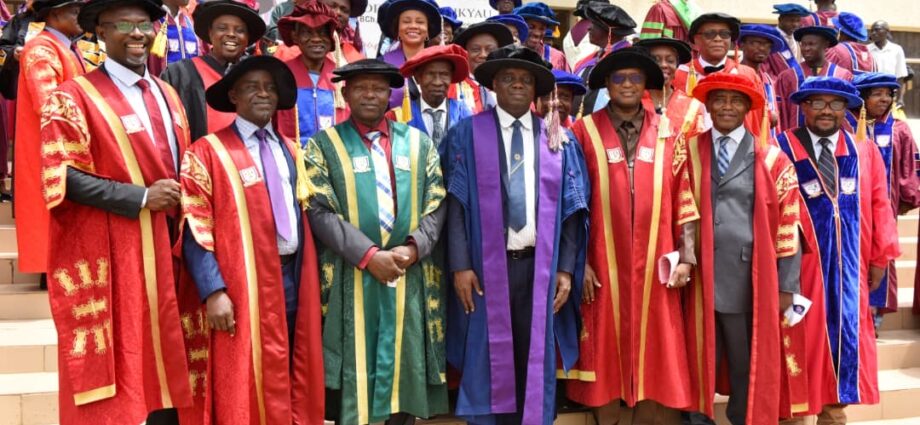
Ayuba made the remark on Tuesday in Karu, Nasarawa State, at the 11th inaugural lecture of the institution delivered by Prof. Musa Dankyau, former Provost of the College of Medical Sciences and current Deputy Vice-Chancellor.
The lecture, titled “The Protean Nature of Family Medicine and Family Care: Old Medicine for New Problems,” highlighted the enduring relevance of foundational medical principles amid rapid technological and societal changes.
Ayuba said the theme underscored the timeless nature of family medicine, noting that the term “protean” was derived from the Greek mythological figure Proteus, known for his ability to change form.
According to him, the concept reflects the flexibility of family medicine as a discipline that continues to adapt to diverse health issues while remaining the cornerstone of comprehensive, continuous and patient-centred care.
“The inaugural lecturer has chosen a topic that bridges the past, present and future of medical practice, emphasising principles that remain crucial in addressing complex health problems,” he said.
The vice-chancellor added that the insights shared would deepen understanding of how traditional values of holistic care remain vital in modern healthcare systems.
Ayuba congratulated Dankyau on delivering the college’s 11th inaugural lecture and disclosed that the College of Medical Sciences currently leads with four inaugural professors.
He said the university planned to compile the first 10 inaugural lectures into a volume to serve as a resource for postgraduate students and scholars.
In his presentation, Dankyau stressed that family medicine was not an outdated practice struggling to survive but “the most adaptable and system-resilient response” to increasingly complex health challenges.
He explained that long before modern hospitals and subspecialties, healthcare was holistic and rooted in families and communities, where illness was viewed as affecting the whole person within a social context.
Using the Proteus metaphor, Dankyau said family medicine adapts across urban and rural settings, affluent and resource-constrained environments, and across infectious and chronic disease burdens without losing its core identity.
“Family medicine is not defined by a single organ system or disease category but by principles that prioritise care for the whole person, continuity over time, integration of services, and attention to family and community context,” he said.
He identified major global health challenges requiring such an approach, including multimorbidity, rising healthcare costs, workforce shortages, technological disruptions that risk dehumanising care, and climate change as a health-threat multiplier, especially in low-resource settings.
According to him, sustainable healthcare systems will emerge not from increased specialisation alone but from stronger, value-driven primary care.
Dankyau described family medicine as “old medicine for new problems” and a pathway to more humane, equitable and resilient health systems.
Among dignitaries at the event was Dr Paul Enenche, Senior Pastor of Dunamis International Gospel Centre, alongside medical practitioners from within and outside Nigeria.
NAN reports that family medicine is a primary care specialty that provides comprehensive healthcare for individuals and families across all ages, genders and disease conditions. (NAN)
Edited by Joseph Edeh